


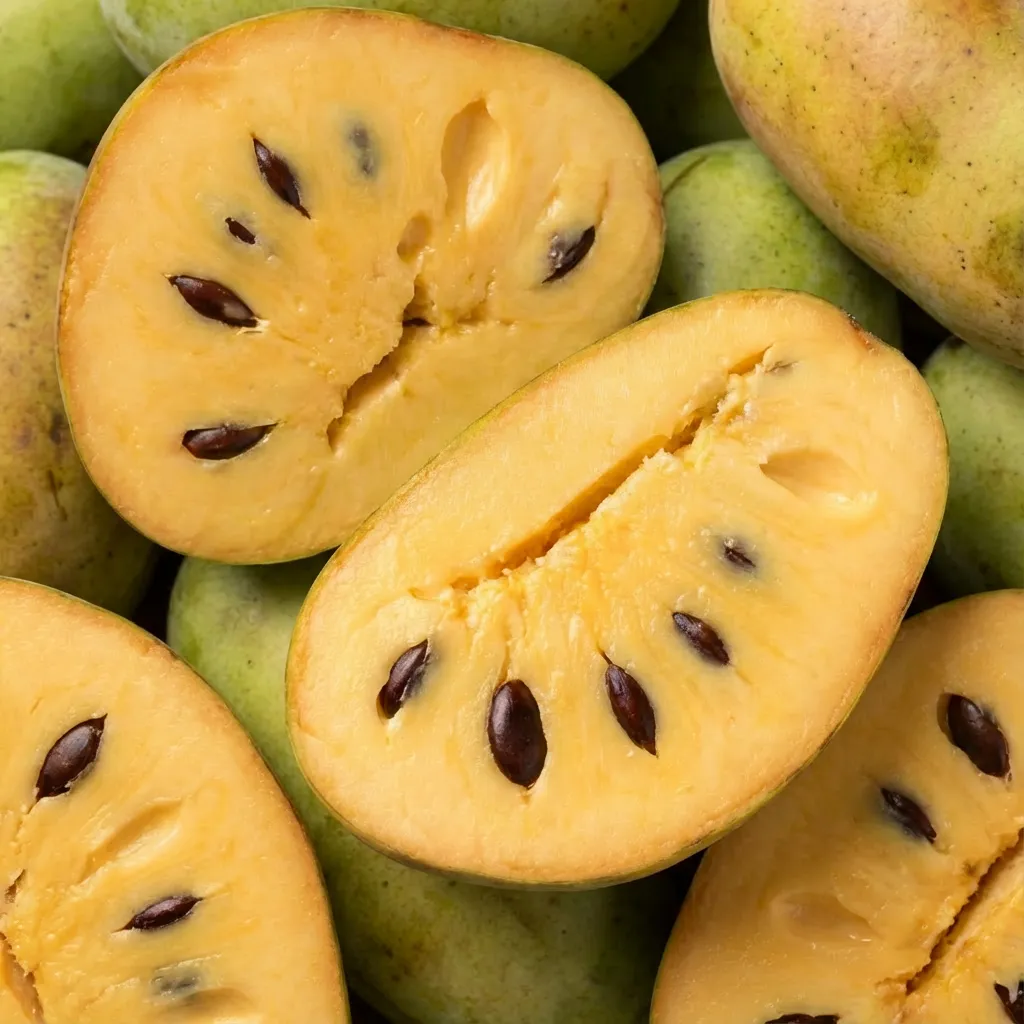
Pawpaw requires caution for dogs. A tiny amount of fully ripe pulp may be tolerated, but the seeds, leaves, skin, and unripe fruit may create toxic, digestive, or mechanical risks.
Quick verdict
- For dogs: uncertain; avoidance is the safest option.
- Key point: never offer the seeds, leaves, skin, or unripe fruit.
Can dogs eat pawpaw?
Fully ripe pawpaw pulp may be tolerated in a very small amount, but safety information is not reassuring enough to recommend it. The safest option is not to offer it intentionally.
Is pawpaw dangerous or toxic to dogs?
It may be dangerous depending on the part eaten. Seeds, leaves, skin, and unripe fruit may contain acetogenins, including annonacin, while the seeds may also cause choking or an intestinal blockage.
Are there any benefits?
Ripe pulp contains fiber, vitamins, energy, and antioxidants, but these benefits do not outweigh the uncertainty surrounding the fruit.
- Provides some fiber and micronutrients.
- Contains plant antioxidants, but they are not essential.
What are the risks?
The fruit requires too many precautions for too little practical benefit.
- Vomiting, diarrhea, or abdominal discomfort.
- Possible toxic effects from seeds, leaves, skin, or unripe fruit.
- Choking or intestinal blockage from seeds.
How much pawpaw can a dog eat?
No regular serving is recommended. If it is offered despite the uncertainty, limit it to a tiny amount of fully ripe pulp with every seed removed.
- Small dog: best avoided.
- Medium dog: one tiny taste of ripe pulp, offered rarely.
- Large dog: one small bite of ripe pulp at most.
Can dogs eat raw, cooked, or processed pawpaw?
The only form that may be considered is fully ripe, plain pulp with all seeds and skin removed. Avoid unripe fruit, seeds, leaves, desserts, and processed products.
How to prepare pawpaw for a dog
- Use only fully ripe fruit.
- Remove every seed and all skin.
- Offer a tiny amount of pulp and monitor digestion.
When should pawpaw be avoided?
- Puppies and small dogs.
- Dogs with sensitive digestion.
- Dogs with pancreatic, neurological, liver, or kidney disorders.
- Dogs taking medication or eating a prescribed veterinary diet.
My dog ate pawpaw: what should I do?
If your dog ate a small amount of ripe pulp, monitor their digestion. Contact a veterinarian if your dog swallowed seeds, skin, leaves, unripe fruit, or a large amount.
Warning signs to watch for
Watch for vomiting, diarrhea, abdominal pain, weakness, lethargy, tremors, drooling, or unusual behavior.
Safer alternatives
- A few plain blueberries.
- A small piece of banana.
- A piece of seedless apple.
How can APPETTO help?
APPETTO helps you compare permitted, uncertain, and risky foods and make clearer choices for your dog with the Pet-Score®. Download APPETTO.
FAQ
Is pawpaw toxic to dogs?
Fully ripe pulp may be tolerated, but the seeds, leaves, skin, and unripe fruit may be harmful.
How much pawpaw can I give my dog?
No regular amount is recommended. At most, offer one tiny taste of fully ripe pulp.
Can dogs eat raw pawpaw?
Only fully ripe pulp with all seeds and skin removed, and only in a very small amount.
Can dogs eat pawpaw seeds?
No. The seeds may be harmful and may also cause choking or intestinal blockage.
What should I watch for if my dog ate pawpaw?
Watch for vomiting, diarrhea, abdominal pain, weakness, tremors, drooling, or unusual behavior.
Can puppies eat pawpaw?
No. It is best avoided in puppies.
Pawpaw remains an uncertain fruit for dogs. Fully ripe pulp may be tolerated in a tiny amount, but the seeds, leaves, skin, and unripe fruit should be avoided. To compare risky and suitable foods, Download APPETTO.
Credits and disclaimer
Credits: Content prepared by the APPETTO team using referenced sources and its internal food classification methodology.
Disclaimer: This information is general and does not replace veterinary advice.