


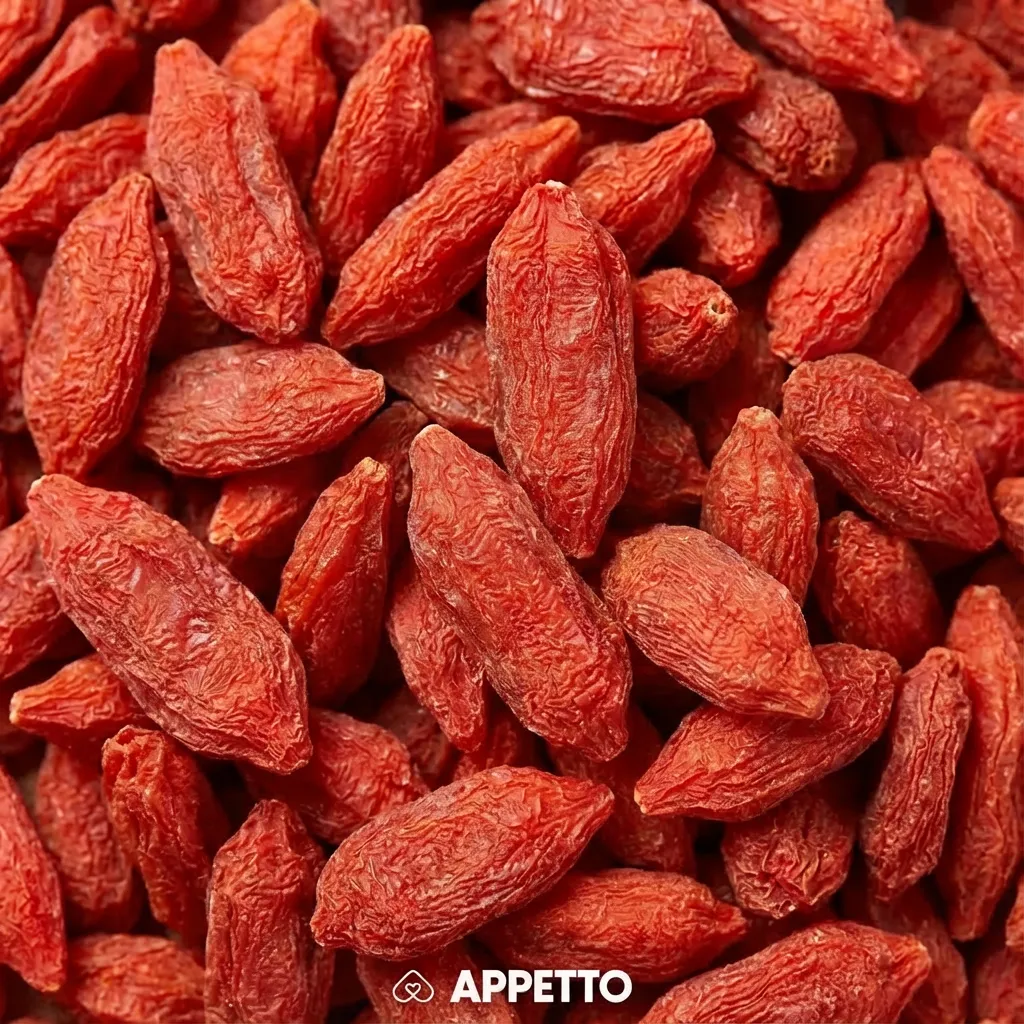
Dogs may eat a very small number of plain goji berries occasionally. The berries contain antioxidants and vitamins, but dried forms are concentrated in sugar and may cause vomiting or diarrhea.
Quick verdict
- For dogs: acceptable only in very small amounts.
- Key point: offer very few plain berries and avoid leaves and stems.
Can dogs eat goji berries?
Goji berries are not generally considered clearly toxic to dogs in tiny amounts, but they should be offered cautiously because they may cause digestive irritation.
Are goji berries dangerous or toxic to dogs?
Small portions are unlikely to be seriously toxic, but plant compounds such as saponins may contribute to drooling, vomiting, or diarrhea. Leaves and stems should not be eaten.
Are there any benefits?
Goji berries contain antioxidants and vitamins, but they should be viewed as an occasional treat rather than an essential food.
- Provides plant antioxidants, including flavonoids.
- Contains vitamins in small amounts.
What are the risks?
The main concerns are digestive irritation and the concentrated sugar found in dried berries.
- Vomiting, diarrhea, or excessive drooling.
- Concentrated sugar in dried fruit.
- Avoid leaves, stems, large portions, sweetened mixes, and products containing chocolate.
How many goji berries can a dog eat?
Offer only a tiny amount and not every day. Rehydrating dried berries may make them softer and easier to chew.
- Small dog: no more than 1 rehydrated berry.
- Medium dog: 1 to 2 rehydrated berries.
- Large dog: a few berries, offered rarely.
Can dogs eat raw, dried, or processed goji berries?
Dried berries should be limited and may be softened in water. Avoid sweetened mixes, snack bars, cereal products, teas, powders, and anything containing chocolate.
How to prepare goji berries for a dog
- Choose plain berries with no added sugar.
- Soak dried berries briefly to soften them.
- Offer a very small amount and monitor digestion.
When should goji berries be avoided?
- Puppies.
- Dogs with diabetes or excess weight.
- Dogs with sensitive digestion or chronic disease.
- Dogs taking medication or eating a prescribed veterinary diet.
My dog ate goji berries: what should I do?
If your dog ate one or two berries, monitoring is usually enough. Contact a veterinarian if your dog ate a large amount, leaves, stems, or a processed product and develops vomiting, diarrhea, or excessive drooling.
Warning signs to watch for
Watch for vomiting, diarrhea, drooling, abdominal discomfort, lethargy, or reduced appetite. Persistent symptoms require veterinary advice.
Safer alternatives
- A few plain blueberries.
- A small piece of seedless apple.
- A treat formulated specifically for dogs.
How can APPETTO help?
APPETTO helps you distinguish between trendy foods and foods that truly suit your dog, with the Pet-Score® making product comparisons easier. Download APPETTO.
FAQ
Are goji berries toxic to dogs?
They are not generally considered toxic in tiny amounts, but they may irritate the digestive system.
How many goji berries can I give my dog?
Offer one to a few berries at most, depending on your dog’s size.
Can dogs eat dried goji berries?
Possibly, but only in very small amounts and preferably after rehydrating them.
Can dogs eat goji leaves?
No. Leaves and stems should be avoided.
What should I watch for if my dog ate too many goji berries?
Watch for vomiting, diarrhea, drooling, or abdominal discomfort.
Can puppies eat goji berries?
It is best to avoid them because puppies have more sensitive digestive systems.
Goji berries may be offered to dogs in very small amounts, but they should remain a rare treat. To compare foods and products more confidently, Download APPETTO.
Credits and disclaimer
Credits: Content prepared by the APPETTO team using referenced sources and its internal food classification methodology.
Disclaimer: This information is general and does not replace veterinary advice.