


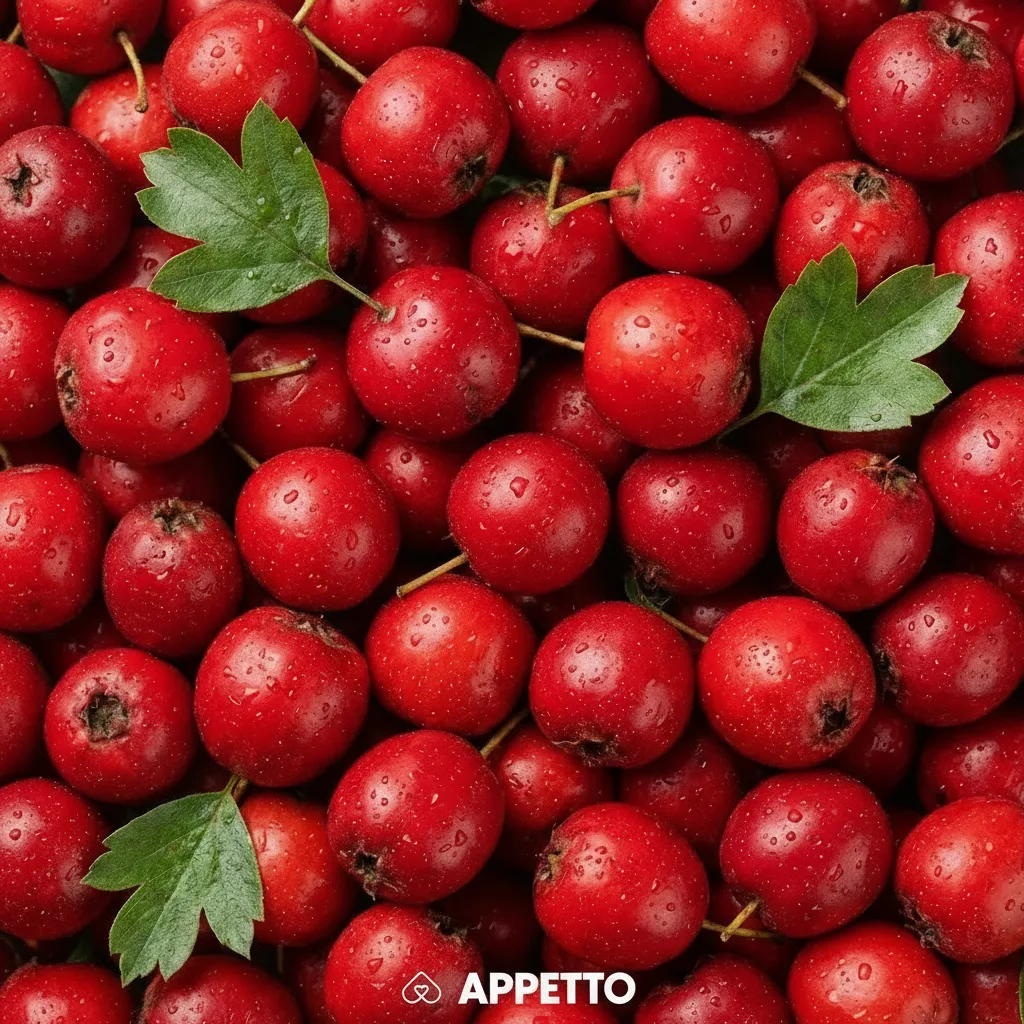
Dogs may eat a small amount of ripe hawthorn berry pulp, but the seeds should be removed. Chewed seeds may contain cyanogenic compounds, while the shrub’s thorns and hard plant parts may cause injury.
Quick verdict
- For dogs: allowed in very small amounts.
- Key point: offer only ripe pulp, without seeds, pits, or thorns.
A small amount of pulp may be tolerated
Hawthorn berries may be offered cautiously, but they should not become a regular treat. Hawthorn also has medicinal uses that should not be confused with ordinary feeding.
Seeds and thorns create the main risks
Small amounts of pulp are generally less concerning. The seeds may release cyanide if many are crushed or chewed, and thorns from the shrub may cause injury.
Possible benefits are limited
Hawthorn contains antioxidant flavonoids and some fiber. Any medicinal use, particularly for heart health, should be supervised by a veterinarian.
- Antioxidant flavonoids.
- A small amount of fiber.
Main risks to know
Hawthorn berries should not be picked and offered casually because of the seeds, tannins, and thorns.
- Vomiting or loose stool after excessive consumption.
- Theoretical cyanide risk if many seeds are chewed.
- Parts to avoid: seeds, pits, large quantities, and thorns.
How much can a dog eat?
Offer only a very small amount of ripe pulp, and only occasionally.
- Small dog: a trace of pulp without the seed.
- Medium dog: pulp from one or two berries.
- Large dog: a few small pieces of pulp, rarely.
Raw berries, dried berries, and supplements
Ripe pulp may be considered in small amounts. Dried berries are more concentrated and should be avoided without advice. Infusions, extracts, and supplements should only be used under veterinary supervision.
How to prepare hawthorn safely
- Use only ripe berries that have been correctly identified.
- Remove every seed and hard part.
- Offer a tiny portion of pulp and monitor tolerance.
When hawthorn should be avoided
- Puppies.
- Small dogs.
- Dogs with heart disease, heart medication, fragile health, or sensitive digestion unless a veterinarian approves it.
- Dogs receiving medication or eating a veterinary diet.
My dog ate hawthorn berries
If your dog ate a small amount of pulp, monitor them. If they chewed many seeds, swallowed a large number of berries, or were injured by thorns, contact a veterinarian.
Warning signs to watch for
Watch for vomiting, diarrhea, lethargy, excessive drooling, difficulty breathing, abdominal pain, or unusual behavior.
Safer alternatives
- A few plain blueberries.
- A small piece of seedless apple.
- A dog treat formulated for their needs.
How APPETTO can help
APPETTO helps you distinguish ordinary treats from active plant ingredients, compare dog products, and track dietary choices with Pet-Score®. Download APPETTO.
FAQ
Are hawthorn berries toxic to dogs?
A small amount of pulp is less concerning, but chewing many seeds may be dangerous.
How much hawthorn can I give my dog?
Only a tiny amount of ripe, seedless pulp, and only rarely.
Can dogs eat hawthorn seeds?
No. The seeds should be removed.
Can dogs take hawthorn supplements?
Only with veterinary advice, particularly for dogs with heart disease or medication.
What symptoms should I watch for after ingestion?
Watch for vomiting, loose stool, lethargy, excessive drooling, or difficulty breathing.
Can puppies eat hawthorn berries?
It is best to avoid them for puppies.
Hawthorn berries may be offered to dogs in tiny amounts, but only as ripe, seedless pulp and never as an improvised medicinal treatment. To compare foods and suitable products, download APPETTO.
Credits and disclaimer
Credits: Content developed by the APPETTO team using referenced sources and its internal food classification methodology.
Disclaimer: This information is general and does not replace veterinary advice.