


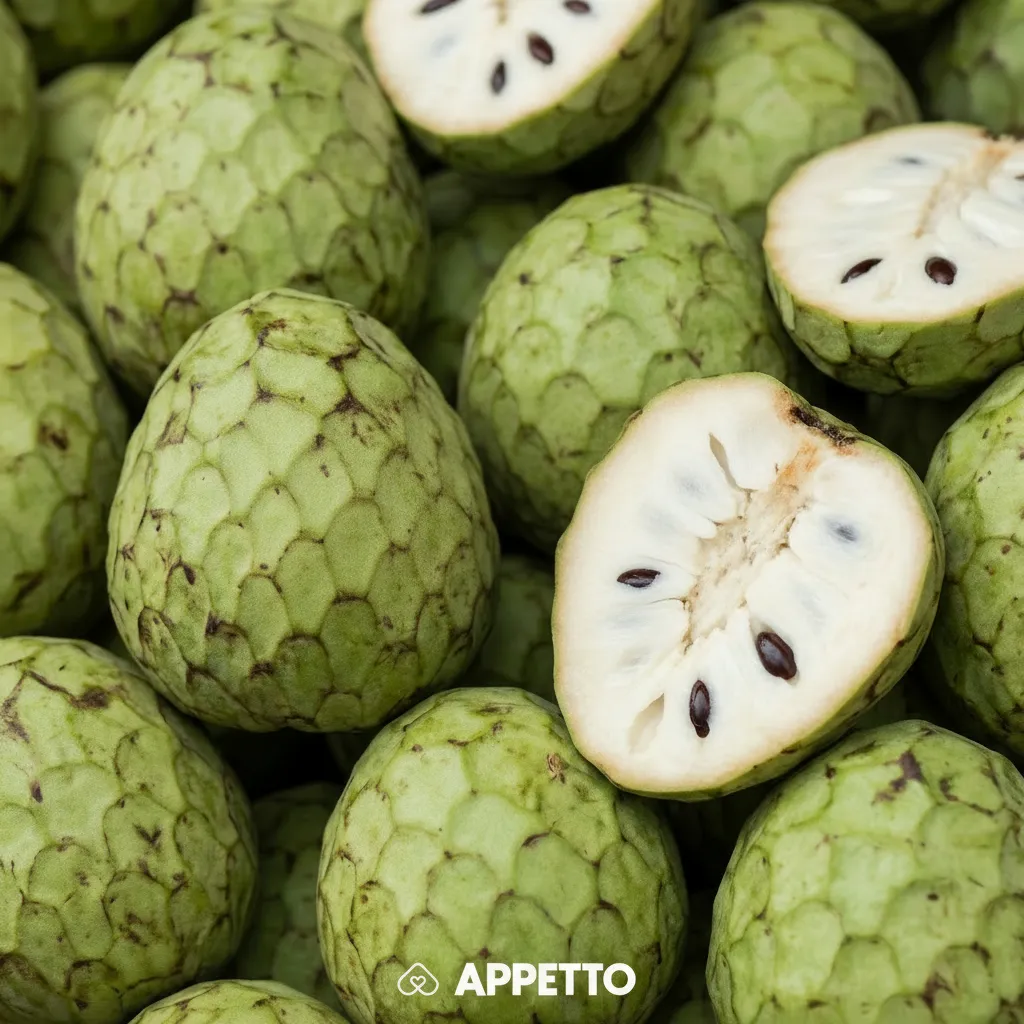
Cherimoya requires great caution around dogs. A tiny amount of fully ripe, completely deseeded pulp may be tolerated, but the seeds, skin, and leaves may be toxic or mechanically dangerous.
Quick verdict
- For dogs: conflicting evidence; increased caution is required.
- Key point: never give the seeds, skin, or leaves.
Cherimoya cannot be clearly recommended
Some sources allow a tiny amount of ripe pulp without skin or seeds, while others advise avoiding the fruit entirely because of its dangerous parts.
The seeds and skin create real risks
The seeds and skin may contain annonacin, a neurotoxic compound, as well as cyanogenic substances. Hard seeds may also cause choking or an intestinal blockage.
Possible benefits are not essential
The ripe pulp contains water, fiber, vitamin C, and potassium, but these benefits do not outweigh the risks of poor preparation.
- Some hydration.
- Small amounts of fiber, vitamin C, and potassium.
Main risks to know
The pulp may appear harmless, but the seeds and skin create serious concerns.
- Vomiting, diarrhea, excessive drooling, or lethargy.
- Tremors or seizures after exposure to toxic parts.
- Parts to avoid: seeds, skin, and leaves.
How much can a dog eat?
No regular amount is recommended. If you offer any despite the uncertainty, use only a tiny amount of fully ripe pulp with every seed and all skin removed.
- Small dog: avoid.
- Medium dog: at most one tiny bite, rarely.
- Large dog: at most one very small bite, without repetition.
Only plain, ripe pulp may be considered
The only potentially acceptable form is raw, fully ripe pulp without skin or seeds. Juices, desserts, sweetened purées, processed products, seeds, skin, and leaves should be avoided.
How to prepare cherimoya carefully
- Choose a fully ripe fruit.
- Remove all skin and every seed without exception.
- Offer one tiny piece of pulp and monitor tolerance.
When cherimoya should be avoided
- Puppies.
- Small dogs.
- Dogs with epilepsy, neurological disease, sensitive digestion, or a history of intestinal blockage.
- Dogs receiving medication or eating a veterinary diet.
My dog ate cherimoya
If your dog only ate a small amount of pulp, monitor them. If they swallowed seeds, skin, leaves, or a large amount, contact a veterinarian, especially if tremors or vomiting appear.
Warning signs to watch for
Watch for vomiting, diarrhea, excessive drooling, tremors, seizures, lethargy, abdominal pain, or an inability to pass stool.
Safer alternatives
- A small piece of banana.
- A few plain blueberries.
- A small piece of seedless apple.
How APPETTO can help
When a fruit is difficult to assess, APPETTO helps you understand the risks, compare dog products, and make clearer choices with Pet-Score®. Download APPETTO.
FAQ
Is cherimoya toxic to dogs?
The ripe pulp may be tolerated, but the seeds, skin, and leaves may be toxic.
How much cherimoya can I give my dog?
No regular amount is recommended. At most, a tiny amount of fully deseeded pulp.
Can dogs eat cherimoya seeds?
No. The seeds are dangerous.
Can dogs eat cherimoya skin?
No. The skin should be avoided.
What symptoms should I watch for after ingestion?
Watch for vomiting, diarrhea, excessive drooling, tremors, seizures, or lethargy.
Can puppies eat cherimoya?
No. It is best to avoid it for puppies.
Cherimoya requires careful handling around dogs. Only a tiny amount of ripe pulp without skin or seeds may be considered. To compare foods and suitable products, download APPETTO.
Credits and disclaimer
Credits: Content developed by the APPETTO team using referenced sources and its internal food classification methodology.
Disclaimer: This information is general and does not replace veterinary advice.