


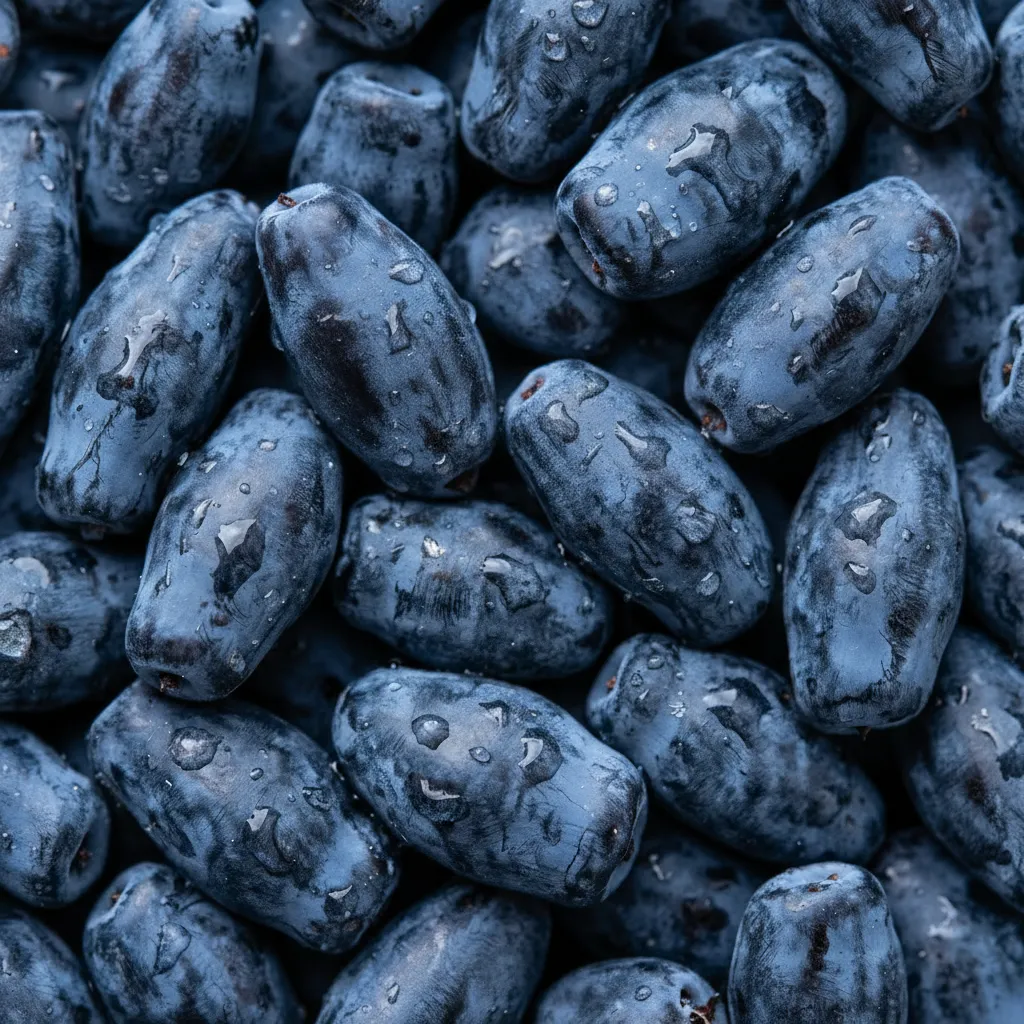
Dogs may eat a few ripe haskap berries if the species has been correctly identified as Lonicera caerulea. The main danger is confusion with other honeysuckle species whose berries may be toxic.
Quick verdict
- For dogs: allowed in small amounts when the species is confirmed.
- Key point: only ripe Lonicera caerulea berries are suitable.
Correct identification is essential
Edible haskap berries may be offered in small amounts. They should never be confused with berries from other Lonicera species that may contain irritating compounds.
The wrong honeysuckle can be dangerous
Ripe haskap berries are considered edible. Other honeysuckle berries may contain compounds such as saponins that cause vomiting and severe diarrhea.
Possible benefits
Correctly identified haskap berries provide antioxidants, fiber, and vitamin C.
- Antioxidants, particularly anthocyanins.
- Small amounts of fiber and vitamin C.
Main risks to know
The berry itself is less concerning than incorrect plant identification.
- Vomiting or diarrhea after excessive consumption.
- More serious symptoms after ingestion of a toxic honeysuckle species.
- Parts to avoid: berries from other Lonicera species, unripe fruit, leaves, and stems.
How many berries can a dog eat?
Offer only a few ripe, washed berries and only when identification is certain.
- Small dog: one ripe berry.
- Medium dog: two to four ripe berries.
- Large dog: a few berries, occasionally.
Raw and processed haskap berries
Raw, washed, ripe berries are the simplest form. Jam, syrup, desserts, sweetened juice, and unripe berries should be avoided.
How to prepare them safely
- Confirm that the berries are edible haskap berries.
- Use only ripe, washed fruit.
- Offer a small amount and monitor digestion.
When haskap berries should be avoided
- Puppies.
- Small or sensitive dogs.
- Dogs with fragile digestion, diabetes, excess weight, or chronic illness.
- Dogs receiving medication or eating a veterinary diet.
My dog ate honeysuckle berries
If you are certain they were ripe haskap berries, monitor your dog. If the species is unknown or your dog ate leaves, stems, or many berries, contact a veterinarian or poison control service.
Warning signs to watch for
Watch for vomiting, diarrhea, lethargy, excessive drooling, weakness, or abnormal behavior.
Safer alternatives
- A few plain blueberries.
- A small piece of seedless apple.
- A clearly labeled dog treat.
How APPETTO can help
APPETTO helps you understand everyday foods, avoid dangerous mix-ups, and compare dog products with Pet-Score®. Download APPETTO.
FAQ
Are haskap berries toxic to dogs?
Ripe Lonicera caerulea berries are not considered toxic, but other honeysuckle species may be.
How many haskap berries can I give my dog?
Only a few ripe berries, depending on the dog’s size.
Can dogs eat honeysuckle berries?
Only when the plant is clearly identified as edible haskap. Otherwise, avoid them.
Can dogs eat unripe haskap berries?
No. Unripe berries may be more irritating.
What symptoms should I watch for after ingestion?
Watch for vomiting, diarrhea, lethargy, excessive drooling, or weakness.
Can puppies eat haskap berries?
It is best to avoid them, especially when the species is uncertain.
Dogs may eat a few ripe haskap berries when the species is correctly identified. To compare foods and avoid dangerous mix-ups, download APPETTO.
Credits and disclaimer
Credits: Content developed by the APPETTO team using referenced sources and its internal food classification methodology.
Disclaimer: This information is general and does not replace veterinary advice.