


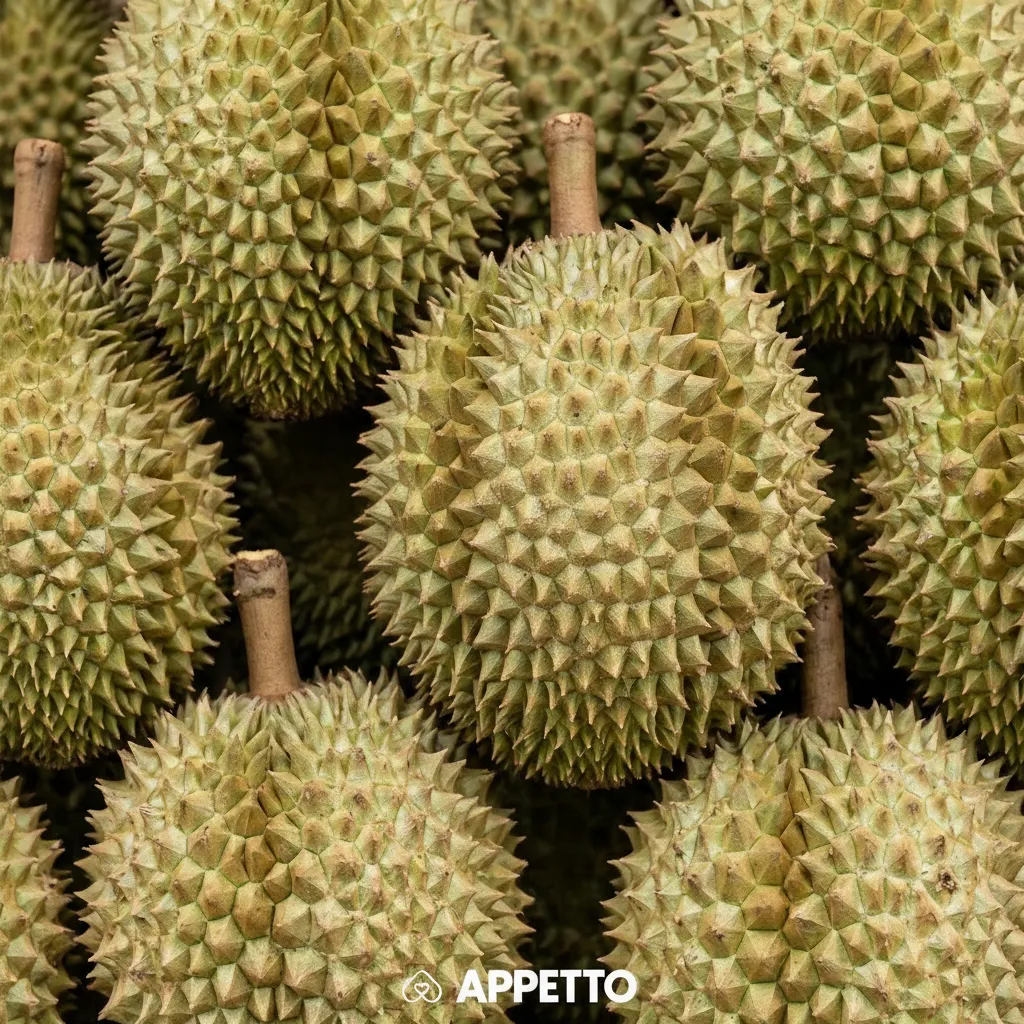
Dogs may tolerate a very small amount of ripe durian flesh, but the fruit should be offered rarely and only after every seed and piece of rind has been removed. Durian is rich in calories, sugar and fat, making digestive upset and pancreatitis a concern in predisposed dogs.
Quick verdict
- For dogs: allowed only in tiny quantities.
- Serve: ripe, plain flesh.
- Avoid: seeds, rind, leaves, stems and processed products.
Is durian safe for dogs?
A small bite of ripe flesh may be tolerated by a healthy adult dog. It should never become a routine treat because its richness can overwhelm sensitive digestive systems.
Are durian seeds toxic?
Durian seeds should be treated as unsafe. They are large, indigestible and may contain cyanogenic compounds. They can also cause choking or intestinal obstruction.
Potential benefits
Durian provides calories, vitamins and minerals, but these nutrients are easily obtained from safer foods. It should not be used to supplement an unbalanced diet.
- Quick energy in a very small portion.
- Small amounts of vitamins and minerals.
Main risks
- Vomiting, diarrhoea and abdominal pain.
- Lethargy or refusal to eat.
- Pancreatitis in dogs sensitive to rich or fatty foods.
- Choking or obstruction caused by seeds or rind.
How much can a dog eat?
- Small dog: one tiny bite.
- Medium dog: one small bite.
- Large dog: up to two small bites, offered rarely.
Raw, cooked or processed?
Only plain, ripe flesh should be considered. Avoid seeds, rind, durian ice cream, cakes, sweets, chips, pastries and any product containing added sugar, fat or salt.
How to prepare durian safely
- Remove the rind completely.
- Remove every seed.
- Offer only a tiny amount of ripe flesh.
- Monitor for digestive symptoms.
When should durian be avoided?
- In puppies.
- In overweight or diabetic dogs.
- In dogs with pancreatitis, kidney disease or digestive sensitivity.
- In dogs receiving medication or following a prescription diet.
My dog ate durian: what should I do?
If your dog ate a small amount of plain flesh, monitor them. Contact a veterinarian if a seed, rind or large quantity was swallowed, or if abdominal pain, vomiting or lethargy develops.
Signs to monitor
Watch for vomiting, diarrhoea, abdominal pain, salivation, lethargy, weakness, reduced appetite or repeated retching.
Safer alternatives
- A small piece of banana.
- A few plain blueberries.
- A dog treat formulated for canine needs.
How APPETTO can help
APPETTO helps you recognise rich foods that should be limited, compare dog products and make more informed decisions using the Pet-Score®. Download APPETTO.
FAQ
Is durian toxic to dogs?
Ripe flesh may be tolerated in tiny amounts, but the seeds and rind are unsafe.
How much durian can I give my dog?
Offer no more than one or two tiny bites depending on body size, and only rarely.
Can dogs eat durian seeds?
No. Seeds may be toxic and can cause choking or intestinal obstruction.
Can overweight dogs eat durian?
It is best avoided because durian is calorie-dense and rich.
Can dogs prone to pancreatitis eat durian?
No. Rich foods such as durian may trigger a recurrence.
Durian can only be considered as a rare, tiny taste of ripe flesh for healthy dogs, with every seed and piece of rind removed.
Credits and disclaimer
Credits: Content developed by the APPETTO team using referenced sources and its internal food-classification methodology.
Disclaimer: This information is general and does not replace veterinary advice.