


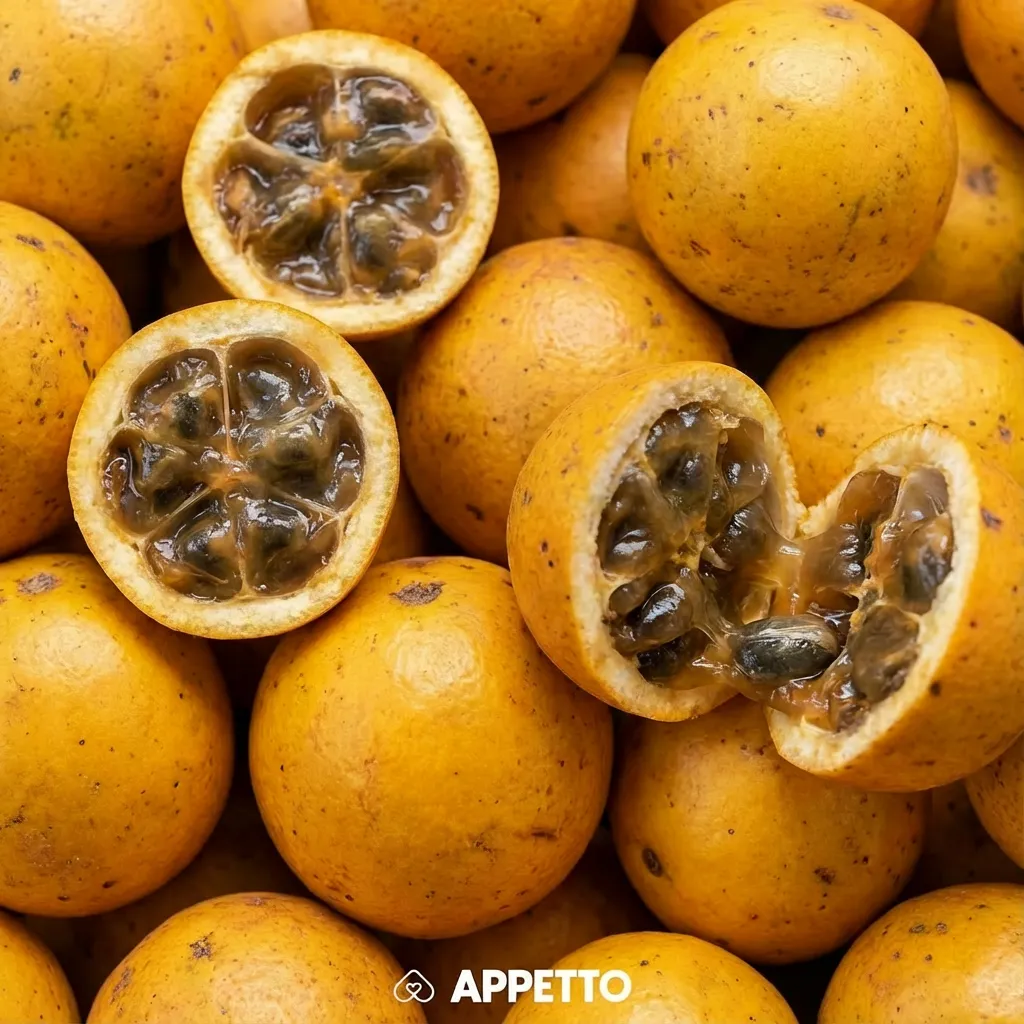
Monkey orange should not be offered to dogs unless the exact species has been reliably identified as edible. The common name covers several Strychnos species, and some contain strychnine-related alkaloids in the seeds or unripe fruit.
Quick verdict
- For dogs: avoid unless species and ripeness are certain.
- Main concerns: seeds, unripe fruit, peel and neurological toxins.
- After ingestion: seek veterinary advice if seeds or unripe fruit were swallowed.
Why identification is essential
Different fruits share the name monkey orange. Safety information for one species cannot automatically be applied to another.
Can ripe pulp ever be safe?
Some locally consumed species have edible ripe pulp, but feeding it to a dog still requires accurate identification and complete removal of every seed. In practice, choosing a better documented fruit is safer.
Possible benefits
- Water and some vitamin C in edible species.
- No essential canine nutritional value.
Major risks
- Vomiting or diarrhoea.
- Excessive salivation.
- Tremors, muscle stiffness or seizures.
- Choking or obstruction from hard seeds.
How much monkey orange can a dog eat?
No general serving can be recommended because safety depends on the exact species.
What to do after ingestion
- Remove the fruit and seeds.
- Keep a sample or clear photograph for identification.
- Contact a veterinarian if seeds, peel or unripe fruit were swallowed.
- Do not induce vomiting without instructions.
Dogs requiring extra caution
- Puppies and small dogs.
- Dogs that swallow food whole.
- Dogs with neurological disease.
- Dogs receiving medication.
Warning signs
Watch for vomiting, salivation, agitation, muscle stiffness, tremors, seizures or breathing difficulty.
Safer alternatives
- A few plain blueberries.
- A small piece of seedless apple.
- A dog treat formulated for canine needs.
How APPETTO can help
APPETTO helps you assess exotic fruits with uncertain common names, compare dog products and make safer decisions using the Pet-Score®. Download APPETTO.
FAQ
Is monkey orange toxic to dogs?
Some species may contain dangerous alkaloids, particularly in seeds or unripe fruit.
Can dogs eat ripe monkey-orange pulp?
Only certain correctly identified species may have edible pulp, but intentional feeding is still not recommended.
Why are the seeds dangerous?
They may contain neurological toxins and can also cause choking or obstruction.
What if the fruit was unripe?
Contact a veterinarian promptly.
Can puppies eat monkey orange?
No. The uncertainty and seed risks make it unsuitable.
Because monkey orange may refer to several species with different toxicological profiles, it is safest not to offer it to dogs.
Credits and disclaimer
Credits: Content developed by the APPETTO team using referenced sources and its internal food-classification methodology.
Disclaimer: This information is general and does not replace veterinary advice.