


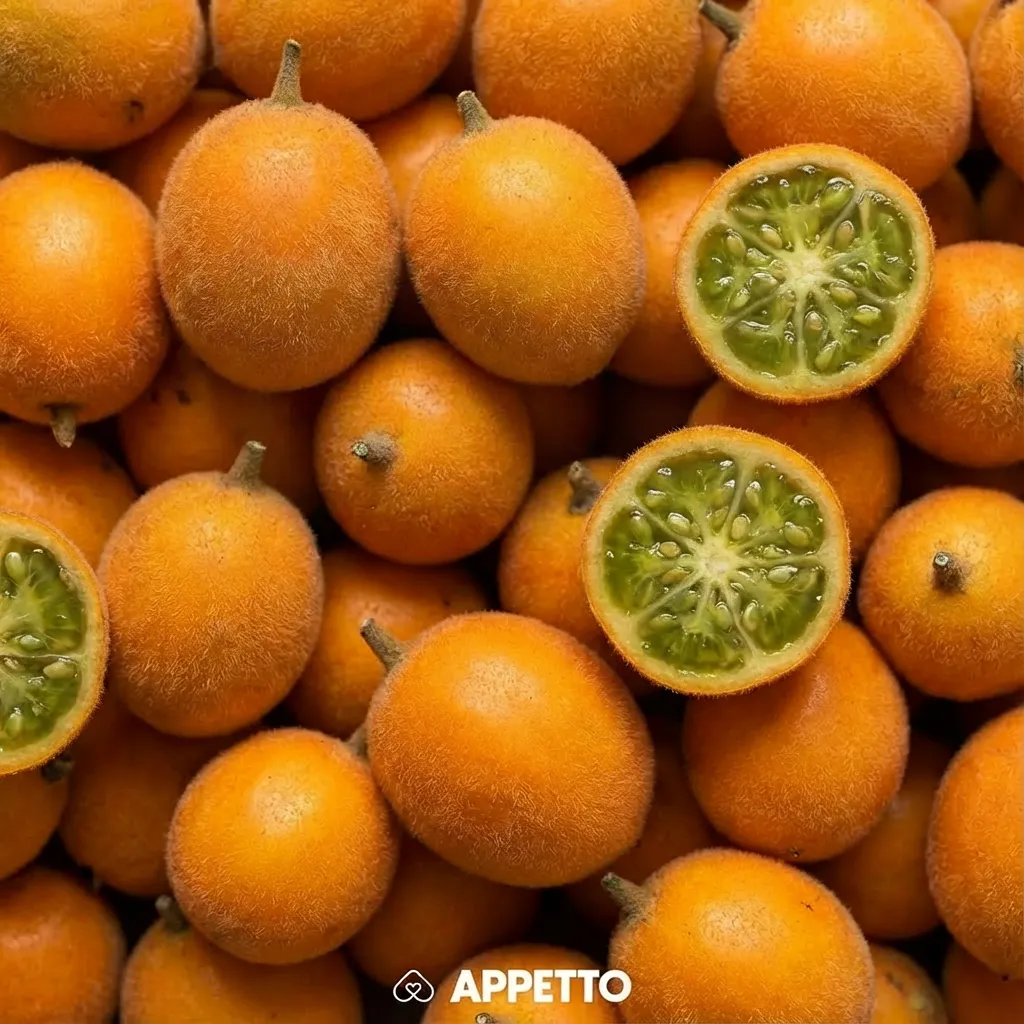
Naranjilla is not a recommended dog treat. A tiny amount of fully ripe pulp may be tolerated, but the unripe fruit, leaves, stems and calyx may contain higher levels of irritating nightshade glycoalkaloids.
Quick verdict
- For dogs: best avoided.
- Main concern: unripe fruit and green plant parts.
- After a tiny taste: monitor if only fully ripe pulp was involved.
Why ripeness matters
Naranjilla belongs to the Solanum genus. Glycoalkaloid concentrations are generally more concerning in unripe fruit and vegetative parts than in fully ripe pulp.
Are the seeds dangerous?
The small seeds are not usually the main toxic concern. However, the fruit is acidic, and large quantities of pulp or seeds may irritate digestion.
Potential benefits
- Water.
- A small amount of vitamin C and antioxidants.
These modest benefits are readily available from safer fruits.
Possible risks
- Vomiting or diarrhoea.
- Excessive salivation.
- Abdominal discomfort from acidity.
- Lethargy, tremors or weakness after exposure to green plant parts.
How much can a dog eat?
No routine serving is recommended. Avoid using naranjilla as a regular treat.
Fresh fruit, juice or processed products?
Avoid unripe fruit, peel, leaves, stems, calyx, concentrated juice, fermented products and sweetened preparations.
What to do after ingestion
- Remove the remaining fruit or plant.
- Determine whether it was fully ripe or green.
- Monitor after a tiny taste of ripe pulp.
- Contact a veterinarian if unripe fruit or green plant parts were swallowed.
Dogs requiring extra caution
- Puppies and elderly dogs.
- Dogs with sensitive digestion.
- Dogs with neurological disease.
- Dogs following a prescription diet.
Warning signs
Watch for vomiting, diarrhoea, salivation, abdominal pain, lethargy, tremors, disorientation or weakness.
Safer alternatives
- A small piece of seedless apple.
- Ripe seedless pear.
- A piece of seedless watermelon.
How APPETTO can help
APPETTO helps you assess uncertain exotic fruits, compare dog products and understand practical limits using the Pet-Score®. Download APPETTO.
FAQ
Is naranjilla toxic to dogs?
Unripe fruit and green plant parts may contain concerning glycoalkaloids.
Can dogs eat ripe naranjilla pulp?
A tiny amount may be tolerated, but it is not recommended as a treat.
Can dogs drink naranjilla juice?
No. Juice is acidic, concentrated and often sweetened.
What symptoms should I monitor?
Vomiting, diarrhoea, salivation, fatigue, tremors or abnormal behaviour.
Can puppies eat naranjilla?
No. It is safer to avoid it.
Naranjilla offers too little benefit to justify its acidity and the potential risks associated with unripe fruit and green plant parts.
Credits and disclaimer
Credits: Content developed by the APPETTO team using referenced sources and its internal food-classification methodology.
Disclaimer: This information is general and does not replace veterinary advice.