


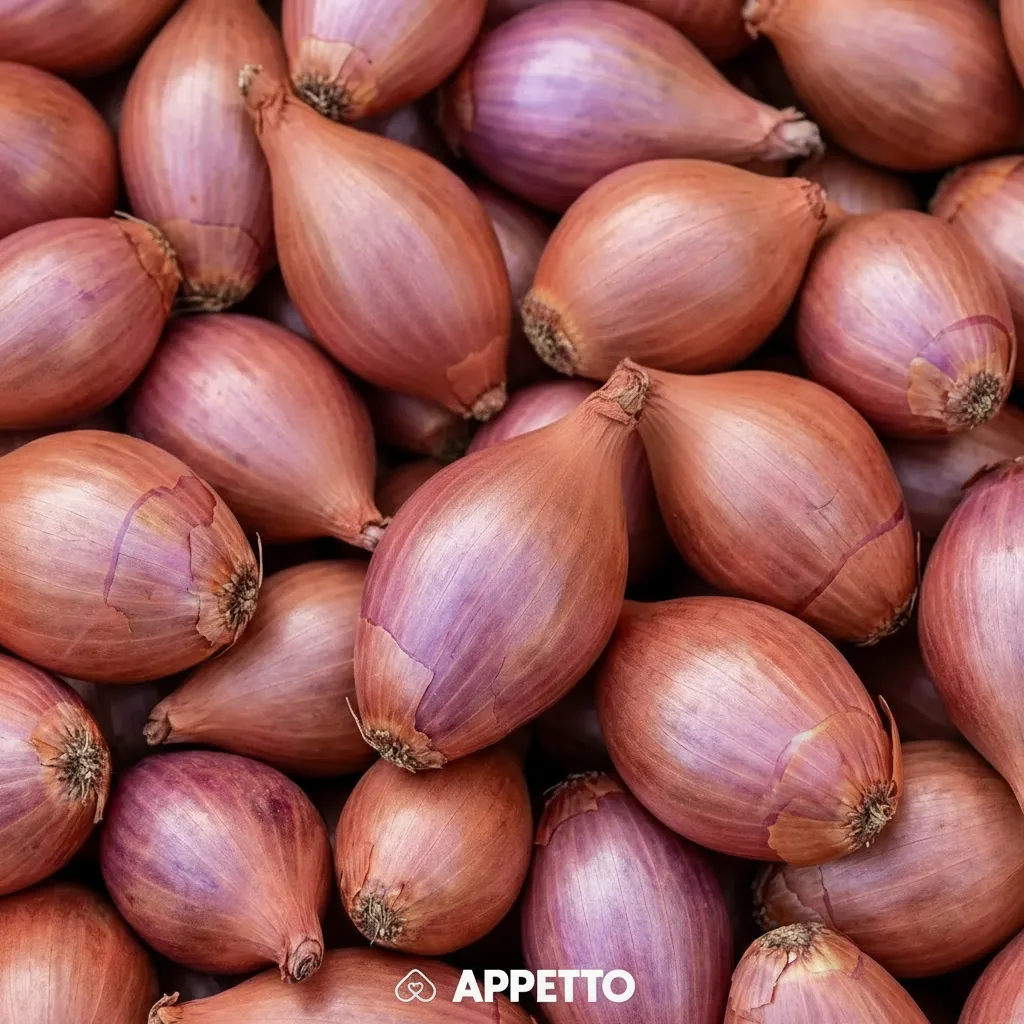
Shallots are strictly forbidden for cats. They belong to the allium family, like garlic and onions, and can cause hemolytic anemia by destroying red blood cells. Even cooked, they remain dangerous.
Quick Verdict
- For cats: strictly forbidden.
- Remember: no shallots raw, cooked, dried, in sauce, or in leftovers.
Shallots and cats: why are they dangerous?
Cats are particularly sensitive to the sulfur compounds in alliums. Thiosulfates can damage their red blood cells, reduce oxygen transport, and lead to anemia.
Are shallots toxic to cats?
Yes. Shallots are toxic to cats, regardless of their form. The danger does not disappear with cooking.
What are the possible benefits?
None. Shallots should not be given to a cat.
- No suitable nutritional value.
- No safe portion size.
Risks to be aware of
- Thiosulfates: destruction of red blood cells.
- Anemia: fatigue, pale mucous membranes, weakness.
- Digestive problems: vomiting and diarrhea.
- Bulb and leaves: to be completely avoided.
How much shallot should you give your cat?
None. Shallots are forbidden for cats.
- Adult cat: zero.
- Sensitive cat: zero.
- Kitten: zero.
Raw, cooked, or in a dish: is the danger the same?
Yes. Shallots remain toxic whether raw, cooked, powdered, or mixed into a sauce. Homemade meals and table scraps should therefore be monitored.
How to prevent ingestion?
- Never give leftovers containing shallots.
- Keep sauces, broths, and stews away from your cat.
- Contact a veterinarian if your cat ingests shallots.
Which cats are more susceptible?
- Kittens.
- Senior cats.
- Anemic cats.
- Frail or sick cats.
- Cats on veterinary treatment or a special diet.
My cat ate shallots: what should I do?
Contact a veterinarian immediately. Even if your cat seems normal at first, signs of anemia may appear later. Don’t try to manage this alone at home.
What signs should you look out for?
Vomiting, diarrhea, lethargy, rapid heartbeat, pale mucous membranes, weakness, or dark urine should all be cause for concern.
What are some safer alternatives?
- Complete, suitable wet food.
- Cat treats.
- Cooked zucchini in small portions.
How can APPETTO help you?
APPETTO helps you avoid toxic foods for cats, compare products using the Pet-Score®, and better understand what deserves a place in their food bowl. Download APPETTO.
FAQ
Are shallots toxic to my cat?
Yes, shallots are toxic to cats.
How much shallot is dangerous for a cat?
No amount is safe.
Can my cat eat cooked shallots?
No, they remain toxic even when cooked.
Are shallot leaves dangerous?
Yes, both the bulb and leaves should be avoided.
What symptoms should I watch for after ingestion?
Vomiting, diarrhea, lethargy, rapid heartbeat, and pale mucous membranes.
Can a kitten eat shallots?
No, it’s strictly forbidden.
Shallots are therefore clearly forbidden for cats. To better understand dangerous foods and compare feline products, APPETTO helps you with the Pet-Score®. Download APPETTO.
Credits and Disclaimer
Credits: Content developed by the APPETTO team using referenced sources and the internal food classification methodology.
Disclaimer: This information is general and does not replace the advice of a veterinarian.