


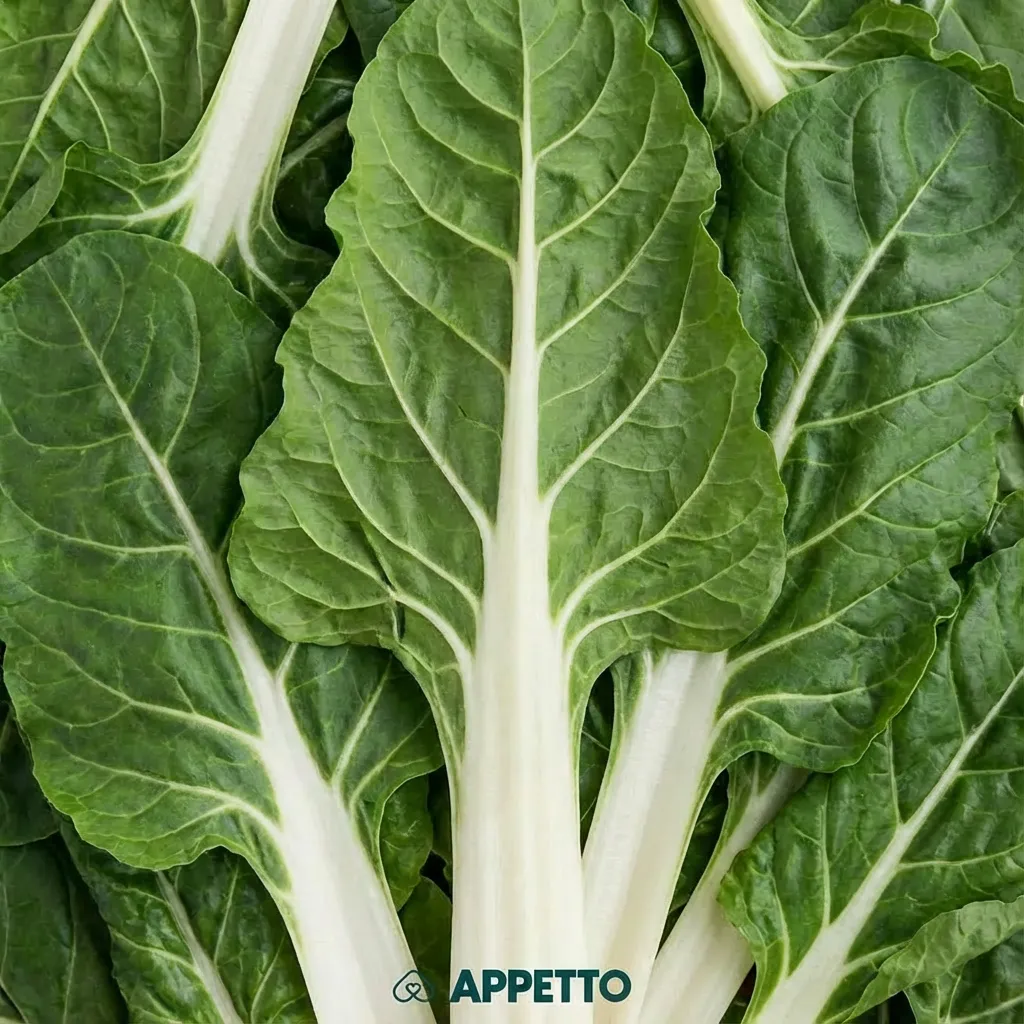
Swiss chard can be given to dogs in moderation, specifically as cooked, drained, and finely chopped leaves. While it provides beneficial fiber and vitamins, its oxalate content requires caution, particularly for dogs prone to urinary stones or kidney disease.
Quick verdict
- For dogs: allowed in moderation.
- To remember: cooking, draining, and serving small portions are essential; avoid long and fibrous stems.
Swiss chard for dogs: allowed, limited, or forbidden?
Swiss chard is allowed in small quantities for dogs, provided it is well prepared. Cooked leaves are highly preferable to the long, fibrous stems. The cooking water should always be discarded to help reduce the oxalate content.
Is Swiss chard dangerous or toxic for dogs?
Swiss chard is not considered toxic, but it does contain oxalates. In predisposed dogs, these compounds can promote the formation of urinary crystals, notably calcium oxalate.
What are the possible benefits?
While there are potential benefits, Swiss chard should only be a small addition to a balanced diet.
- Dietary fiber, useful for digestion in small amounts.
- Vitamins A, C, and K.
- Light hydration.
- Beta-carotene, a precursor to vitamin A.
What are the risks to know?
Although Swiss chard is not inherently dangerous, it carries certain risks.
- Oxalates: Can cause urinary crystals in predisposed dogs.
- Fiber: May lead to diarrhea and gas if given in excess.
- Fibrous stems: Difficult to chew and pose a choking risk.
How much to give your dog?
Swiss chard should remain an occasional treat.
- Small dog: Half a teaspoon of chopped cooked leaves.
- Medium dog: One teaspoon.
- Large dog: One to two teaspoons maximum.
Can my dog eat raw, cooked, or processed Swiss chard?
Cooked Swiss chard is preferable. Cooking and thoroughly draining the leaves reduce some of the oxalates and improve digestibility. Processed versions such as creamed, salted, or gratinated Swiss chard, as well as those prepared with garlic or onion, must be avoided.
How to prepare it correctly?
- Wash the leaves and remove any long or fibrous stems.
- Boil them in water, then discard the cooking water.
- Chop the leaves finely and serve a small, plain amount.
When should it be avoided?
- Puppies.
- Frail senior dogs.
- Dogs with a history of urinary or kidney issues.
- Dogs prone to calcium oxalate stones.
- Dogs on a strict veterinary diet.
My dog ate Swiss chard: what to do?
If your dog ate a small portion of plain cooked leaves, simply monitor them. However, in case of a significant ingestion, consumption of long stems, or if you notice any urinary signs, seek veterinary advice.
What signs should alert you?
Vomiting, diarrhea, abdominal pain, gas, difficulty urinating, unusual urine, or lethargy are signs that should be closely monitored.
What are safer alternatives?
- Plain cooked zucchini.
- Well-cooked green beans.
- Cooked carrots in small pieces.
How can APPETTO help you?
APPETTO helps you understand which foods are allowed with precautions, compare dog products using the Pet-Score®, and make more informed choices for their bowl. Download APPETTO.
FAQ
Is Swiss chard toxic to my dog?
No, it is not considered toxic, but its oxalate content requires caution.
How much Swiss chard can I give my dog?
Half a teaspoon to two teaspoons of cooked leaves, depending on your dog’s size.
Can my dog eat raw Swiss chard?
It is not recommended. Cooked and drained Swiss chard is highly preferable.
Are Swiss chard stems dangerous for dogs?
Long and fibrous stems can be difficult to chew and should be avoided to prevent choking.
What signs to watch for if my dog ate Swiss chard?
Vomiting, diarrhea, abdominal pain, or any urinary changes should alert you.
Can a puppy eat Swiss chard?
It is better to avoid giving it to puppies or to ask your veterinarian for advice.
Swiss chard can be given to dogs, but only in small portions of cooked, chopped, and drained leaves. To better compare everyday foods and find suitable products, APPETTO helps you with the Pet-Score®. Download APPETTO.
Credits and warning
Credits: Content developed by the APPETTO team based on referenced sources and internal food classification methodology.
Warning: This information is general and does not replace veterinary advice.