


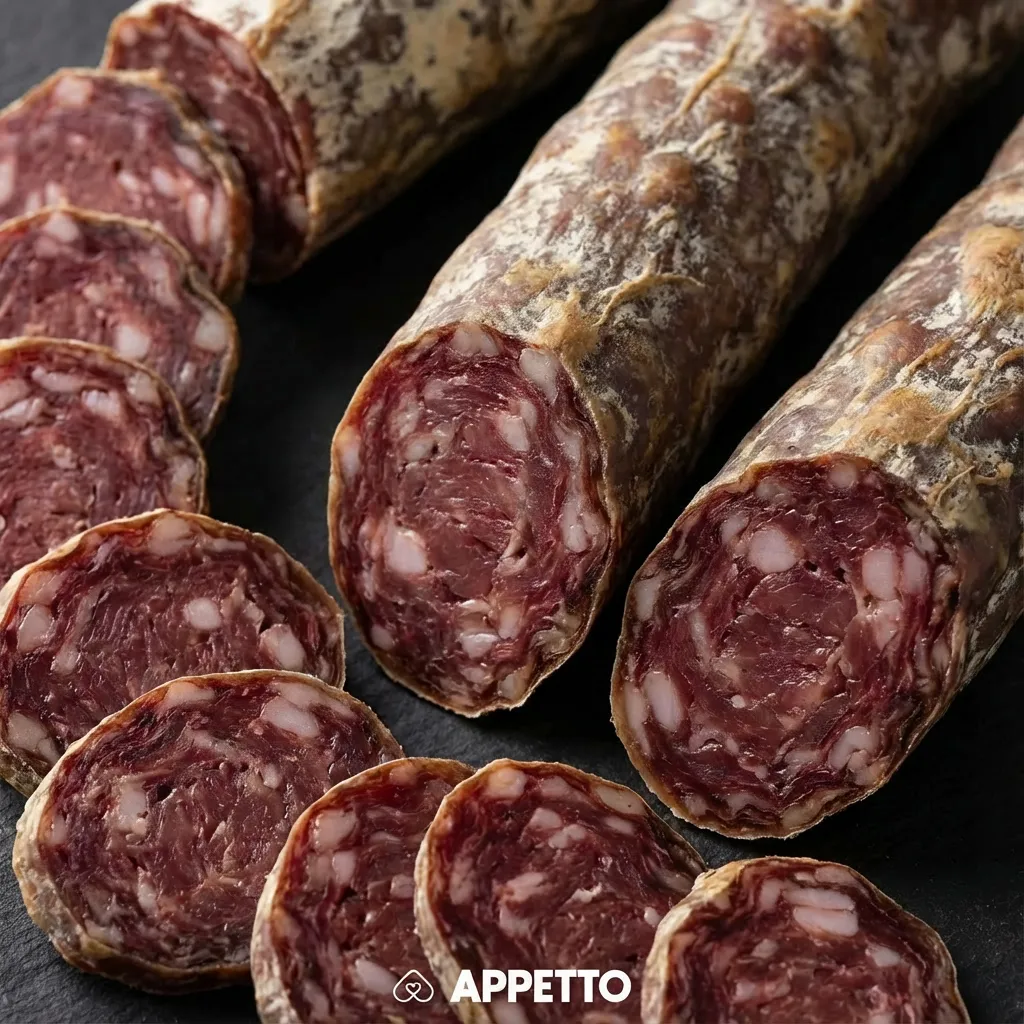
Wild boar sausage is a food to avoid giving your dog. With its salt, fats, additives, casing, and the health risks associated with processed game products, it is not a suitable treat. Your dog might want to join the party, but their pancreas wasn’t invited.
Quick verdict
- For dogs: to avoid.
- Key takeaway: a processed product that is too salty, too fatty, and potentially risky depending on its origin and preparation.
Wild boar sausage for dogs: allowed, in moderation, or forbidden?
Wild boar sausage is not recommended for dogs. Even though well-cooked wild boar meat can sometimes be given with caution, the sausage is a processed, salty, and fatty charcuterie product.
Is wild boar sausage dangerous or toxic to dogs?
It can be dangerous depending on the amount and composition. The salt can cause dehydration, the fats can promote pancreatitis, and poorly controlled game products can raise health and safety concerns.
What are the possible benefits?
The benefits are very low in this form.
- Contains meat, but within a highly processed product.
- Highly palatable, mainly due to the fat and salt.
What are the risks to be aware of?
Wild boar sausage does not fit the profile of a balanced canine treat.
- High salt and fat content.
- Additives or spices depending on the recipe.
- Digestive, pancreatic, or sanitary risks.
- Parts to avoid: casing, skin, visible fat, thick or very dry slices.
How much should you give your dog?
No amount is recommended. Minimal accidental ingestion should be monitored, but this product must not be given intentionally.
- Small dog: no portion.
- Medium dog: no portion.
- Large dog: no portion.
Can my dog eat raw, dry, or cooked wild boar sausage?
Wild boar sausage is a dry and processed product. It remains too salty and fatty. Cooking it does not make it suitable. Unregulated or highly spiced artisanal preparations should be strictly avoided.
How to prepare it properly?
- Do not give wild boar sausage to your dog.
- If you want to offer wild boar, only choose well-cooked, plain, boneless meat.
- Avoid game charcuterie and appetizer leftovers.
When should it be avoided?
- For puppies.
- For senior dogs.
- For dogs sensitive to fat or prone to pancreatitis.
- For dogs with heart or kidney conditions, or those on a veterinary diet.
My dog ate wild boar sausage: what should I do?
Check the amount eaten, the composition, and the presence of casing. Offer water. If your dog ate a large amount, has a sensitive stomach, or shows symptoms, contact your vet.
What signs should you look out for?
Vomiting, diarrhea, abdominal pain, excessive thirst, lethargy, weakness, or loss of appetite should alert you.
What are safer alternatives?
- Well-cooked, plain wild boar in small amounts.
- Cooked, skinless chicken or turkey.
- Dog treats that are low in salt and fat.
How can APPETTO help you?
APPETTO helps you compare dog treats and foods using the Pet-Score®, allowing you to spot overly rich or heavily processed products without being misled by labels. Download APPETTO.
FAQ
Is wild boar sausage toxic to my dog?
It isn’t always toxic, but it is too salty, fatty, and processed to be given to them.
How much wild boar sausage can I give my dog?
No amount is recommended.
Can my dog eat one slice of wild boar sausage?
It’s better to avoid it, even a single slice.
Is the sausage casing dangerous?
Yes, it can be hard to digest and pose a mechanical risk (choking or blockage).
What symptoms should I watch for after ingestion?
Vomiting, diarrhea, abdominal pain, excessive thirst, or fatigue.
Can a puppy eat wild boar sausage?
No, it is too rich, salty, and unsuitable.
Therefore, wild boar sausage should be avoided for dogs. To compare more suitable treats and understand products using the Pet-Score®, APPETTO helps you sort things out. Download APPETTO.
Credits and disclaimer
Credits: Content created by the APPETTO team based on referenced sources and our internal food classification methodology.
Disclaimer: This information is general and does not replace veterinary advice.