


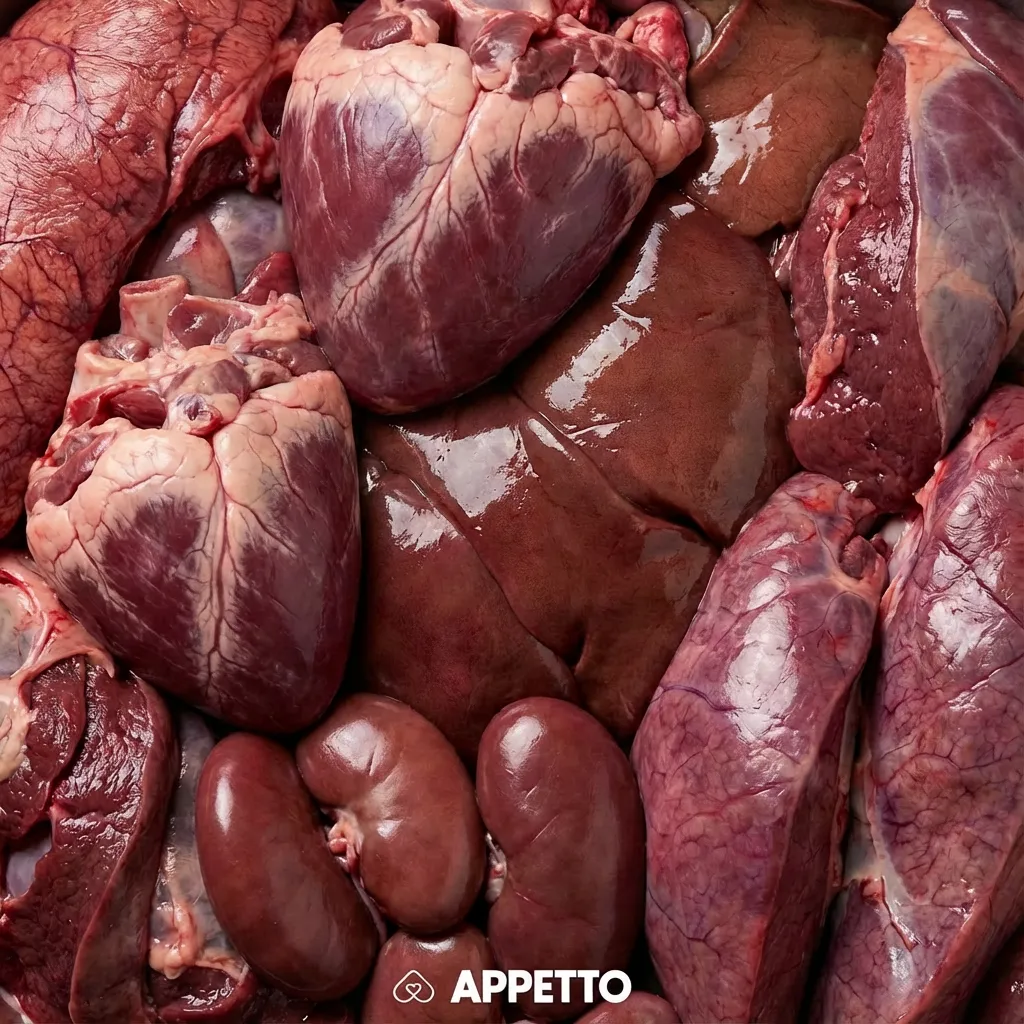
Wild boar offal can be given to dogs only with great caution and always thoroughly cooked. Raw, they pose serious health risks, notably Aujeszky’s disease (pseudorabies) and certain parasites like Trichinella. Suffice it to say, cooking is not an optional detail here.
Quick verdict
- For dogs: allowed in moderation, only fully cooked.
- Key takeaway: never feed raw wild boar offal, nor dubious or uninspected organs.
Wild boar offal for dogs: allowed, limited, or forbidden?
Wild boar offal such as the liver or heart can provide protein, iron, and vitamins, but only if their source is reliable and they are cooked all the way through. This is not a food to improvise with after a hunt or a game meal.
Is wild boar offal dangerous or toxic for dogs?
The main danger is biological. Raw wild boar products can transmit Aujeszky’s disease, which is potentially fatal in dogs, as well as parasites like Trichinella. Thorough cooking significantly reduces these risks.
What are the possible benefits?
Once well-cooked, wild boar offal can offer occasional nutritional benefits.
- Source of animal protein.
- Presence of iron and vitamins.
- Highly palatable for some dogs.
What are the risks to know?
Wild boar requires higher vigilance than classic farmed meat.
- Aujeszky’s disease in the case of raw or undercooked products.
- Parasites like Trichinella.
- Digestive issues if the portion is too rich or too large.
- Parts to avoid: raw organs, unidentified offal, seasoned offal, or offal from an uncertain source.
How much to give your dog?
If the source is reliable and it is fully cooked, stick to a small occasional portion. Offal should never form the basis of a diet without professional guidance.
- Small dog: a very small, well-cooked piece.
- Medium dog: a few well-cooked diced pieces, occasionally.
- Large dog: a small, well-cooked portion, rarely.
Can my dog eat wild boar offal raw, cooked, or processed?
Raw offal must be strictly avoided. Cooked all the way through, it can be considered in small amounts. Smoked, salted, home-dried, or sauce-and-spice-prepared offal is not suitable.
How to prepare it properly?
- Use only offal from a reliable and inspected source.
- Cook completely, leaving no pink or raw parts.
- Cut into small pieces and serve a small amount without salt or seasoning.
When should it be avoided?
- In puppies, who are more vulnerable.
- In senior dogs.
- In immunocompromised dogs or those with digestive issues.
- In sick dogs or those on a veterinary diet.
My dog ate wild boar offal: what should I do?
If the offal was well-cooked and in a small amount, monitor their digestion. If it was raw, undercooked, or from an uncertain source, contact a vet immediately, even before symptoms appear.
What signs should raise an alarm?
Excessive drooling, vomiting, fever, unusual itching, restlessness, neurological issues, weakness, or abnormal behavior should be considered emergencies after ingesting raw wild boar.
What are safer alternatives?
- Plain cooked chicken.
- Cooked lean beef.
- Protein treats formulated for dogs.
How can APPETTO help?
APPETTO helps you better understand everyday foods, but also more specific meats like game. The Pet-Score® provides a clear benchmark to compare products and avoid confusing choices. Download APPETTO.
FAQ
Is wild boar offal dangerous for my dog?
Yes, if it is raw or undercooked, due to Aujeszky’s disease and possible parasites.
How much wild boar offal can I give my dog?
Only a small amount, fully cooked, and occasionally.
Can my dog eat raw wild boar offal?
No, this must be strictly avoided.
Can my dog eat cooked wild boar liver?
Yes, but only in small amounts, thoroughly cooked, and from a reliable source.
What signs should I watch for if my dog ate raw wild boar?
Drooling, vomiting, fever, nervous system disorders, or abnormal behavior should warrant immediate attention.
Can a puppy eat wild boar offal?
It’s best to avoid it, as their immune and digestive systems are more fragile.
Wild boar offal should only be considered for dogs if it is thoroughly cooked, in small amounts, and from a reliable source. To better compare foods and avoid bad habits, APPETTO guides you with the Pet-Score®. Download APPETTO.
Credits and disclaimer
Credits: Content created by the APPETTO team based on referenced sources and internal food classification methodology.
Disclaimer: This information is general and does not replace veterinary advice.