


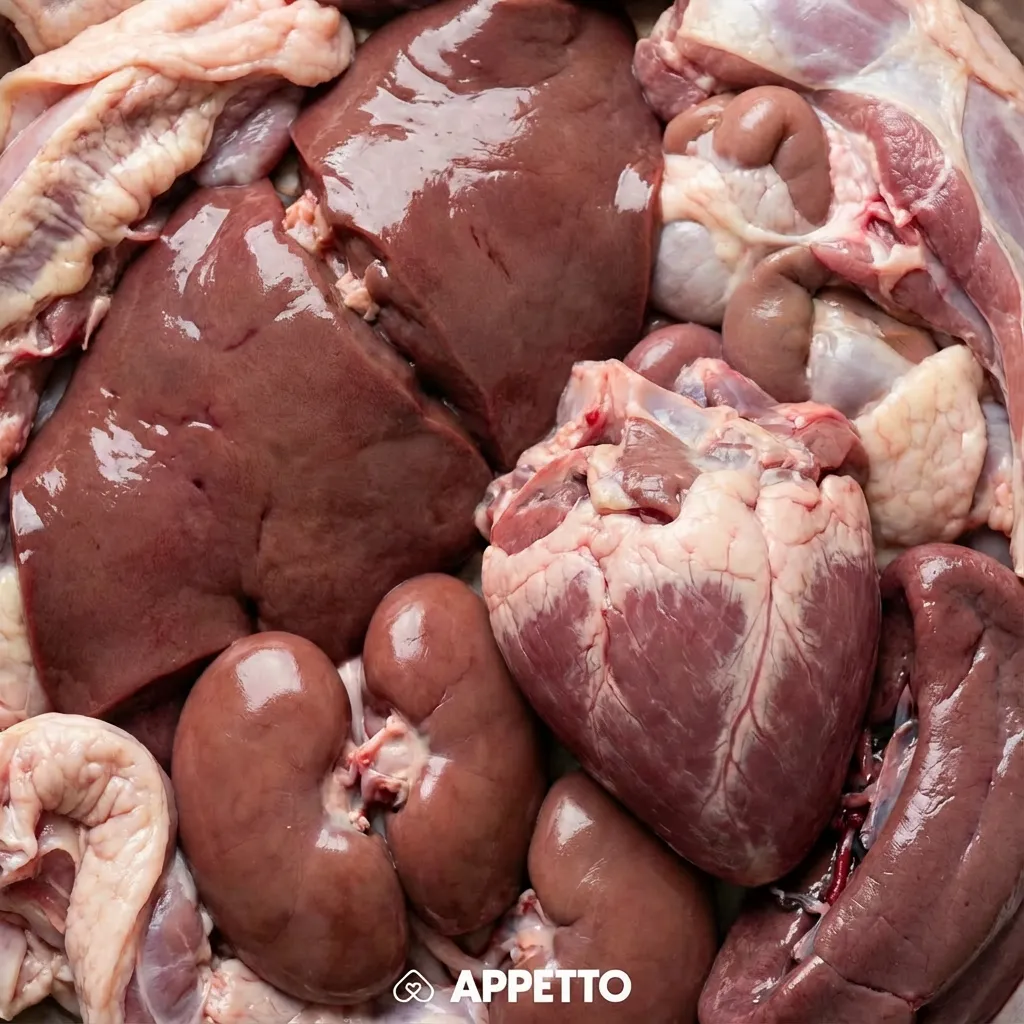
Sheep offal can be given to cats in moderation. They provide high-quality proteins, iron, and taurine in the heart, but liver must be kept to a minimum due to its vitamin A content.
Quick verdict
- For cats: allowed in moderation.
- Key takeaway: heart and kidneys in small portions, liver strictly limited.
Sheep offal and cats: beneficial, but highly concentrated
Cats can benefit from certain offal, but excesses quickly become problematic. Liver, in particular, should never be given in large quantities.
What are the potential benefits?
- Animal proteins.
- Taurine in the heart.
- Iron.
- Vitamins.
Risks to know
- Vitamin A: joint pain in case of chronic excess.
- Fat: digestive issues if the portion is too large.
- Raw: hygiene must be strictly controlled.
How much to feed?
A small portion is enough. Liver must remain a very small fraction of the diet.
Raw or cooked?
Cooking is safer, especially for senior or fragile cats. Raw feeding requires a perfectly controlled supply chain.
How to prepare them?
- Choose fresh sheep offal.
- Cook without salt, garlic, or onion.
- Cut into mini-pieces.
At-risk cats
- Senior cats.
- Kittens.
- Cats with sensitive digestion.
- Cats with liver disease.
My cat ate too much: what should I do?
Monitor for vomiting, diarrhea, loss of appetite, or stiffness. Seek veterinary advice if a large amount of liver was consumed.
How can APPETTO help you?
APPETTO helps you understand offal, compare cat foods with the Pet-Score®, and choose a more balanced diet. Download APPETTO.
FAQ
Is sheep offal good for cats?
Yes, in small quantities.
Is sheep heart beneficial?
Yes, it provides a great source of taurine.
Is sheep liver dangerous?
It can be if consumed in excess.
Should offal be cooked?
It is the safer option.
What signs should I watch for?
Vomiting, diarrhea, or joint stiffness.
Can a senior cat eat it?
Yes, but with caution.
Sheep offal can be a valuable addition for cats, but liver must be strictly limited. To compare feline foods, APPETTO helps you with the Pet-Score®. Download APPETTO.
Credits and warning
Credits: Content developed by the APPETTO team based on referenced sources and our internal food classification methodology.
Warning: This information is general and does not replace veterinary advice.