


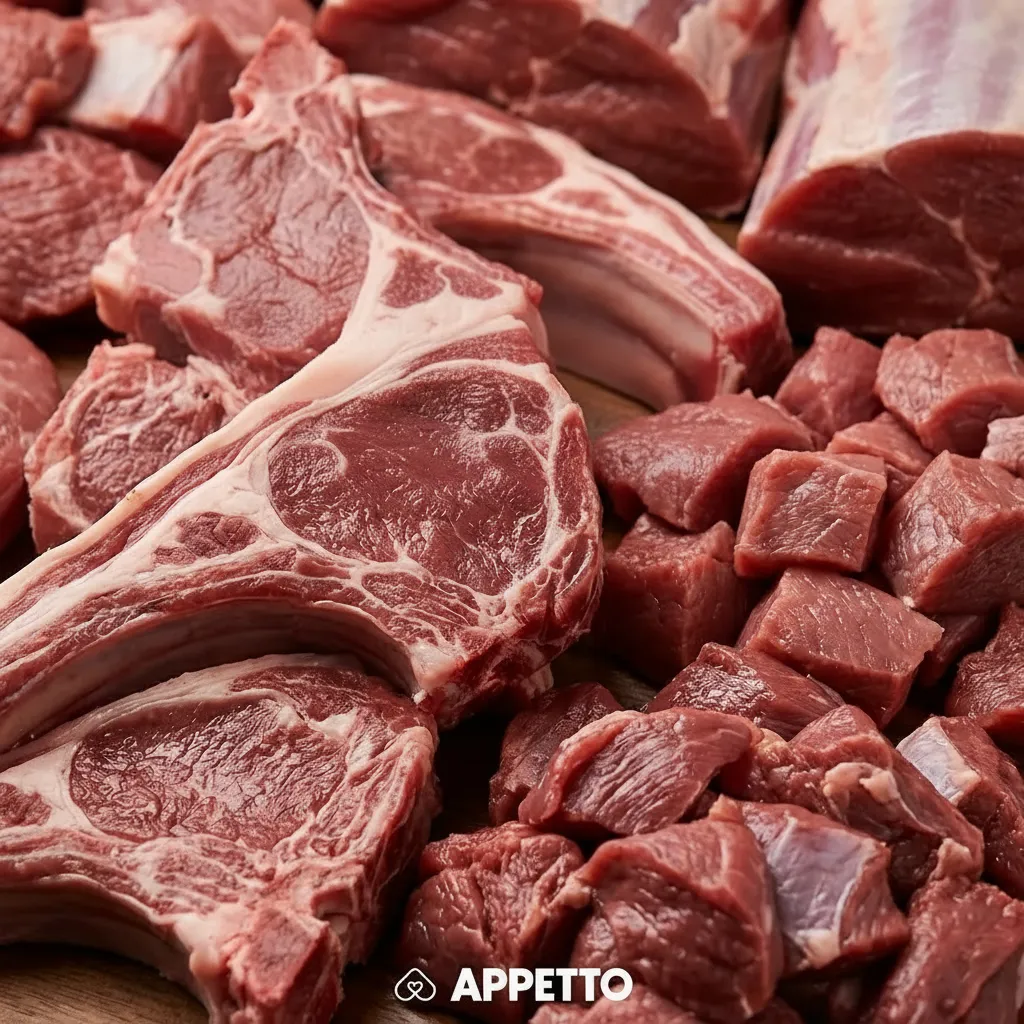
Goat meat can be given to cats in moderation. It is a lean protein that should be served cooked, boneless, and without skin or visible fat to prevent digestive issues.
Quick verdict
- For cats: safe in moderation.
- Key points: cooked lean meat, no skin, no bones.
Goat and cats: rare protein, reasonable portion
Goat meat can add variety to your cat’s protein sources. However, it should remain an occasional treat or part of a properly formulated diet, not an improvised staple.
Potential benefits
- Lean protein.
- Vitamin B12.
- Supports muscle mass.
- Alternative to other common meats.
Risks to consider
- Bones: risk of injury or blockage.
- Skin and fat: potential for pancreatitis.
- Excessive portions: vomiting or diarrhea.
How much to feed?
A small portion is sufficient, depending on the complete daily ration and the cat’s weight.
Raw or cooked?
Cooking is recommended to eliminate parasites and bacteria.
How to prepare it?
- Choose a lean cut.
- Remove skin, bones, and visible fat.
- Cook plain and cut into small pieces.
At-risk cats
- Obese cats.
- Senior cats.
- Cats with sensitive digestion.
- Cats with a history of pancreatitis.
My cat ate too much: what should I do?
Monitor for vomiting, diarrhea, or abdominal pain. Consult a vet if symptoms persist.
How APPETTO can help you
APPETTO helps you compare meats and animal proteins, evaluate cat products using the Pet-Score®, and make better choices. Download APPETTO.
FAQ
Is goat meat good for cats?
Yes, in small, lean portions.
Should it be cooked?
Yes, cooking is preferable.
Can my cat eat the bones?
No.
Do I need to remove the skin?
Yes.
What signs should I watch for?
Vomiting or diarrhea.
Can an obese cat eat it?
Yes, but only in very small, lean portions.
Goat meat can be offered to cats if it is lean, cooked, and boneless. To compare feline foods, APPETTO helps you with the Pet-Score®. Download APPETTO.
Credits and disclaimer
Credits: Content created by the APPETTO team based on referenced sources and our internal food classification methodology.
Disclaimer: This information is general and does not replace veterinary advice.