


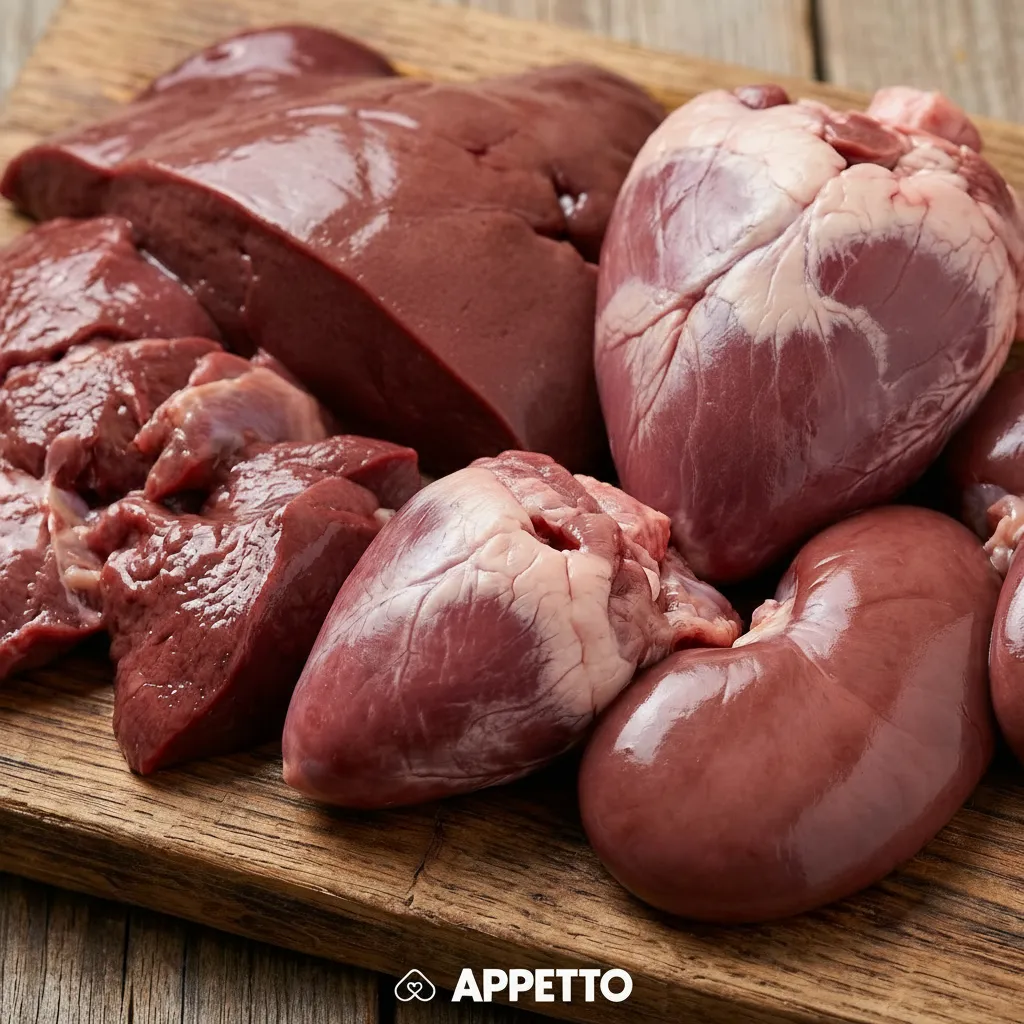
Horse offal can be given to dogs in moderation. It is rich in protein, iron, and vitamins, but its concentration requires small portions, especially when it comes to the liver.
Quick verdict
- For dogs: allowed in moderation.
- To remember: liver and heart in small quantities, gradual introduction.
Horse offal for dogs: highly nutritious, but not for every day
Red offal is nutrient-dense. Heme iron supports oxygen transport, but an excess of retinol, particularly from the liver, can cause issues.
Possible benefits
- Animal protein.
- Heme iron.
- Vitamins, including vitamin A.
- Good nutritional density.
Risks to consider
- Vitamin A: excess is harmful long-term.
- Rapid transition: diarrhea.
- Large pieces: difficulty swallowing.
How much to give?
Offal should remain a small proportion of the diet. Liver must be kept to a minimum.
Raw or cooked?
It can be served raw if sourced safely, but simple cooking is safer to limit health risks.
How to prepare it?
- Choose fresh offal.
- Cut into small pieces.
- Introduce gradually, without seasoning.
At-risk dogs
- Puppies.
- Seniors.
- Dogs with liver disease.
- Dogs with sensitive digestion.
My dog ate too much: what should I do?
Monitor for vomiting, diarrhea, or joint pain if excess liver consumption is repeated. Consult your vet if needed.
How can APPETTO help?
APPETTO helps you better understand offal, compare dog products using the Pet-Score®, and make choices based on nutritional quality. Download APPETTO.
FAQ
Is horse offal good for dogs?
Yes, in small quantities.
Is horse liver allowed?
Yes, but it should be limited.
What signs should I look out for?
Vomiting, diarrhea, or joint pain in case of excess.
Does it need to be cooked?
Cooking is safer if hygiene standards are uncertain.
Can a puppy eat it?
Yes, but introduce it very gradually.
Can offal replace meat?
No, it should remain a minor part of the diet.
Horse offal can enrich a dog’s diet, but only in small quantities. To compare suitable products, APPETTO helps you with the Pet-Score®. Download APPETTO.
Credits and disclaimer
Credits: Content created by the APPETTO team based on referenced sources and our internal food classification methodology.
Disclaimer: This information is general and does not replace veterinary advice.