


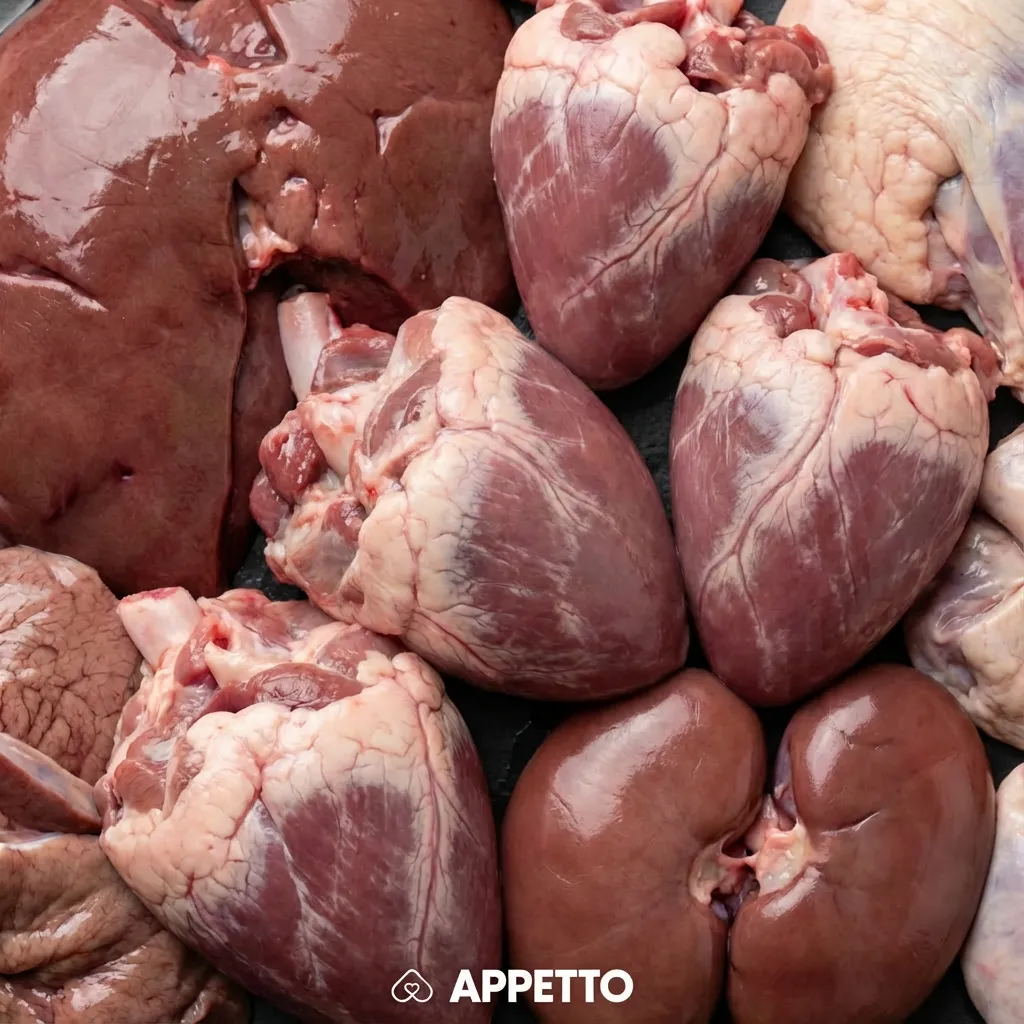
Goat offal can be given to dogs in moderation. It is dense in vitamins, minerals, iron, copper, and zinc, but must be kept to small quantities to avoid diarrhea and vitamin A toxicity.
Quick verdict
- For dogs: allowed in moderation.
- Key takeaway: liver and heart in small portions, introduce gradually.
Goat offal and dogs: highly nutritious, but potent
Red organ meats are rich and palatable. They can complement a diet, but too large a portion can quickly upset digestion.
What are the possible benefits?
- Iron.
- Copper and zinc.
- Vitamins.
- Animal proteins.
Risks to know
- Vitamin A: harmful excess with too much liver.
- Rapid transition: diarrhea.
- Overdose: possible vomiting.
How much to give?
Offal should remain a small part of the diet. Liver must be a minority.
Raw or cooked?
Raw feeding requires a highly controlled supply chain. Simple cooking is safer to limit risks.
How to prepare them?
- Choose fresh offal.
- Cook or serve within a controlled diet.
- Give small portions without seasoning.
At-risk dogs
- Puppies.
- Seniors.
- Dogs with sensitive digestion.
- Dogs with liver disease.
My dog ate too much: what to do?
Monitor for vomiting and diarrhea. Consult a vet if signs persist or if a large portion of liver was consumed.
How APPETTO can help you?
APPETTO helps you understand dense ingredients like offal, compare dog products using the Pet-Score®, and make better-balanced choices. Download APPETTO.
FAQ
Is goat offal good for dogs?
Yes, in small doses.
Is goat liver allowed?
Yes, but strictly limited.
What signs to watch for?
Vomiting or diarrhea.
Should offal be cooked?
It is safer if hygiene is uncertain.
Can a puppy eat it?
With caution and gradually.
Can offal be given daily?
No, unless precisely formulated in the diet.
Goat offal can enrich a dog’s diet, but it must remain very moderate. To compare foods, APPETTO helps you with the Pet-Score®. Download APPETTO.
Credits and disclaimer
Credits: Content developed by the APPETTO team based on referenced sources and the internal food classification methodology.
Disclaimer: This information is general and does not replace veterinary advice.