


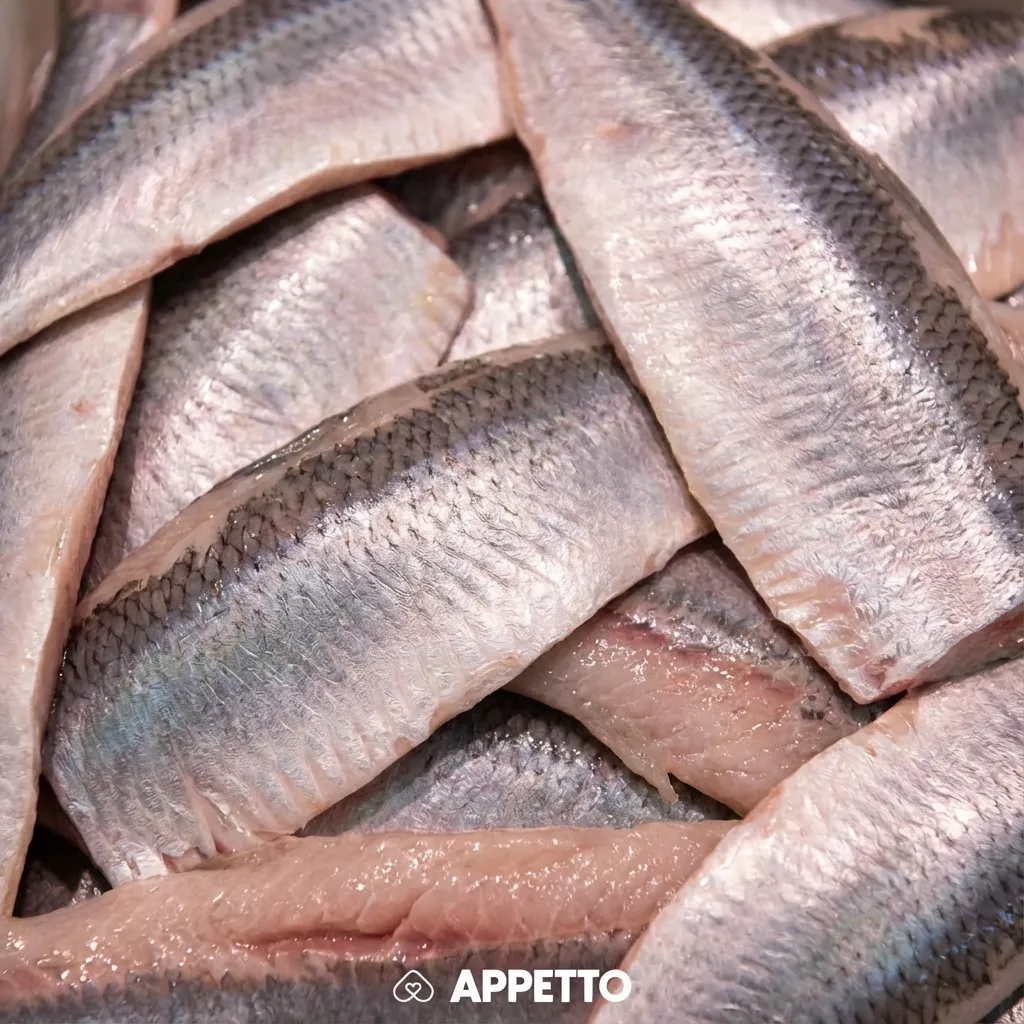
Fish is often highly appreciated by our four-legged friends, but what about natural herring? If you are wondering whether you can share this small fish with your dog, the answer is a resounding yes! Provided you follow a few preparation rules, herring is an excellent source of nutrients for them.
The benefits of natural herring for your dog
Herring is a fatty fish that is particularly healthy for dogs. It is packed with benefits:
- Rich in Omega-3: These essential fatty acids are perfect for enhancing your dog’s coat, soothing sensitive skin, and supporting joint health.
- High-quality proteins: Ideal for maintaining your pet’s muscle mass and giving them all the energy they need.
- Vitamins and minerals: Herring provides vitamin D in particular, which is essential for strong bones.
- Low in heavy metals: Being a small fish at the bottom of the food chain, herring accumulates much less mercury than large fish like tuna.
How to feed herring to your dog?
For the fish to be beneficial, it must absolutely be served natural (plain). This means it should not contain any salt, oil, or spices. Avoid smoked, marinated (like rollmops), or canned herring if they contain added sauces or salt.
The best way to serve it is steamed, boiled, or baked, without any seasoning. If you want to opt for raw herring (as part of a BARF diet, for example), make sure it has been previously frozen to the core for at least a week to destroy any potential parasites.
Precautions and recommended portions
Although very healthy, herring remains a rich food. It should be given in moderate quantities to avoid digestive issues or weight gain. Consider it an occasional treat or a tasty addition to their usual bowl.
Finally, be careful with the bones. Even though herring bones are small, it is best to clean the fish as much as possible before serving it, especially for small dogs, to rule out any risk of esophagus or stomach irritation.