


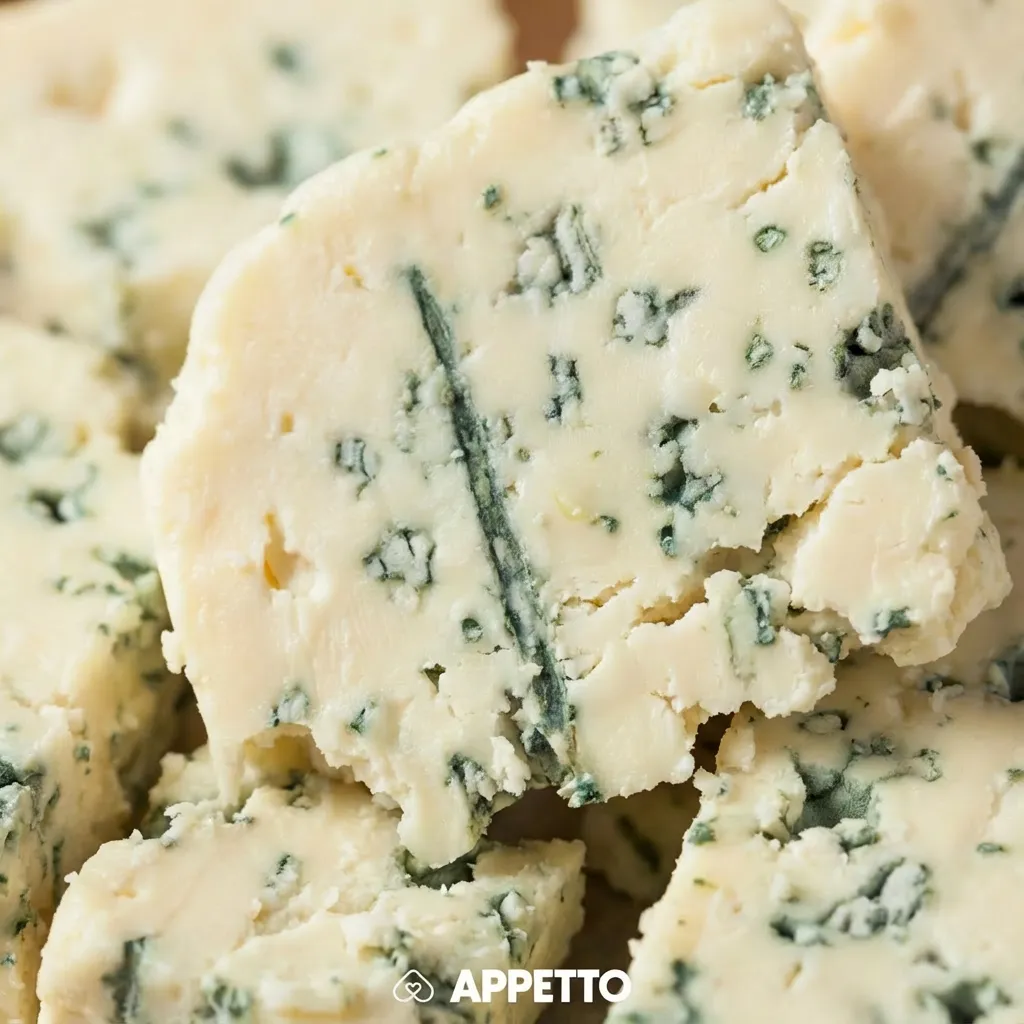
Gorgonzola should be avoided for cats. This blue cheese contains potentially problematic molds, in addition to being fatty, salty, and unnecessary for an obligate carnivore. The data is more cautious than for dogs, but common sense dictates: you don’t test blue cheese on a cat. They already have enough drama in their personality.
Quick verdict
- For cats: avoid.
- Key takeaway: molds, lactose, salt, and fat make gorgonzola unfavorable for cats.
Gorgonzola for cats: allowed, to be limited, or forbidden?
Gorgonzola is not recommended for cats. All cheese should be avoided, including sauces, crumbs, crusts, and gorgonzola-based dishes. Cats often poorly digest dairy products, and moldy cheeses add an extra risk.
Is gorgonzola dangerous or toxic for cats?
Gorgonzola can pose a risk due to molds and possible mycotoxins. In cats, digestive signs like vomiting and diarrhea are the most expected, but tremors or neurological signs must be taken very seriously.
What are the possible benefits?
There are no valid benefits to giving gorgonzola to a cat.
- The proteins present are not needed in the form of blue cheese.
- The risk far outweighs any nutritional interest.
What are the risks to know?
Gorgonzola combines several risks for cats.
- Molds: possible digestive and neurological risk.
- Lactose: diarrhea, vomiting, abdominal discomfort.
- Parts to avoid: all the cheese, gorgonzola sauces, pizzas, pasta, and baked dishes.
How much to give your cat?
No amount is recommended. Gorgonzola should be avoided.
- Adult cat: avoid.
- Sensitive cat: strictly avoid.
- Kitten: totally avoid.
Can my cat eat raw, cooked, or sauced gorgonzola?
No. Raw, cooked, melted, or in a sauce, gorgonzola remains unadvised. Gorgonzola dishes can also contain cream, salt, butter, garlic, onion, or spices, which further aggravates the risk.
How to react properly?
- Remove the cheese or the dish concerned.
- Note the amount swallowed and the approximate time.
- Contact your vet if the amount is notable, if your cat is fragile, or if symptoms appear.
In which cases should it be avoided?
- Kittens.
- Senior cats.
- Cats with sensitive digestion, kidney or heart failure, or overweight cats.
- Cats under treatment or on a veterinary diet.
My cat ate gorgonzola: what should I do?
If your cat swallowed a tiny crumb, watch them closely. If the amount is significant, or if vomiting, diarrhea, tremors, or signs of fatigue appear, quickly contact a veterinarian.
What signs should alert you?
Vomiting, diarrhea, tremors, fatigue, loss of appetite, hypersalivation, disorientation, or unusual behavior should alert you. Tremors require prompt veterinary advice.
What are safer alternatives?
- A treat specially formulated for cats.
- A small piece of plain cooked chicken.
- A complete wet food suited to their profile.
How can APPETTO help you?
APPETTO helps you better understand which foods to avoid for cats, especially those that seem tasty but can pose a real problem. Thanks to the Pet-Score®, you can compare products with more clarity. Download APPETTO.
FAQ
Is gorgonzola toxic to my cat?
It can pose a risk due to molds. It is better to strictly avoid it.
How much gorgonzola can I give my cat?
No amount is recommended. This cheese is to be avoided.
Can my cat eat gorgonzola sauce?
No, it contains blue cheese and often a lot of salt or fat.
Can my cat eat cooked gorgonzola?
No, cooking does not make this cheese suitable for cats.
What signs to watch for if my cat ate gorgonzola?
Watch for vomiting, diarrhea, tremors, fatigue, and unusual behavior.
Can a kitten eat gorgonzola?
No, a kitten must avoid moldy cheeses and stick to a suitable diet.
Gorgonzola is therefore to be avoided for cats: molds, lactose, salt, and fat make it a poor choice. To better compare suitable foods and products, APPETTO helps you with the Pet-Score®. Download APPETTO.
Credits and disclaimer
Credits: Content developed by the APPETTO team based on referenced sources and internal food classification methodology.
Disclaimer: This information is general and does not replace veterinary advice.