


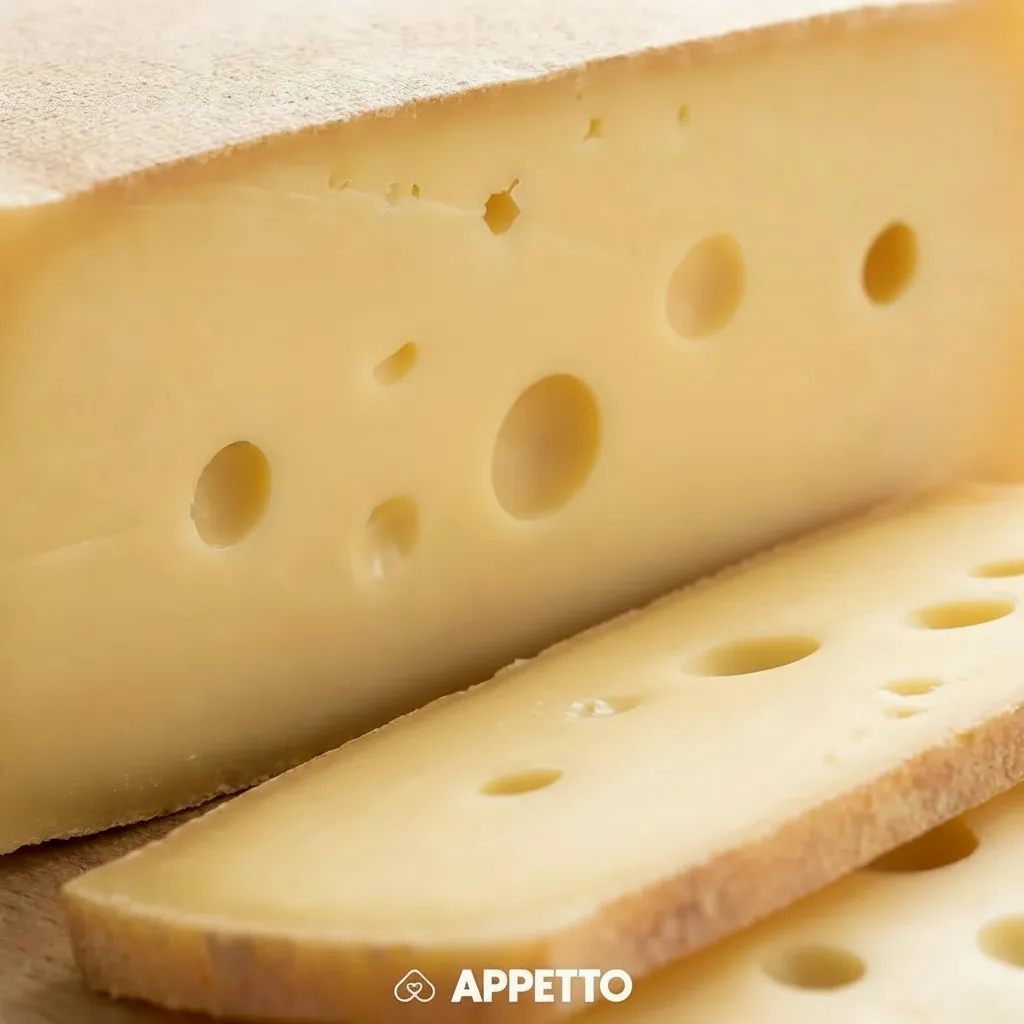
Beaufort cheese can be tolerated by some cats in tiny amounts, but it is clearly not a food suited to their daily diet. Cats are strict carnivores, and even though this aged cheese contains less lactose than other dairy products, it is still salty, fatty, and high in calories. So yes, a tiny crumb isn’t necessarily a tragedy; but no, it shouldn’t become a regular treat.
Quick verdict
- For cats: allowed in strict moderation.
- Key takeaway: only a tiny amount, rarely, and never for a frail cat or one with kidney disease.
Beaufort for cats: allowed, to be limited, or forbidden?
Beaufort is not the most dangerous food in the cheese family, but it should still be strictly limited. Its residual lactose can bother some cats, its salt content is not ideal, and its calories can quickly unbalance the diet of a sterilized or sedentary cat.
Is Beaufort dangerous or toxic for cats?
Beaufort is not toxic in micro-quantities for a healthy adult cat. The real danger comes from excess, salt, fats, and poor digestive tolerance. For a cat suffering from kidney disease or on a veterinary diet, it is best to avoid it completely.
What are the possible benefits?
The benefits remain modest. Even though Beaufort contains protein and calcium, it is not a good way to supplement a cat’s diet.
- Minimal protein intake, but unnecessary if their regular diet is complete.
- Contains calcium, but in a food that is too salty and caloric for regular use.
What are the risks to know?
For cats, caution is even more important because dietary deviations are poorly tolerated.
- Residual lactose: diarrhea or vomiting in sensitive cats.
- Salt: unnecessary burden on the kidneys, especially for frail cats.
- Parts to avoid: rind with visible mold, dry or questionable pieces.
How much can I give my cat?
If you do give them some, the quantity must be minuscule. Beaufort should never become a habit.
- Adult cat: a crumb or a mini-shaving, very occasionally.
- Sensitive cat: avoid, especially if they are prone to frequent diarrhea or vomiting.
- Kitten: avoid, as their diet must remain strictly tailored to their growth.
Can my cat eat raw, melted, or processed Beaufort?
Plain Beaufort in micro-quantities is the only viable option. Melted Beaufort, in gratins, sauces, quiches, or with cold cuts, should be avoided: it’s too fatty, too salty, and sometimes accompanied by ingredients dangerous to cats.
How to prepare it properly?
- Remove the rind, especially if it shows visible mold.
- Cut a tiny crumb, not a real chunk.
- Give it on its own and observe their digestion in the following hours.
When should it be avoided?
- Kittens.
- Senior cats.
- Overweight, diabetic, or kidney-impaired cats, or those prone to digestive issues.
- Cats on medication or a specific veterinary diet.
My cat ate Beaufort: what should I do?
If your cat ate a small crumb, simply monitor their behavior and digestion. If they ate a large amount, have kidney issues, or if symptoms appear, call your vet. Salt and fats are not minor details for a fragile cat.
What signs should alert me?
Watch out for vomiting, diarrhea, loss of appetite, lethargy, unusual thirst, or behavioral changes. In cats, any persistent symptom should always be taken seriously.
What are safer alternatives?
- A complete and suitable feline treat.
- A small piece of plain cooked chicken.
- High-quality wet food suited to their profile.
How can APPETTO help you?
APPETTO helps you avoid making choices “on a whim” in front of the fridge. Thanks to the Pet-Score®, you can compare cat products, understand their limitations, and make clearer choices about what goes in their bowl. Download APPETTO.
FAQ
Is Beaufort toxic to my cat?
No, not in micro-quantities, but it remains discouraged in excess due to the salt, fats, and residual lactose.
How much Beaufort can I give my cat?
A tiny crumb is more than enough, and only very rarely. If your cat is frail, it’s better to avoid it entirely.
Can my cat eat the Beaufort rind?
No, it is better to avoid it, especially if there is visible mold.
Can my cat eat melted Beaufort?
It is not recommended. Melted cheese dishes are often too fatty, too salty, or mixed with other problematic ingredients.
What signs should I look out for if my cat ate Beaufort?
Watch for vomiting, diarrhea, lethargy, unusual thirst, and loss of appetite.
Can a kitten eat Beaufort?
No, it is better to avoid it. A kitten needs a diet suited to their growth, not salty cheese.
A micro-crumb of Beaufort isn’t an emergency, but it should still be strictly limited for cats. To better understand foods and compare products with a clear benchmark, APPETTO is here to guide you with the Pet-Score®. Download APPETTO.
Credits and disclaimer
Credits: Content created by the APPETTO team based on referenced sources and our internal food scoring methodology.
Disclaimer: This information is general and does not replace veterinary advice.