


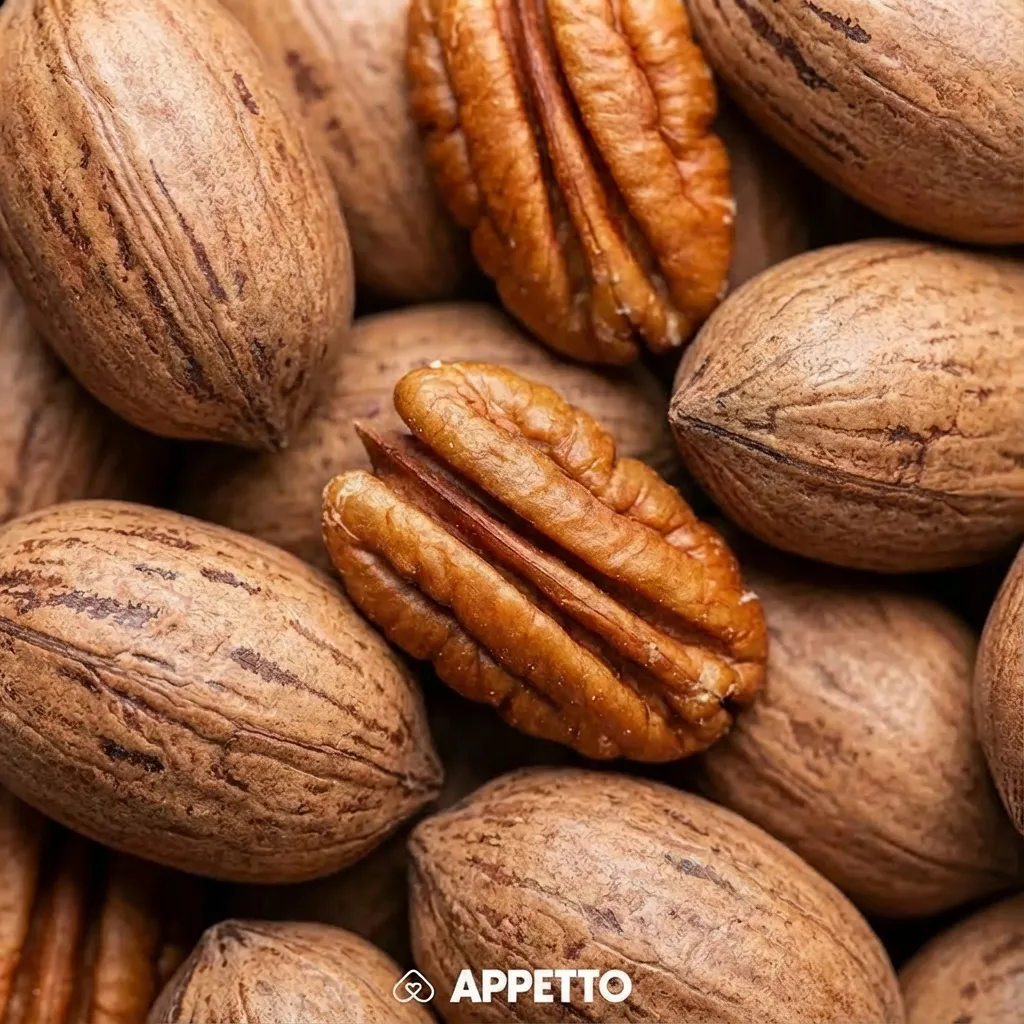
When considering sharing your snacks with your pet, you might wonder if pecans are safe. According to available data, pecans are an ingredient to avoid for dogs.
Nutritional Value
Pecans do not offer any health benefits for your pet, and their nutritional value for dogs is considered to be zero. The data is completely unfavorable, regardless of whether the nuts are raw, cooked, or processed.
Risks and Scientific Explanations
Feeding pecans to dogs carries several significant risks:
- Nutritional Risk: Pecans are very high in fat (lipids). An excess of fat can cause inflammation of the pancreas, which may lead to pancreatitis.
- Chemical Toxicity: There is a risk associated with mold. Altered or moldy nuts can develop mycotoxins, which are linked to liver damage. The possible presence of juglone is also noted.
- Mechanical Risk: The shell of the pecan is a strict hazard and can lead to a mechanical obstruction in the digestive tract.
Because of these dangers, the shell and any altered or moldy nuts are the specific parts that are explicitly bad and must be completely avoided.
Vulnerable Dogs
While pecans are to be avoided for all dogs, those that are already prone to pancreatitis are at a very high risk if they consume this food.
Symptoms to Watch For
If your dog happens to eat pecans, you must be on the lookout for signs of poisoning. The primary symptoms to monitor include vomiting and diarrhea.
What to Do in Case of Ingestion
Official recommendations suggest exercising caution with nuts in general, as many should be limited or completely avoided. If your dog has ingested pecans, carefully monitor them for vomiting or diarrhea. Should any of these symptoms appear, persist, or seem concerning, it is important to consult a veterinarian.
APPETTO
To help you better understand your dog’s diet and to check information on various foods, you can download the APPETTO app at https://www.download.appetto.co.
This article is provided for informational purposes only and does not replace the advice or diagnosis of a veterinarian. A veterinarian should always be consulted in the event of concerning or persistent symptoms.