


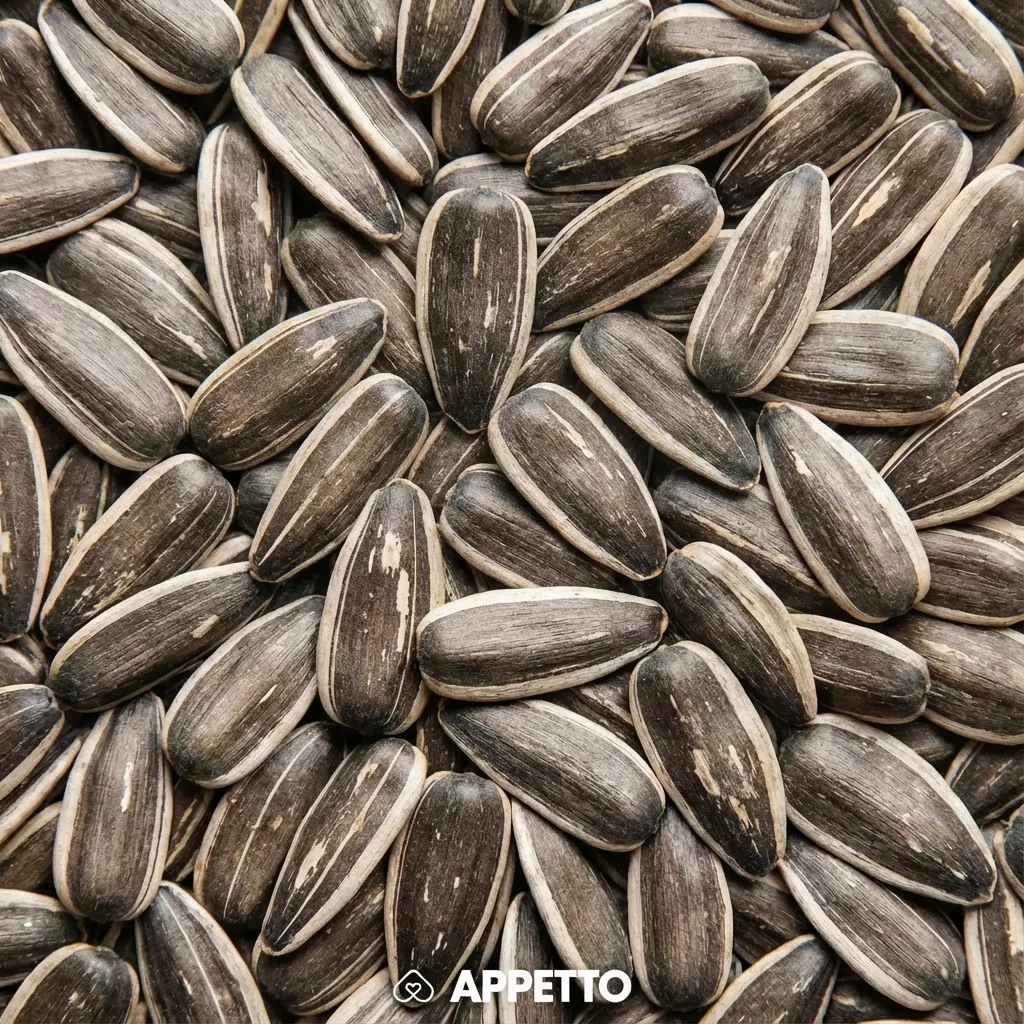
If you are wondering whether you can share sunflower seeds with your dog, they are authorized in moderation.
Benefits and nutritional value
Although their overall nutritional value is low, sunflower seeds can serve as an occasional treat. The sunflower (Helianthus annuus) contains vitamin E, which provides antioxidant cellular protection, as well as fatty acids.
Precautions and risks
To safely feed them to your dog, the seeds must be shelled and crushed, and served raw. The hard shell is a specific part that is bad for them and should be avoided.
Feeding sunflower seeds involves certain risks. There is a mechanical risk if the seeds are given whole or with the hard shell, which can lead to choking or a possible obstruction. Additionally, there is a nutritional risk due to their caloric density and fats, which can lead to weight gain if abused. Inactive dogs are especially vulnerable to becoming overweight. Diarrhea may also occur in case of excess.
It is recommended to give only small amounts as a rare, occasional treat. It is also advised to monitor your dog’s stools after introducing sunflower seeds to their diet.
Symptoms and what to do
If your dog eats an inappropriate or excessive amount, the symptoms to watch for include vomiting and diarrhea.
If these symptoms appear, monitor your dog and contact a veterinarian if they seem concerning.
FAQ
Can dogs eat whole sunflower seeds with the shell?
No, the hard shell should be avoided, and whole seeds present a mechanical risk of choking or possible obstruction. They must always be shelled and crushed.
How often can I feed sunflower seeds to my dog?
They should be given in small quantities as a rare, occasional treat.
APPETTO
To help you better understand the diets of dogs and cats, the APPETTO app allows you to consult information on a variety of foods. You can download it at https://www.download.appetto.co.
This article is provided for informational purposes only and does not replace the advice or diagnosis of a veterinarian. A veterinarian should be consulted if concerning or persistent symptoms occur.