


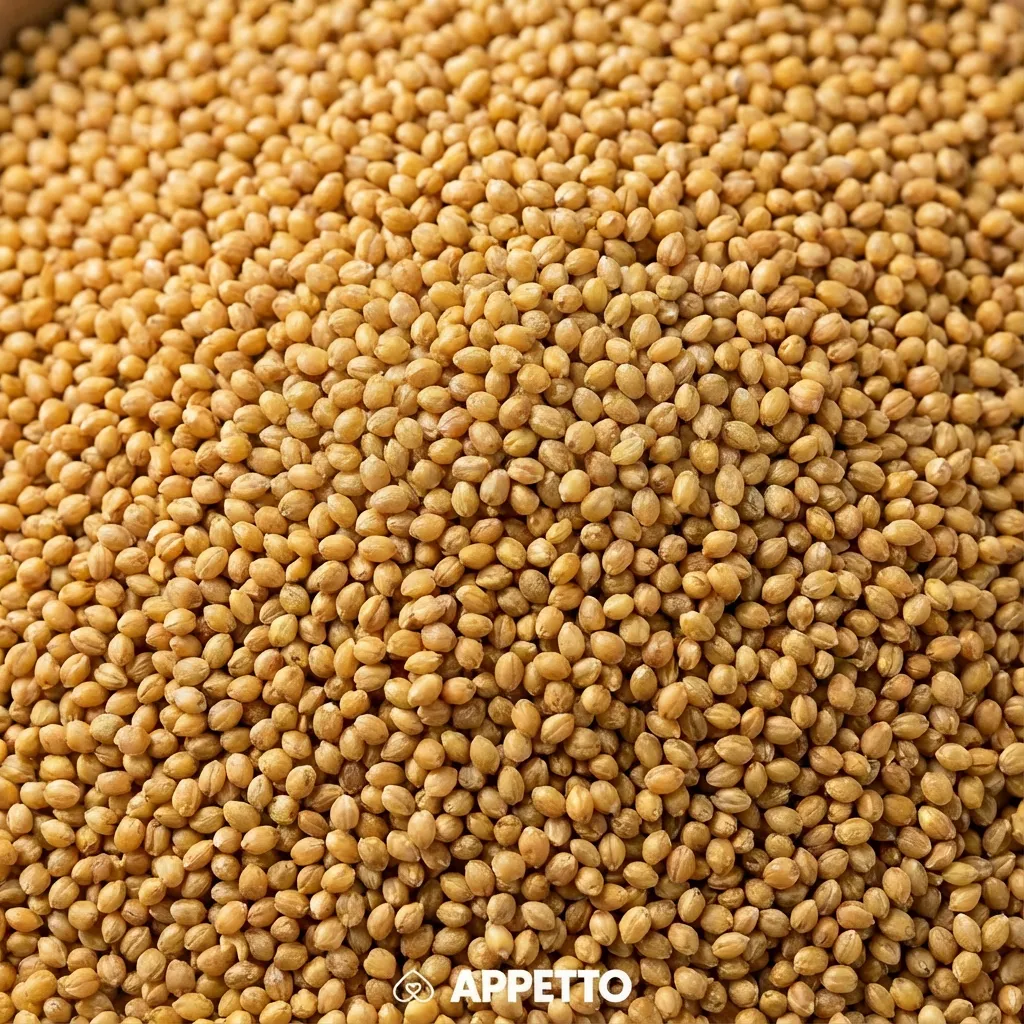
Millet (Panicum miliaceum s.l.) is a common cereal, but can dogs eat it? Yes, millet is allowed in moderation for dogs.
Benefits and nutritional value
Millet provides a source of carbohydrates and fiber. However, its overall nutritional value for dogs is considered low. It has the advantage of being a gluten-free cereal that provides B vitamins and minerals. Because of this, small amounts can be used in gluten-free diets.
The absence of gliadin explains why it contains no gluten, which can lead to better tolerance in sensitive dogs.
How to prepare millet for your dog
It is recommended to offer millet cooked, as the tender grains are better tolerated by the animal.
Risks and precautions
While allowed, an excess of millet can cause digestive issues. The nutritional risk is primarily associated with starch, which can lead to caloric overload. Additionally, eating too much presents a digestive risk that may result in soft stools.
Caution is advised for dogs that are sensitive to starches.
Symptoms to watch for
If a dog consumes too much millet, digestive symptoms may occur, including:
- Vomiting
- Diarrhea
- Flatulence
What to do if symptoms appear
If your dog shows these signs after eating millet, it is advisable to monitor their condition. Contact a veterinarian if the symptoms persist, worsen, or seem concerning.
About APPETTO
To help you better understand your dog’s diet and consult information about various foods, you can use the APPETTO application.
This article is provided for informational purposes only and does not replace the advice or diagnosis of a veterinarian. A professional should be consulted in the event of concerning or persistent symptoms.