


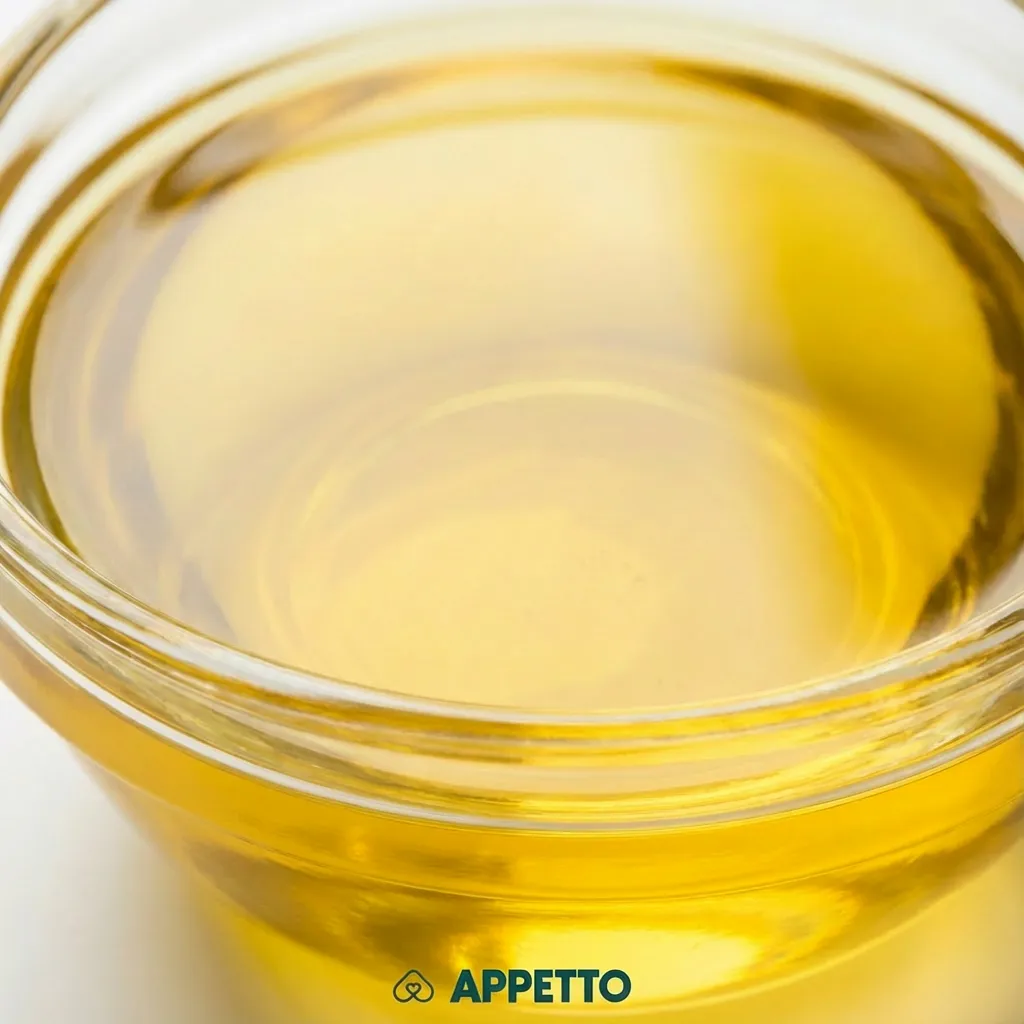
Is safflower oil safe for dogs? Yes, safflower oil is allowed in moderation.
Benefits and Nutritional Value
While its overall nutritional value is considered low, safflower oil provides linoleic acid (an omega-6 fatty acid) which can support the skin and coat. Scientifically, linoleic acid is a component of skin ceramides that help maintain the skin barrier. Additionally, GLA (gamma-linolenic acid) offers anti-inflammatory modulation via eicosanoids. It is an ingredient recognized for use in dog food.
Safe Preparation and Parts to Avoid
You should only use fresh, cold-pressed safflower oil. It must be added raw and cold to the diet; do not heat it. It is important to introduce it gradually in small quantities. Rancid or oxidized oil must be avoided entirely, as it presents a chemical toxicity risk and is irritating to the dog.
Potential Risks and Vulnerable Dogs
Feeding safflower oil involves some potential risks:
- Nutritional risk: An excess of omega-6 can lead to an imbalance and may promote inflammation if not compensated.
- Digestive risk: Introducing the oil too quickly can lead to soft stools and diarrhea.
- Weight gain: Providing too much can contribute to an increase in weight.
Dogs that are overweight or have pancreatitis are particularly vulnerable; they must have their lipid intake limited.
Symptoms to Watch For
If the dog consumes inappropriate amounts or rancid oil, symptoms may appear, such as:
- Vomiting
- Diarrhea
- Decreased appetite
What to Do if Symptoms Occur
If these symptoms appear, persist, or seem concerning, it is advised to consult a veterinarian.
APPETTO
To learn more about your dog’s diet and consult information about various foods, you can download the APPETTO app at https://www.download.appetto.co.
This article is provided for informational purposes only. It does not replace the advice or diagnosis of a veterinarian. A veterinarian must be consulted in case of concerning or persistent symptoms.