


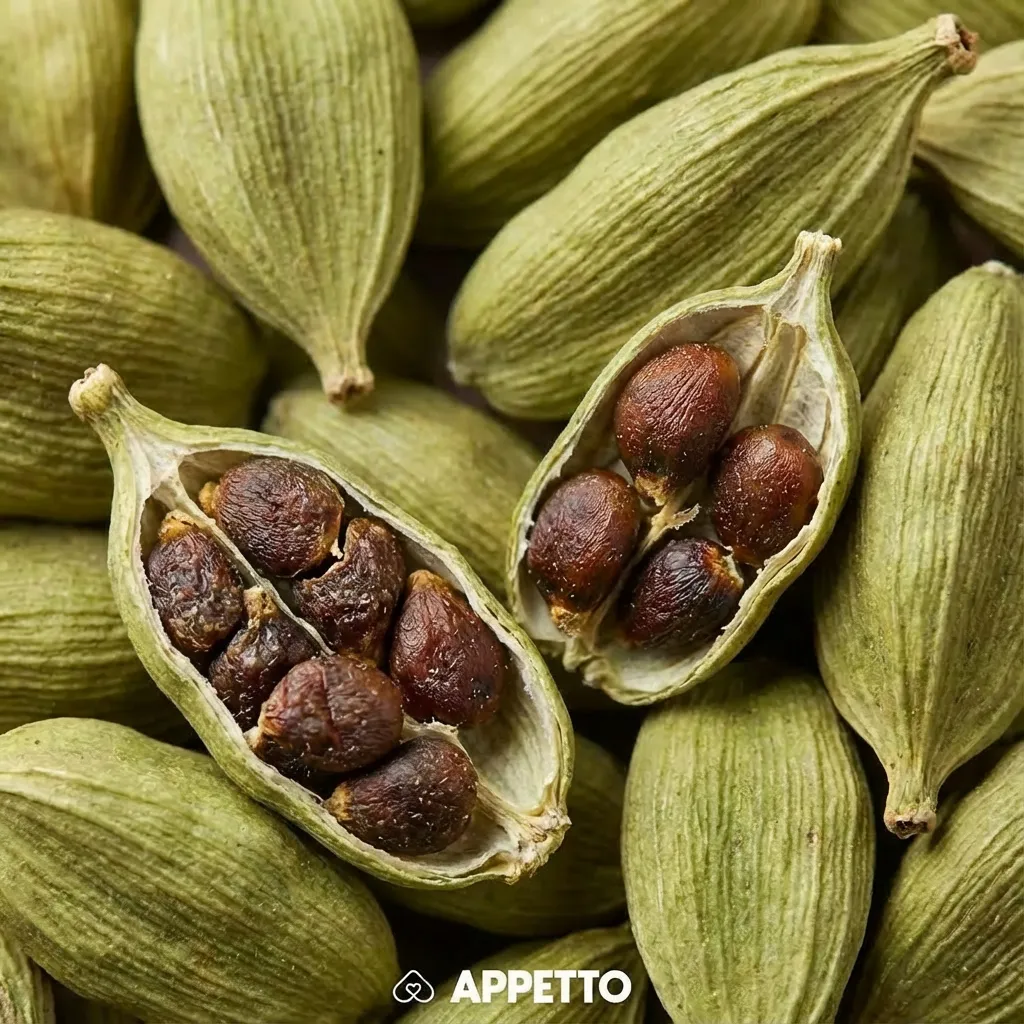
Are you wondering if your cat can eat cardamom (seeds)? This spice is allowed in moderation. When given appropriately, it can be tolerated, but certain precautions must be taken.
Potential Benefits and Nutritional Value
The nutritional value of cardamom is low. However, in very small quantities, it can aid digestion and reduce bloating in cats.
Safe Preparation and Toxic Parts
You can give cardamom as a dry spice in a pinch. It is important to use only finely ground seeds. Essential oils, regardless of their form, must be entirely avoided. Scientific explanations indicate that 1,8-cineole and terpenoids found in the spice can stimulate mucous membranes, which may cause nausea if given in high doses.
Risks and Symptoms
While safe in moderation, a concentrated spice like cardamom carries a nutritional risk and can lead to digestive irritation and issues if given in excess. Furthermore, concentrated essential oils present a chemical toxicity that involves a hepatic risk for cats.
If a cat consumes too much or ingests the essential oil form, the following symptoms may appear:
- Hypersalivation
- Vomiting
- Diarrhea
Caution is particularly advised for cats with a fragile liver. If your cat ingests a large amount of cardamom or if any of these symptoms appear and cause concern, you should contact a veterinarian.
Frequently Asked Questions
Can cats with liver issues eat cardamom?
Caution is recommended for cats with a fragile liver, particularly due to the risks associated with concentrated forms.
About the APPETTO App
The APPETTO app helps users better understand the diets of cats and dogs and allows you to consult information on various foods. You can find it here: APPETTO.
This article is provided for informational purposes only and does not replace the advice or diagnosis of a veterinarian. A veterinarian should be consulted in the event of persistent or concerning symptoms.