


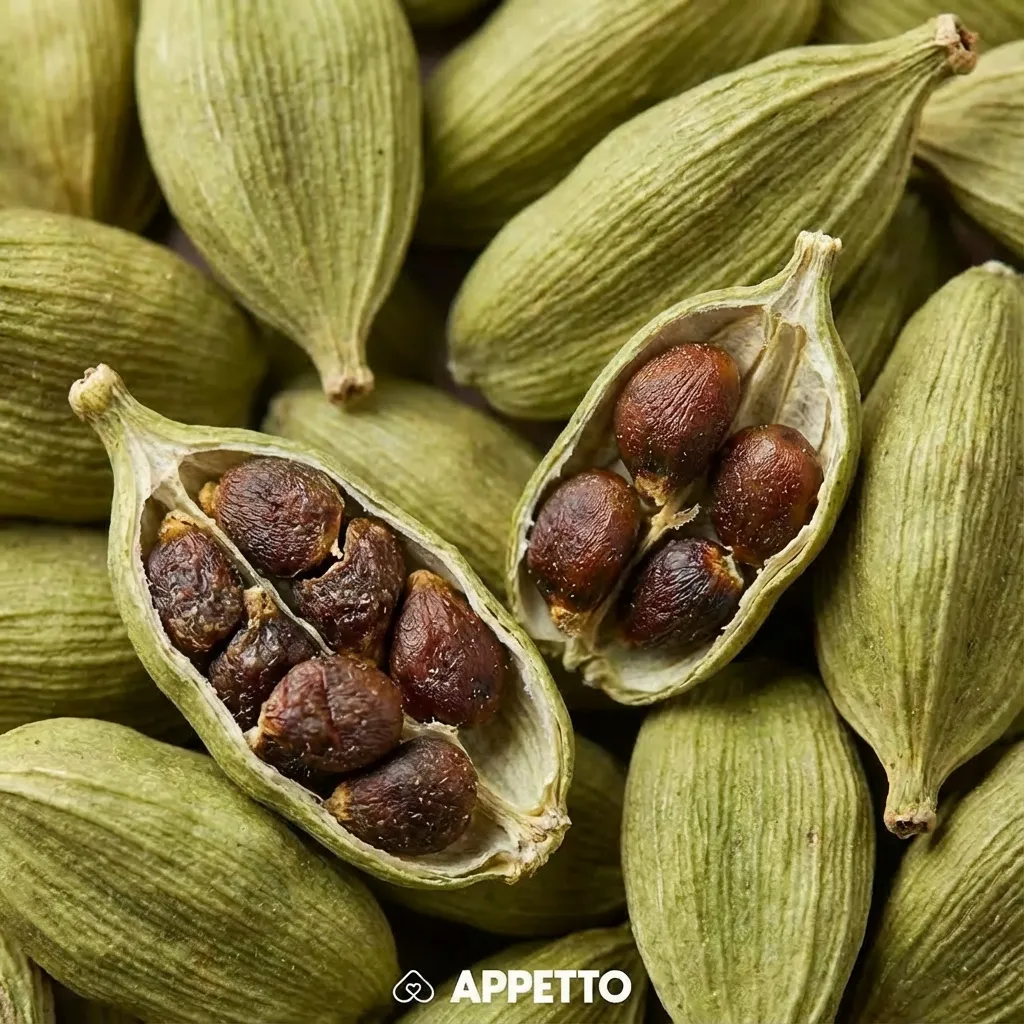
Are you wondering if you can share a bit of cardamom with your dog? This spice, derived from seeds, is allowed in moderation.
Potential benefits and nutritional value
Cardamom has an overall low nutritional value, but it can help with sensitive digestion when used on a very occasional basis. Recommendations suggest that it can be given in very small amounts to support digestion, provided you monitor for any intolerances.
Scientifically, it contains polyphenols that offer a moderate antioxidant activity, as well as terpenes (such as cineole) which provide a slight carminative effect.
Preparation and parts to avoid
Whether raw or cooked does not matter, as long as it is served as a very small pinch of fine powder. Finely ground seeds are the appropriate and safe form.
Concentrated essential oils must be avoided. Additionally, whole seeds present a mechanical risk as they need to be finely chewed, so it is best to avoid giving them whole.
Risks and symptoms of excess
If given in excess, cardamom can cause gastrointestinal issues. Its high aromatic density poses a nutritional risk that may lead to nausea in the event of an overdose.
The main symptoms of excessive intake to watch out for include vomiting and diarrhea. Puppies and senior dogs require increased caution regarding these risks.
What to do in case of ingestion
If your dog consumes an excessive amount of cardamom or shows signs of intolerance, monitor them for symptoms like vomiting and diarrhea. Contact a veterinarian if these symptoms appear, persist, or seem concerning.
Discover APPETTO
To help you better understand your dog’s diet and access information on various foods, you can use the APPETTO application. It is available for download here: https://www.download.appetto.co.
This article is provided for informational purposes only and does not replace the advice or diagnosis of a veterinarian. A veterinarian should be consulted in the event of concerning or persistent symptoms.