


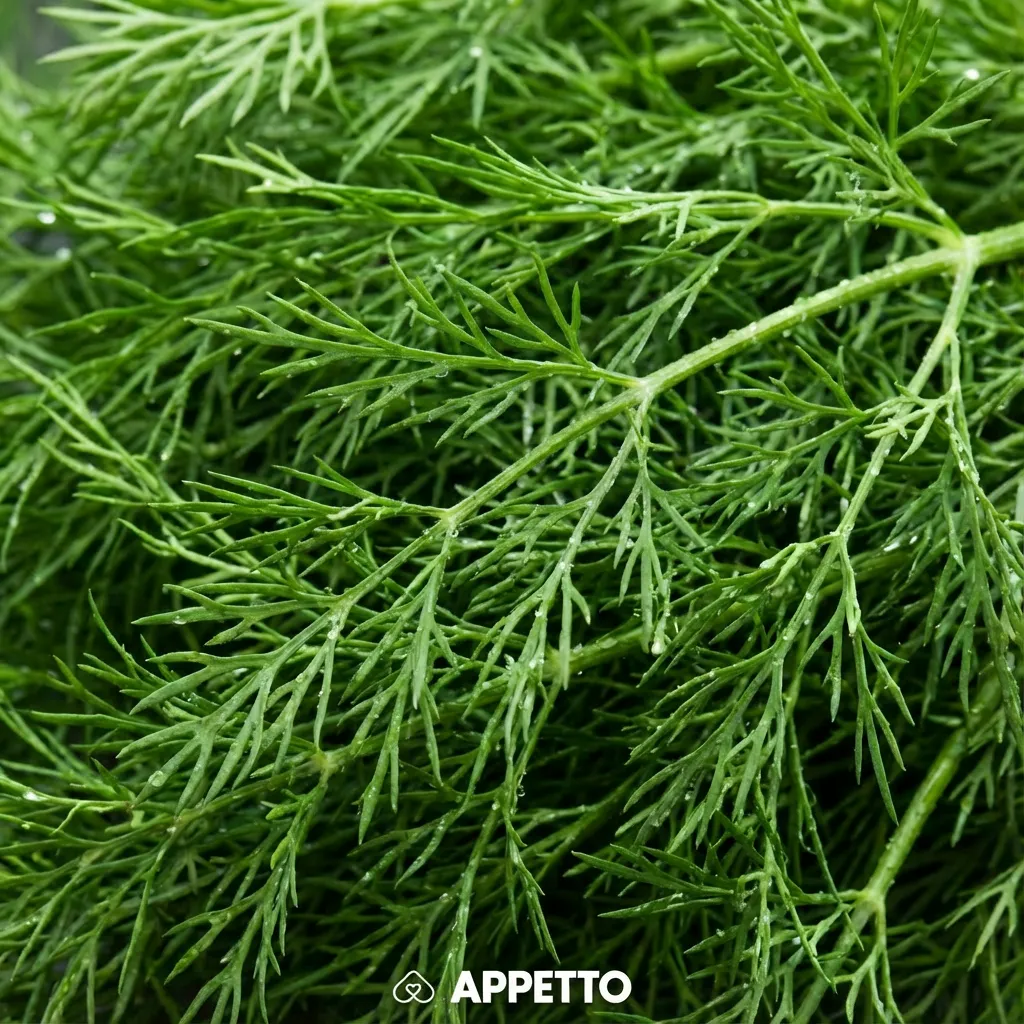
Dogs can eat dill, but this aromatic herb must be given in moderation. When used occasionally and in very small amounts, dill is generally well-tolerated and non-toxic, although specific precautions should be taken.
Benefits of Dill for Dogs
Even though its nutritional value is low, dill offers interesting benefits for your dog’s digestive system. It helps aid digestion, specifically by addressing nausea and improving breath. It also provides a light appetite support.
These benefits are explained by the presence of monoterpenes, such as carvone, which have a carminative effect that helps reduce intestinal gas. Furthermore, dill contains flavonoids, which provide a light antioxidant effect for moderate cellular protection.
How to Prepare and Feed Dill to Your Dog
When offering dill to your dog, you should only use the tender leaves, which must be finely chopped. Raw dill is perfectly fine to give, as long as the portions remain tiny and occasional.
Risks and Vulnerable Dogs
Dill is highly discouraged for pregnant female dogs. The aromatic compounds found in the herb pose a risk of chemical toxicity that can cause uterine contractions. Therefore, pregnant dogs must avoid the plant entirely, especially the seeds and essential oils.
Symptoms to Watch For
An excess of this herb poses a nutritional risk. If a dog consumes too much dill, gastrointestinal issues may occur. The symptoms to monitor include:
- Vomiting
- Diarrhea
- Agitation (if too much is given)
If you observe these symptoms, you should contact a veterinarian, as professional advice is always preferred.
Discover the APPETTO App
If you want to learn more about what to feed your pet, the APPETTO app helps users better understand the diet of dogs and cats and consult information on various foods. You can download it here: APPETTO.
This article is provided for informational purposes only and does not replace the advice or diagnosis of a veterinarian. A veterinarian should be consulted if concerning or persistent symptoms occur.