


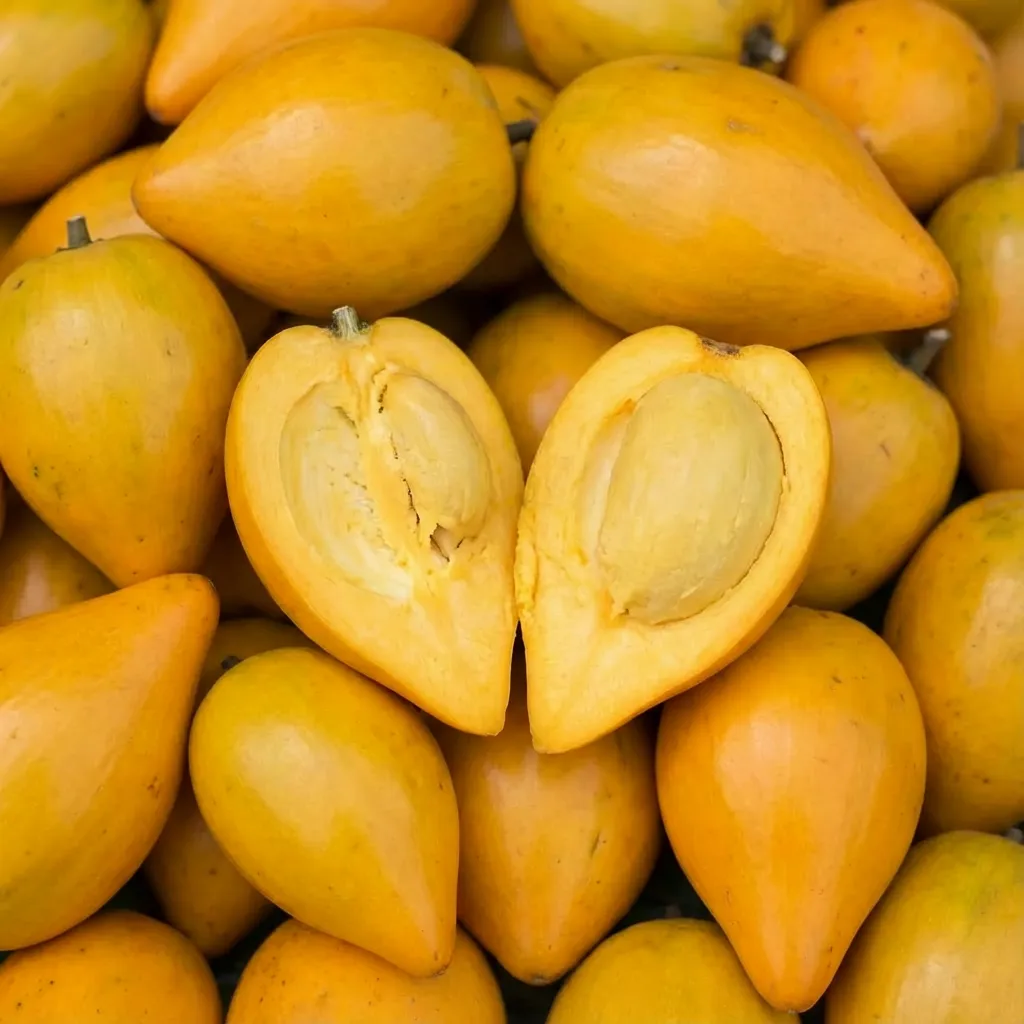
Canistel may be offered to dogs in moderation, but only as fully ripe flesh. It contains carotenoids, niacin, and vitamin C, while the skin and large seeds should be removed to prevent digestive upset, choking, or an intestinal blockage.
Quick verdict
- For dogs: allowed in small amounts.
- Key point: offer ripe flesh only; never give the seeds or skin.
Is canistel safe for dogs?
Canistel is not reported as toxic to dogs when only the fully ripe flesh is offered in small portions. It should remain an occasional treat because it contains sugar and may upset digestion when too much is eaten.
Is canistel dangerous or toxic to dogs?
The ripe flesh is not considered toxic. The main concern is the large seed, which may cause choking or an intestinal blockage. The skin should also be removed.
What are the possible benefits?
Canistel may provide a small amount of micronutrients, but it should not become a regular part of the diet.
- Carotenoids, which are a source of vitamin A activity.
- Small amounts of niacin and vitamin C.
What risks should you know about?
Canistel has a dense texture, so it should be cut into small pieces and all seeds should be removed.
- Vomiting, diarrhea, or abdominal discomfort may occur after excessive consumption.
- The seeds may cause choking or an intestinal blockage.
- Parts to avoid: seeds and skin.
How much canistel can a dog eat?
Offer only a small portion of fully ripe flesh, especially the first time.
- Small dog: one tiny bite.
- Medium dog: one small piece.
- Large dog: one or two small pieces, occasionally.
Can dogs eat canistel raw, cooked, or processed?
Raw, fully ripe, plain flesh is the best option. Sweetened purées, desserts, jam, smoothies, and products containing milk, sugar, or chocolate should be avoided.
How should it be prepared?
- Choose a fully ripe fruit.
- Remove the skin and every seed.
- Cut the flesh into small pieces and offer a small portion.
When should it be avoided?
- Puppies.
- Small dogs at greater risk of choking.
- Dogs with diabetes, excess weight, digestive disease, or a history of obstruction.
- Dogs receiving medication or eating a veterinary diet.
My dog ate canistel: what should I do?
If your dog ate a small amount of ripe flesh, monitor them. If your dog swallowed a seed, skin, or a large amount, contact a veterinarian, especially if vomiting, pain, or an inability to pass stool develops.
What signs should you watch for?
Watch for vomiting, diarrhea, abdominal discomfort, coughing, retching, lethargy, or signs of an intestinal blockage.
What are safer alternatives?
- A small piece of banana.
- A few blueberries.
- A small piece of seedless apple.
How can APPETTO help?
APPETTO helps you understand which parts of foods are safe, compare dog products, and make clearer choices with Pet-Score®. Download APPETTO.
FAQ
Is canistel toxic to dogs?
The ripe flesh is not considered toxic, but the seeds and skin should be avoided.
How much canistel can I give my dog?
Only a small amount of fully ripe flesh, and only occasionally.
Can dogs eat raw canistel?
Yes, but only the fully ripe flesh with the skin and seeds removed.
Can dogs eat canistel seeds?
No. The seeds may cause choking or an intestinal blockage.
What symptoms should I watch for if my dog ate too much?
Watch for vomiting, diarrhea, abdominal pain, or signs of an obstruction.
Can puppies eat canistel?
It is best to avoid it for puppies.
Canistel may be offered to dogs in small amounts, but only as fully ripe flesh with the seeds and skin removed. To compare foods and products suited to your dog, Download APPETTO.
Credits and disclaimer
Credits: Content developed by the APPETTO team using referenced sources and its internal food classification methodology.
Disclaimer: This information is general and does not replace veterinary advice.