


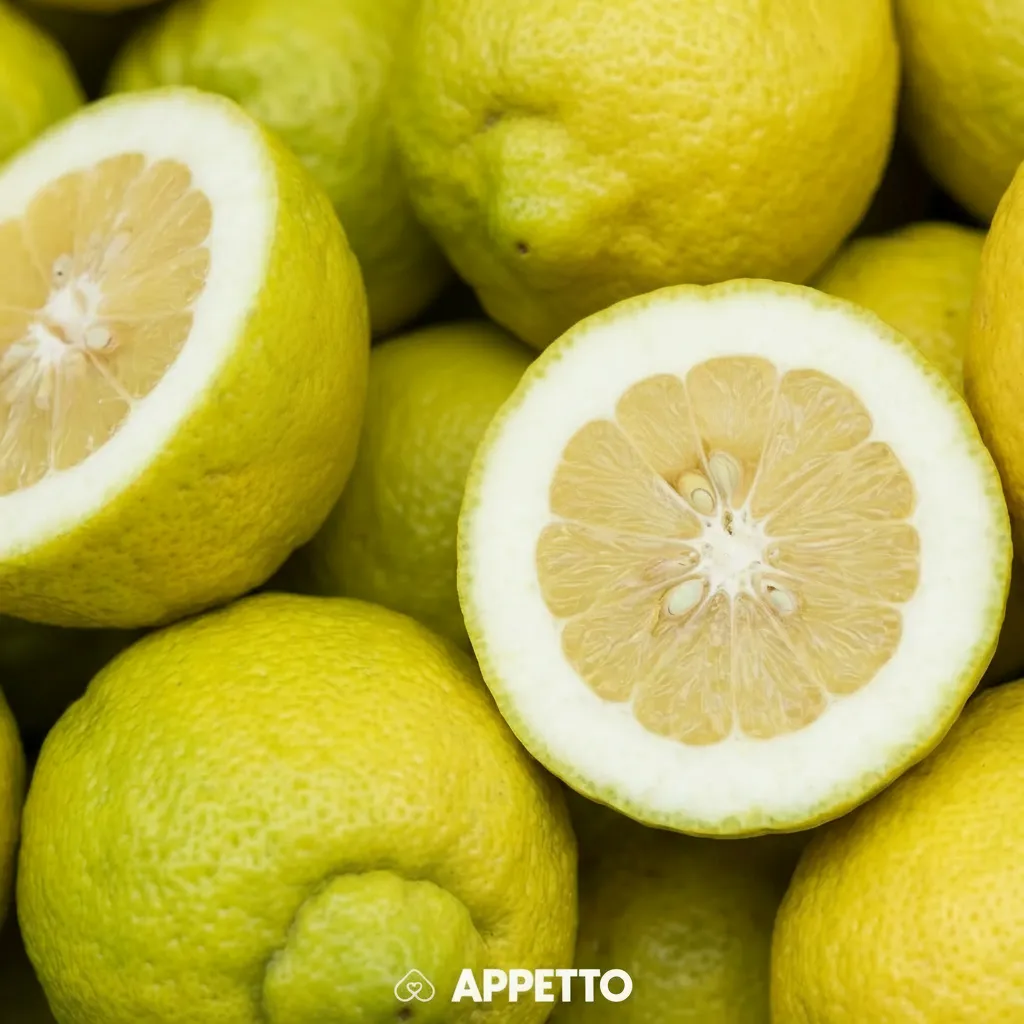
Dogs may tolerate a trace of citron flesh, but this fruit is not recommended. Its flesh is highly acidic, while the peel, zest, seeds, leaves, and stems contain irritating compounds and should be kept out of reach.
Quick verdict
- For dogs: a trace of flesh may be tolerated, but avoidance is recommended.
- Key point: never give the peel, zest, seeds, leaves, or stems.
Citron is not a useful dog treat
Citron should not be included in a dog’s diet. The flesh may be less concerning than the peel or seeds, but its acidity makes it poorly tolerated by many dogs.
Where the danger comes from
The main concerns are essential oils, furocoumarins, terpenes, and psoralens found in citrus peel and other plant parts. Significant exposure may cause digestive upset, lethargy, or tremors.
Very limited benefits
Citron provides some water and vitamin C, but dogs do not need citrus fruit as a vitamin C source.
- Minimal hydration from a tiny amount of flesh.
- A small amount of vitamin C with little practical benefit.
Main risks to know
Citron is highly acidic and offers little nutritional value to dogs.
- Vomiting or diarrhea caused by acidity.
- Digestive or neurological irritation after significant exposure to essential oils or psoralens.
- Parts to avoid: peel, zest, white pith, seeds, leaves, and stems.
How much can a dog eat?
No regular amount is recommended. If your dog tastes a tiny trace of flesh, monitor their digestion, but do not use citron as a treat.
- Small dog: avoid.
- Medium dog: at most a trace of flesh, rarely.
- Large dog: only a very small accidental amount of flesh.
Raw, candied, or processed citron
Raw citron should be avoided apart from an accidental trace of flesh. Candied citron, syrups, desserts, essential oils, marmalade, and sweetened preparations are unsuitable.
Preparation precautions
- Remove all peel, zest, seeds, and white pith.
- Leave only a trace of flesh.
- Monitor digestion and do not offer it again.
When citron should be avoided completely
- Puppies.
- Small dogs.
- Dogs with gastritis, reflux, digestive disease, liver disease, or sensitive stomachs.
- Dogs receiving medication or eating a veterinary diet.
My dog ate citron
If your dog licked a small amount of flesh, monitor them. If they ate peel, zest, seeds, leaves, essential oil, or a large amount, contact a veterinarian, especially if vomiting, lethargy, or tremors develop.
Warning signs to watch for
Watch for vomiting, diarrhea, excessive drooling, lethargy, tremors, abdominal pain, or unusual behavior.
Safer alternatives
- A few plain blueberries.
- A small piece of seedless apple.
- A small piece of seedless watermelon.
How APPETTO can help
APPETTO helps you understand foods that appear harmless but have important limitations, compare dog products, and make informed choices with Pet-Score®. Download APPETTO.
FAQ
Is citron toxic to dogs?
A trace of flesh is less concerning, but the peel, seeds, leaves, and stems may be irritating or toxic.
How much citron can I give my dog?
No regular amount is recommended.
Can dogs eat citron peel?
No. The peel contains essential oils and irritating compounds.
Can dogs eat candied citron?
No. Candied citron is too sweet and unsuitable.
What symptoms should I watch for after ingestion?
Watch for vomiting, diarrhea, lethargy, excessive drooling, or tremors.
Can puppies eat citron?
No. It is best to avoid it for puppies.
Citron offers no meaningful benefit to dogs. A trace of flesh is less concerning, but the peel, zest, seeds, and leaves should be avoided. To compare foods and suitable products, download APPETTO.
Credits and disclaimer
Credits: Content developed by the APPETTO team using referenced sources and its internal food classification methodology.
Disclaimer: This information is general and does not replace veterinary advice.