


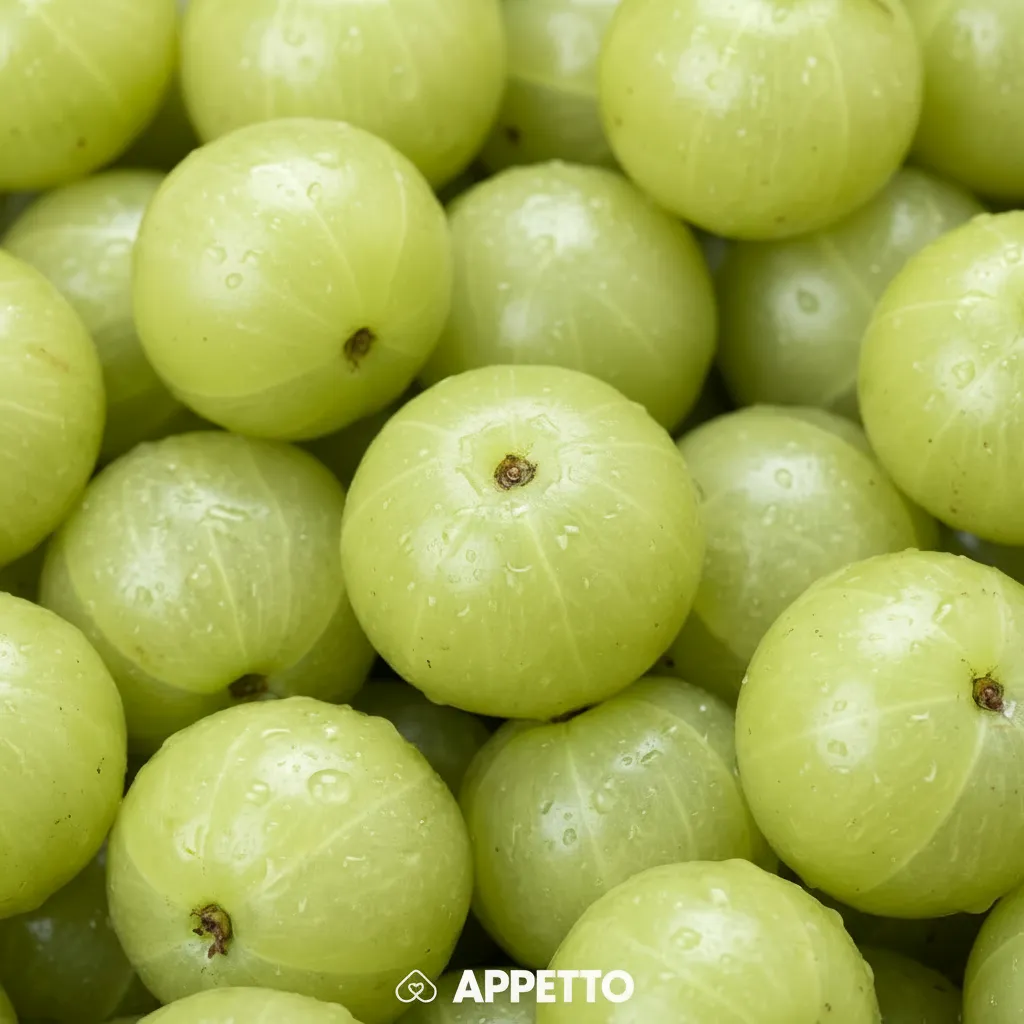
Dogs may eat a small amount of fresh Indian gooseberry, also called amla, after the hard stone has been removed. The fruit contains vitamin C, fibre and antioxidants, but its intense acidity and concentrated products may cause vomiting or diarrhoea.
Quick verdict
- For dogs: allowed in small quantities.
- Serve: plain fresh pulp without the stone.
- Avoid: concentrated powder, sweetened products and excessive portions.
Is Indian gooseberry safe for dogs?
A tiny portion of fresh amla pulp may be tolerated by a healthy adult dog. It should not become a daily supplement without veterinary advice.
Potential benefits
- Vitamin C and antioxidant compounds.
- A small amount of dietary fibre.
Dogs normally synthesise their own vitamin C, so amla is not essential and should not be treated as a cure or routine supplement.
Possible risks
- Vomiting or diarrhoea after excessive intake.
- Gastric irritation caused by acidity.
- Itching, hives or another allergic-type reaction in rare cases.
- Choking or obstruction from the hard stone.
- Overdosing with concentrated powder or supplements.
How much can a dog eat?
- Small dog: one tiny trace of fresh pulp.
- Medium dog: one small piece.
- Large dog: a small amount, offered occasionally.
Powdered products should only be used according to veterinary or manufacturer guidance for animals.
Fresh amla, powder or processed products?
Plain fresh pulp is the safest form. Avoid juice, sweets, jam, syrup, spicy preparations and human supplements. Concentrated powder requires particular caution.
How to prepare amla safely
- Remove the hard stone completely.
- Cut off a small amount of plain pulp.
- Introduce it gradually.
- Stop if vomiting, diarrhoea or irritation develops.
When should amla be avoided?
- In puppies.
- In dogs with gastritis, reflux or recurrent vomiting.
- In dogs with highly sensitive digestion.
- In dogs receiving medication or following a prescription diet.
My dog ate Indian gooseberry: what should I do?
If your dog ate a small amount of pulp, monitor digestion. Contact a veterinarian if a large quantity, concentrated powder or the stone was swallowed, or if symptoms develop.
Warning signs
Look for vomiting, diarrhoea, salivation, abdominal pain, itching, hives, fatigue or reduced appetite.
Safer alternatives
- A few plain blueberries.
- A small piece of seedless apple.
- A balanced dog treat.
How APPETTO can help
APPETTO helps you evaluate foods marketed as “superfruits,” compare dog products and make more informed choices using the Pet-Score®. Download APPETTO.
FAQ
Is Indian gooseberry toxic to dogs?
Fresh pulp is not generally considered toxic in a small amount, but its acidity may irritate digestion.
How much amla can I give my dog?
Offer one tiny trace to one small piece depending on body size.
Can dogs eat raw amla?
Yes, in a small amount of plain pulp with the stone removed.
Can dogs take amla powder?
Only with careful dosing and preferably veterinary advice, as powder is concentrated.
Can puppies eat Indian gooseberry?
It is safer to avoid it because puppies have more sensitive digestive systems.
Indian gooseberry can be an occasional dog treat in a very small amount, but its acidity and concentrated forms require caution.
Credits and disclaimer
Credits: Content developed by the APPETTO team using referenced sources and its internal food-classification methodology.
Disclaimer: This information is general and does not replace veterinary advice.