


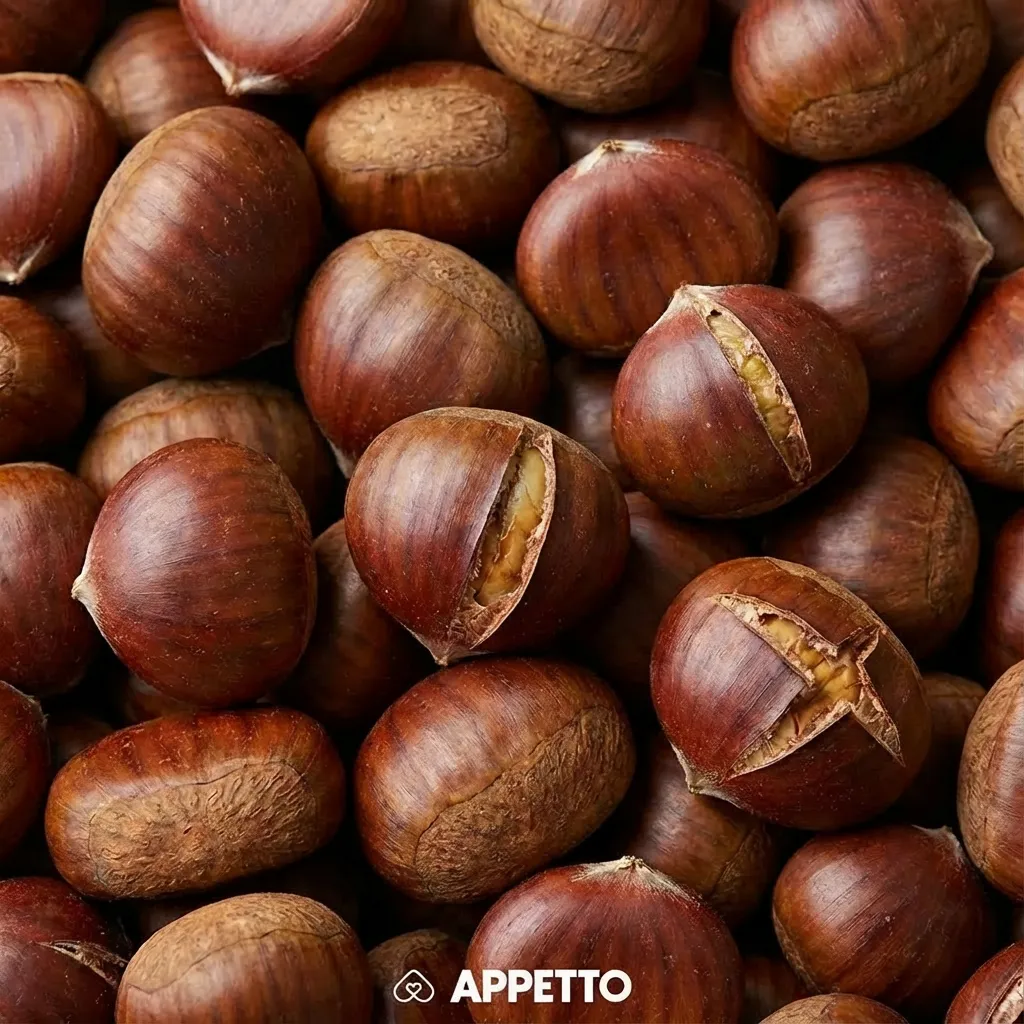
Dogs may eat a small amount of plain, cooked edible chestnut after the shell and inner skin have been removed. Horse chestnuts are entirely different and are toxic because they contain aesculin, saponins and other harmful compounds.
Quick verdict
- Edible chestnut: allowed in moderation.
- Horse chestnut: strictly forbidden.
- Serve: cooked, plain and peeled.
How edible chestnuts differ from horse chestnuts
Edible chestnuts come from Castanea trees. Horse chestnuts come from Aesculus trees and can cause serious poisoning in dogs.
Potential benefits of edible chestnuts
- A small amount of fibre.
- Some minerals.
- An occasional source of carbohydrates.
Possible risks
- Bloating, vomiting or diarrhoea.
- Choking or obstruction from shell or large pieces.
- Excess starch for diabetic or overweight dogs.
- Serious poisoning from horse chestnuts.
How much edible chestnut can a dog eat?
- Small dog: one tiny piece.
- Medium dog: one small piece.
- Large dog: a small piece, offered occasionally.
How to prepare chestnuts safely
- Confirm that the nut is an edible chestnut.
- Cook it without salt, sugar, butter or seasoning.
- Remove the shell and inner skin.
- Cut it into a small piece.
When should edible chestnuts be avoided?
- In diabetic or overweight dogs.
- In dogs prone to bloating.
- In dogs with sensitive digestion.
- Whenever identification is uncertain.
My dog ate a horse chestnut: what should I do?
Contact a veterinarian promptly. Horse-chestnut poisoning may cause digestive, neurological and cardiovascular symptoms.
Warning signs
Watch for vomiting, diarrhoea, drooling, weakness, tremors, loss of coordination, collapse or abnormal heart rate.
Safer alternatives
- A few plain blueberries.
- A small piece of seedless apple.
- A dog treat formulated for canine needs.
How APPETTO can help
APPETTO helps you distinguish edible foods from dangerous lookalikes, compare dog products and make safer decisions using the Pet-Score®. Download APPETTO.
FAQ
Are edible chestnuts toxic to dogs?
No, when cooked, plain, peeled and served in a small amount.
Are horse chestnuts toxic to dogs?
Yes. They can cause serious poisoning and require veterinary advice.
Can dogs eat chestnut shell?
No. The shell may cause choking or obstruction.
Can dogs eat sweetened chestnuts?
No. Sugary preparations should be avoided.
Can diabetic dogs eat chestnuts?
It is best to avoid them or seek veterinary guidance.
Plain edible chestnuts may be offered occasionally, but horse chestnuts are toxic and must never be confused with them.
Credits and disclaimer
Credits: Content developed by the APPETTO team using referenced sources and its internal food-classification methodology.
Disclaimer: This information is general and does not replace veterinary advice.