


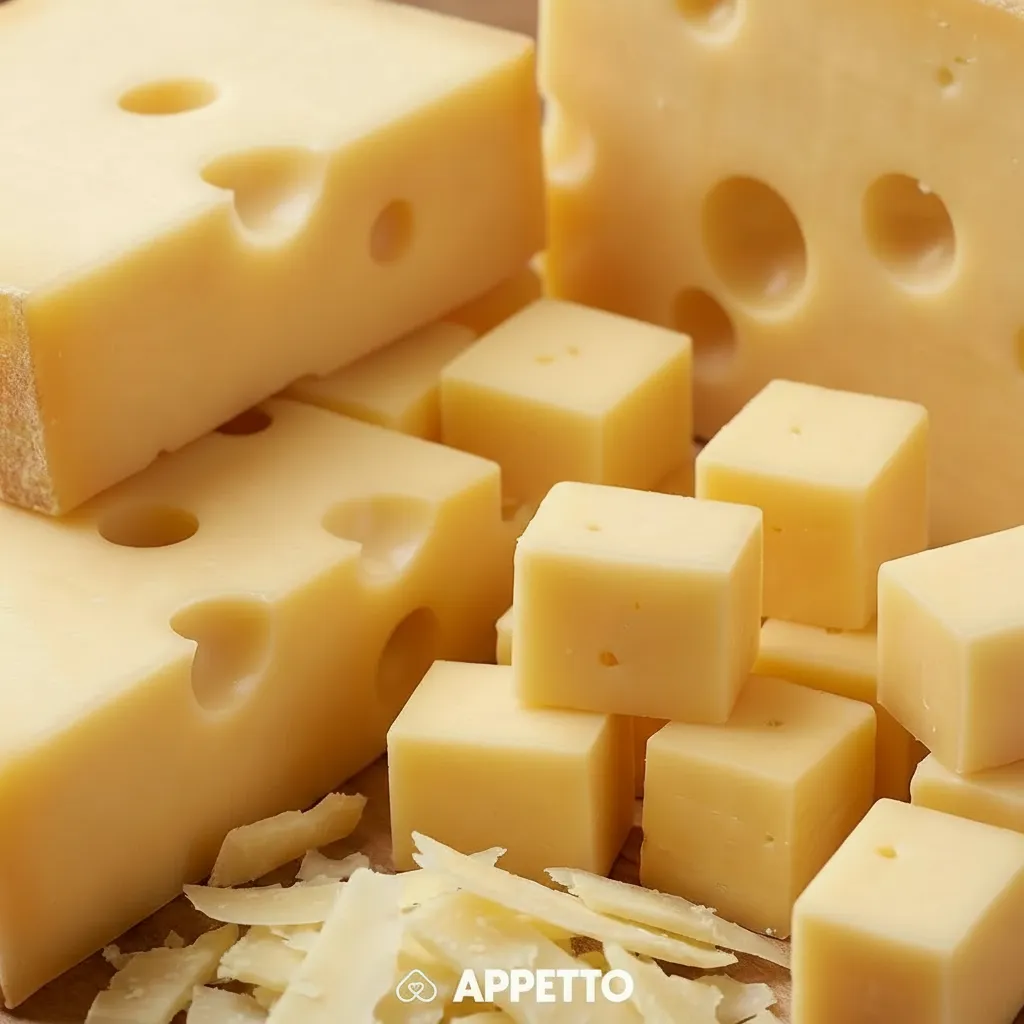
Gruyère can be tolerated by some cats in tiny amounts, but it must remain a very occasional treat. Its lactose content is generally low, but salt and fat are still present. A tiny crumb to hide a pill can sometimes help out; a cheese habit, no. Your cat might protest, but they will be just fine.
Quick verdict
- For the cat: allowed in strict moderation.
- Key takeaway: only a tiny amount, without the rind, and to be avoided for cats with heart or kidney conditions.
Gruyère for cats: allowed, to be limited, or forbidden?
Gruyère is not strictly forbidden for cats, but it is not suitable for regular consumption. Cats are obligate carnivores and do not need cheese. If a tiny amount is given, it must remain exceptional.
Is Gruyère dangerous or toxic for cats?
Gruyère is not toxic in tiny portions, but it can cause vomiting or diarrhea in sensitive cats. Sodium is also a point of concern, especially for cats with heart conditions, kidney failure, or on a low-sodium diet.
What are the possible benefits?
The benefits are mostly practical, not nutritional.
- Can occasionally help to hide a pill.
- Provides a little protein, but of no real value if their diet is already complete.
What risks should you be aware of?
The risk increases with quantity and frequency.
- Residual lactose: vomiting, diarrhea, or gas in sensitive cats.
- Salt: must be limited for cats with heart or kidney conditions.
- Parts to avoid: rind, very salty pieces, gratins, or cheese sauces.
How much should you give your cat?
If you do offer it, the portion must remain tiny.
- Adult cat: a tiny crumb or mini-cube, very rarely.
- Sensitive cat: avoid.
- Kitten: avoid completely.
Can my cat eat raw, melted, or grated Gruyère?
Plain Gruyère in tiny amounts is the only acceptable form. Melted, grated in large quantities, or mixed into a gratin, quiche, or sauce, it is not recommended as it is too fatty, too salty, and often combined with other unsuitable ingredients.
How to prepare it properly?
- Choose a tiny piece of plain Gruyère.
- Remove the rind.
- Monitor their stool and behavior after consumption.
When should it be avoided?
- Kittens.
- Senior cats.
- Cats with heart disease, kidney failure, overweight, or with a sensitive stomach.
- Cats undergoing treatment or on a low-salt veterinary diet.
My cat ate Gruyère: what should I do?
For a tiny crumb, just keep an eye on them. If the amount is significant, if your cat is fragile, or if vomiting, diarrhea, or signs of lethargy appear, contact your vet.
What signs should you look out for?
Vomiting, diarrhea, lethargy, gas, unusual thirst, loss of appetite, or behavioral changes are warning signs.
What are safer alternatives?
- A suitable feline treat.
- A small piece of plain cooked chicken.
- Specific veterinary products to help hide pills.
How can APPETTO help?
APPETTO helps you compare cat products and understand which foods should only be given with caution. Thanks to the Pet-Score®, you can make clearer choices for their bowl. Download APPETTO.
FAQ
Is Gruyère toxic to my cat?
No, not in tiny amounts, but it can be poorly tolerated or too salty if eaten in excess.
How much Gruyère can I give my cat?
A tiny crumb is enough, and only on rare occasions.
Can my cat eat the rind of Gruyère?
No, it is best to remove the rind.
Can my cat eat grated Gruyère?
Only a tiny pinch very occasionally, assuming your cat tolerates it.
What signs should I watch for if my cat ate Gruyère?
Look out for vomiting, diarrhea, gas, lethargy, and unusual thirst.
Can a kitten eat Gruyère?
No, it’s best avoided. A kitten should stick to an appropriate diet.
Gruyère can therefore be tolerated in tiny quantities by some cats, but it must be strictly limited. To easily compare suitable products, APPETTO helps you with the Pet-Score®. Download APPETTO.
Credits and disclaimer
Credits: Content created by the APPETTO team based on referenced sources and our internal food classification methodology.
Disclaimer: This information is general and does not replace veterinary advice.