


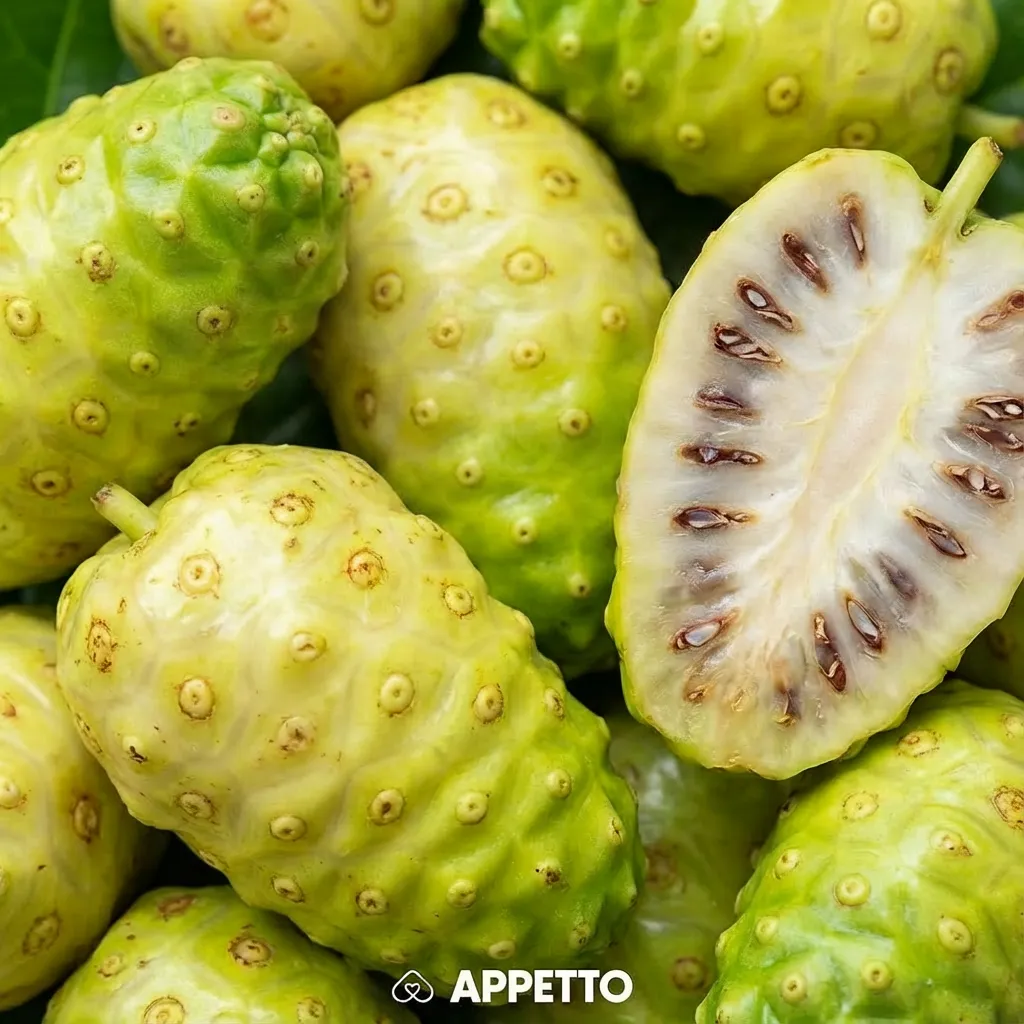
Noni is not a routine dog treat. A tiny amount of ripe, seedless pulp may be tolerated by some healthy dogs, but concentrated or fermented juice can cause digestive upset and may be unsuitable for dogs with liver or kidney disease.
Quick verdict
- For dogs: use only with considerable caution.
- Least concerning form: a trace of ripe, seedless pulp.
- Avoid: seeds, concentrated juice, fermented products and supplements.
Is noni safe for dogs?
Noni is not consistently classified as toxic, but reliable canine research is limited. It should not be promoted as a miracle food or used to replace veterinary treatment.
Potential benefits
- Contains plant antioxidants.
- Traditional uses have been reported.
These claims do not establish a meaningful health benefit for dogs.
Possible risks
- Diarrhoea or vomiting.
- Dehydration after a strong laxative effect.
- Abdominal discomfort.
- Mechanical risk from seeds.
- Possible concerns in dogs with liver or kidney disease.
How much noni can a dog eat?
No standard safe serving has been established. Avoid intentional feeding unless a veterinarian familiar with your dog approves it.
Raw fruit, juice or supplements?
Avoid concentrated juice, fermented preparations, extracts, powders and homemade supplements. A trace of plain ripe pulp is less concerning than these processed forms.
What to do after ingestion
- Identify the form and amount consumed.
- Check whether seeds were swallowed.
- Monitor after a tiny amount of pulp.
- Contact a veterinarian after concentrated-product exposure or if symptoms develop.
When should noni be avoided?
- In puppies and frail senior dogs.
- In dogs with liver or kidney disease.
- In dogs with diarrhoea, dehydration or pancreatitis.
- In dogs receiving medication or following a prescription diet.
Warning signs
Watch for diarrhoea, vomiting, lethargy, abdominal pain, excessive thirst, reduced appetite or signs of dehydration.
Safer alternatives
- A small piece of seedless apple.
- Cucumber pieces.
- A suitable dog treat.
How APPETTO can help
APPETTO helps you evaluate foods promoted as naturally beneficial, compare dog products and make evidence-based choices using the Pet-Score®. Download APPETTO.
FAQ
Is noni toxic to dogs?
It is not consistently classified as toxic, but safety evidence is limited and digestive intolerance is possible.
How much noni can I give my dog?
No standard serving is recommended.
Can dogs drink noni juice?
Concentrated, fermented or sweetened juice should be avoided.
Are noni seeds dangerous?
They should be removed because of mechanical risk and uncertain safety.
Can puppies eat noni?
No. It is safer to avoid it.
Noni requires more caution than enthusiasm, particularly in concentrated forms or in dogs with liver, kidney or digestive problems.
Credits and disclaimer
Credits: Content developed by the APPETTO team using referenced sources and its internal food-classification methodology.
Disclaimer: This information is general and does not replace veterinary advice.