


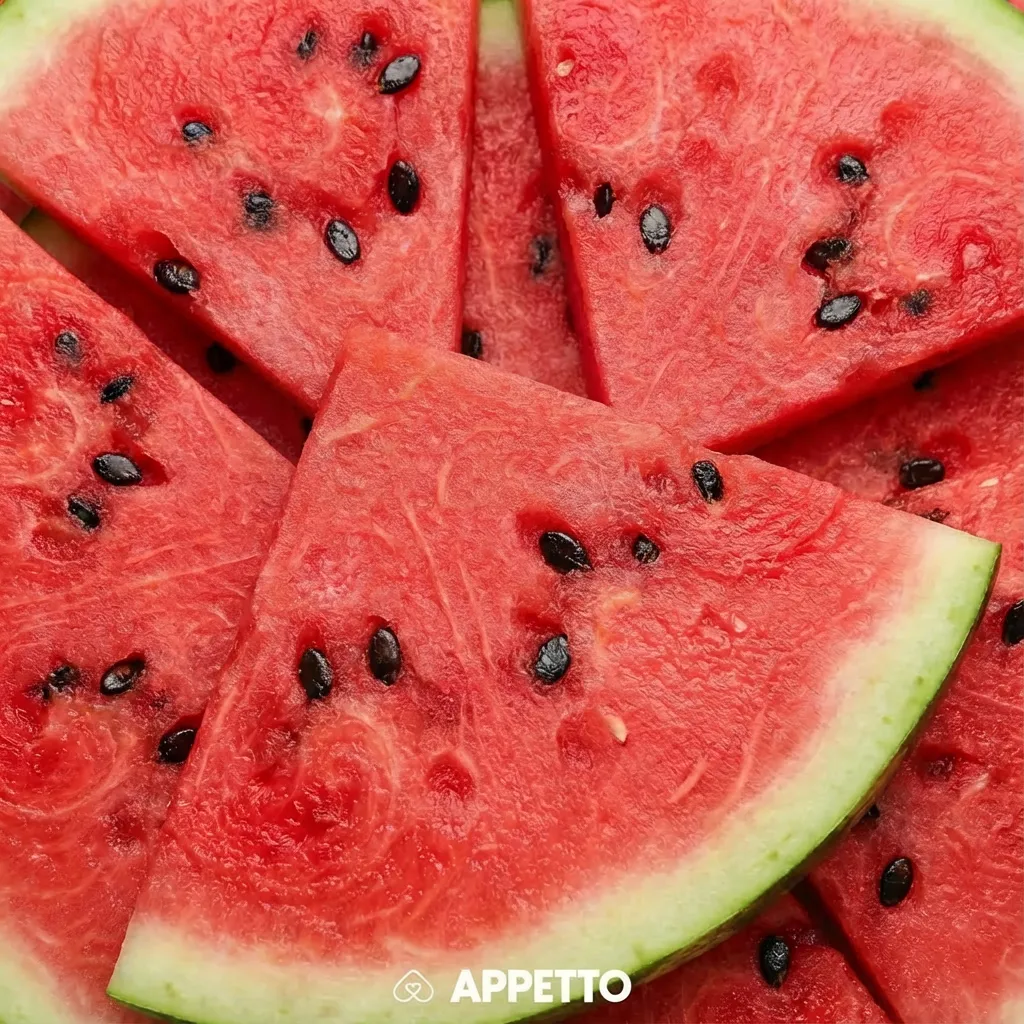
Can dogs eat watermelon? Yes, dogs may eat plain watermelon in moderation when only the red flesh is served. Watermelon is generally safe for dogs, but the rind and visible seeds should be removed because they may cause choking, digestive irritation or intestinal obstruction.
Quick verdict: is watermelon safe for dogs?
- For dogs: watermelon is allowed in moderation.
- Serve: seedless red flesh in small cubes.
- Avoid: rind, large seeds, juice and sweetened products.
Is watermelon good for dogs?
Watermelon can be a refreshing occasional treat for many dogs. It has a high water content and is relatively low in calories, although treats should remain a small part of a balanced diet.
Potential benefits of watermelon for dogs
- High water content.
- A small amount of fibre.
- Vitamins and plant antioxidants.
Can dogs eat watermelon seeds?
Visible seeds should be removed before serving. A few accidentally swallowed seeds may not cause a problem, but larger amounts can contribute to digestive discomfort. Do not intentionally offer seeded pieces.
Can dogs eat watermelon rind?
No. Dogs should not eat watermelon rind. It is difficult to digest and may cause choking, irritation or an intestinal obstruction. This is a mechanical digestive risk rather than a reason to treat the red flesh as dangerous.
How much watermelon can a dog eat?
- Small dog: one or two small cubes.
- Medium dog: three to five cubes.
- Large dog: a small handful of cubes.
Start with a small portion and keep an eye on your dog’s response. Too much watermelon may cause vomiting or diarrhoea.
How to prepare watermelon for a dog
- Remove the entire rind.
- Remove all visible seeds.
- Cut the flesh into pieces appropriate for your dog’s size.
- Serve it plain, without added sugar or flavouring.
Fresh, frozen or juiced watermelon?
Fresh flesh is ideal. Small thawed or lightly frozen pieces may be offered to dogs that chew properly. Avoid juice, sorbet, sweets and flavoured products because they may contain extra sugar or unsuitable ingredients.
When should watermelon be limited?
- In very young puppies.
- In diabetic or overweight dogs.
- In dogs prone to diarrhoea.
- In dogs following a prescription diet.
Extra sugar may be inappropriate for diabetic or overweight dogs, so ask your veterinarian before adding this treat.
My dog ate watermelon rind: what should I do?
After a small piece, monitor your dog closely. Contact a veterinarian if a large amount was swallowed or if vomiting, pain, constipation or loss of appetite develops. These signs may indicate digestive irritation or obstruction.
Safer alternatives
- Cucumber pieces.
- Seedless melon.
- Plain carrot.
How APPETTO can help
APPETTO helps you manage treat portions, identify unsafe fruit parts and compare dog products using the Pet-Score®. Download APPETTO.
FAQ about dogs and watermelon
Can my dog eat watermelon?
Yes, your dog can eat a small amount of plain red watermelon flesh after the rind and visible seeds have been removed.
Can dogs eat watermelons?
Dogs can eat watermelon as an occasional treat, but the portion should be small and the fruit must be prepared safely.
Can dogs have watermelon seeds?
It is best to remove visible watermelon seeds before serving. Do not give your dog large amounts of seeded watermelon.
Can puppies eat watermelon?
A tiny prepared piece may be tolerated, but introduce treats slowly, especially in very young puppies.
Is watermelon toxic to dogs?
No. The plain red flesh is not toxic to dogs when served in moderation. The rind and seeds should still be avoided because of choking and digestive risks.
How much watermelon is okay for dogs?
Depending on body size, this may range from one or two small cubes to a small handful. Too much can cause vomiting or diarrhoea.
Watermelon is okay for dogs as a small, plain treat when the rind and visible seeds are removed and the portion remains limited.
Credits and disclaimer
Credits: Content developed by the APPETTO team using referenced sources and its internal food-classification methodology.
Disclaimer: This information is general and does not replace veterinary advice.