


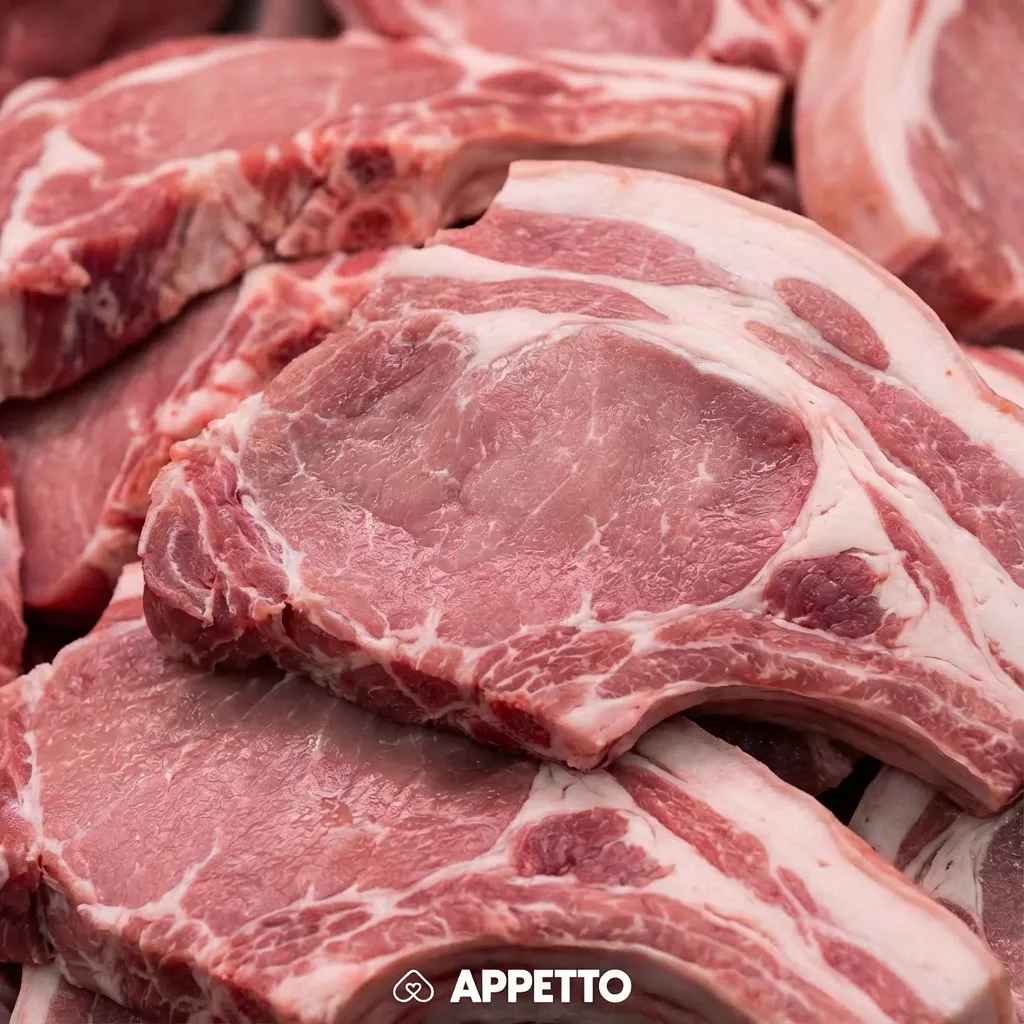
Pork can be given to cats in moderation, but only well-cooked and in small portions. Raw pork should be strictly avoided due to the risk of Aujeszky’s disease, which can be fatal for cats.
Quick verdict
- For cats: allowed in moderation.
- Key takeaway: cooked lean meat, no skin, no bones, never raw.
Pork and cats: possible, but requires caution
Pork can provide animal protein, but it must be handled with care. Raw pork is the main danger, especially regarding viral and bacterial risks.
Potential benefits
- Animal protein.
- Highly palatable.
- Occasional variety.
Risks to know
- Aujeszky’s disease: fatal risk if raw.
- Bacteria: diarrhea or vomiting.
- Excess calories: weight gain if portions are large.
How much to give?
A small portion is enough. Pork does not replace a complete diet without a specifically formulated meal plan.
Raw or cooked?
Cooked only. Raw pork in any form must be avoided.
How to prepare it?
- Choose lean meat.
- Cook thoroughly.
- Remove skin, fat, and bones.
At-risk cats
- Kittens.
- Senior cats.
- Immunocompromised cats.
- Cats with sensitive digestion.
- Overweight cats.
My cat ate raw pork: what should I do?
Contact a vet immediately. Monitor for vomiting, diarrhea, hypersalivation, lethargy, or neurological signs.
How APPETTO can help
APPETTO helps you identify meats that require cooking, compare cat products using the Pet-Score®, and make safer choices. Download APPETTO.
FAQ
Is pork good for cats?
Yes, but only in small, lean, and well-cooked portions.
Can my cat eat raw pork?
No, never.
Why is raw pork dangerous?
It can transmit Aujeszky’s disease and harmful bacteria.
Should I remove the skin?
Yes, it is too fatty.
What signs should I monitor?
Vomiting, diarrhea, or hypersalivation.
Can a kitten eat pork?
Only cooked, in very small portions, and with caution.
Pork can be offered to cats only if well-cooked, lean, and boneless. To compare feline foods, APPETTO helps you with the Pet-Score®. Download APPETTO.
Credits and disclaimer
Credits: Content developed by the APPETTO team based on referenced sources and our internal food classification methodology.
Disclaimer: This information is general and does not replace veterinary advice.