


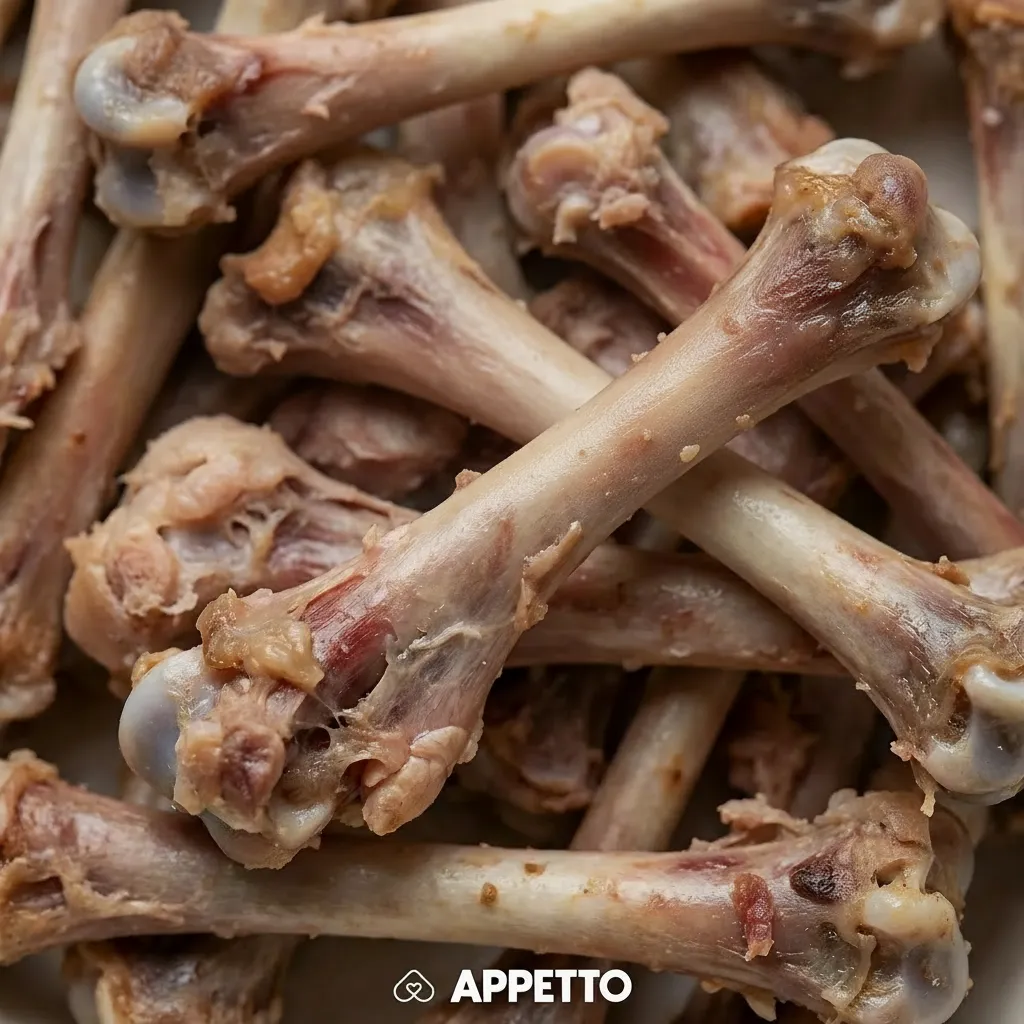
Turkey bones should be avoided for cats. They provide no useful nutritional benefit and can cause choking, obstruction, pain, vomiting, or digestive perforation.
Quick verdict
- For cats: avoid.
- Key takeaway: no turkey bones, raw or cooked, in the bowl.
Turkey bones and cats: too risky for their size
Poultry bones can splinter into sharp fragments. In a cat, even a small fragment can get stuck or injure the digestive tract.
Possible benefits?
No benefit justifies this risk.
- No necessary nutritional value.
- Safer dental alternatives are available.
Risks to know
- Esophageal obstruction: a stuck fragment.
- Splinters: bleeding and pain.
- Cooked bones: break more easily.
How much to give?
No intentional amount is recommended.
Raw or cooked?
Both forms should be avoided for cats. Cooked bones are particularly brittle.
How to prevent ingestion?
- Remove all bones from the meat.
- Do not give carcass leftovers.
- Keep plates out of reach.
At-risk cats
- Kittens.
- Voracious cats.
- Senior cats.
- Cats with sensitive digestive tracts.
My cat swallowed a turkey bone: what should I do?
Monitor for drooling, pain, vomiting, or breathing difficulties. Contact a vet if any sign appears.
How APPETTO can help
APPETTO helps you avoid mechanically dangerous foods, compare cat products using the Pet-Score®, and make safer choices. Download APPETTO.
FAQ
Can my cat eat a turkey bone?
No, it should be avoided.
Is a cooked bone dangerous?
Yes, it can splinter.
What signs should I look for?
Choking, pain, or vomiting.
Can a kitten eat a small bone?
No.
Is a raw bone acceptable?
It remains too risky.
What alternative should I choose?
A dental treat suitable for cats.
Turkey bones should be avoided for cats. To compare more suitable alternatives, APPETTO helps you with the Pet-Score®. Download APPETTO.
Credits and disclaimer
Credits: Content created by the APPETTO team based on referenced sources and our internal food classification methodology.
Disclaimer: This information is general and does not replace veterinary advice.