


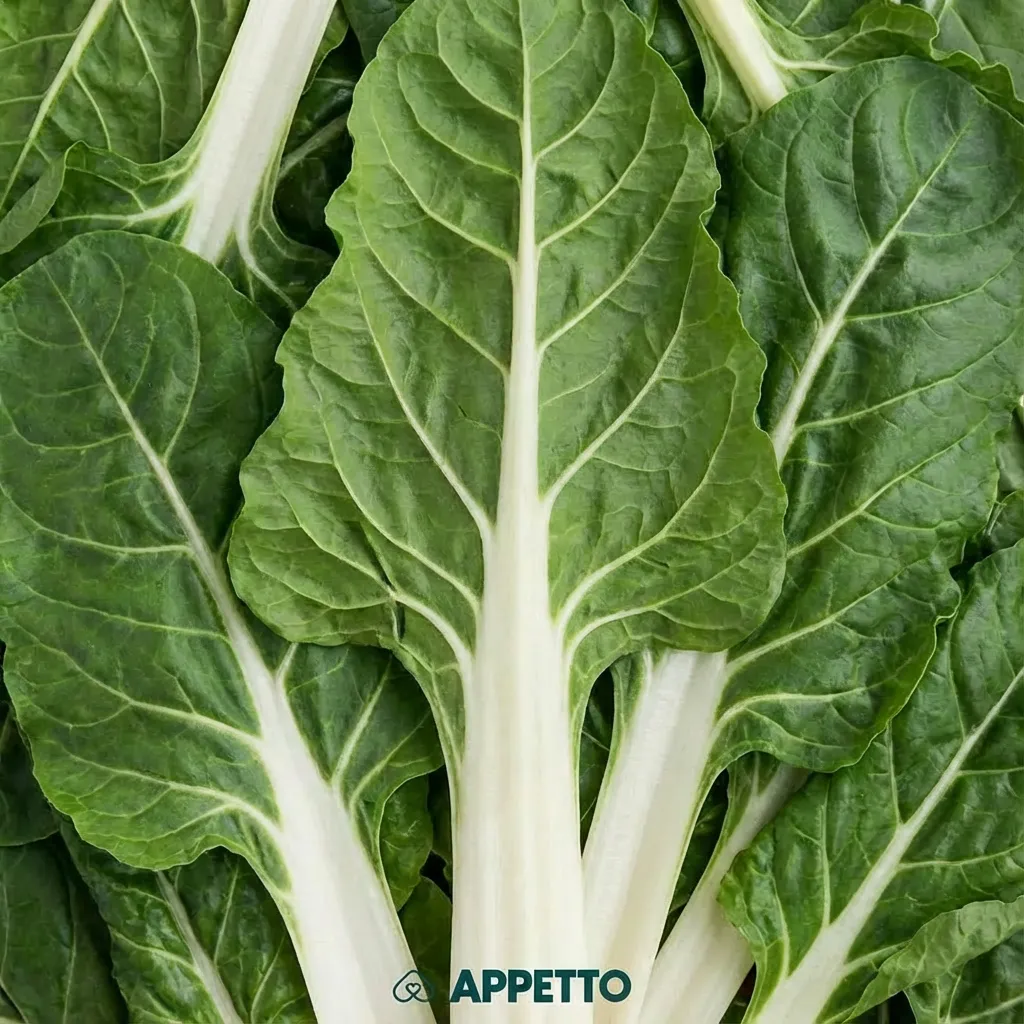
Swiss chard can be given to cats in strict moderation, and only as cooked, drained, and finely chopped leaves. While it is not toxic, its oxalate content requires caution, especially for cats prone to urinary stones.
Quick verdict
- For cats: allowed in strict moderation.
- To remember: only a micro-portion of cooked leaves, never thick uncut stems.
Swiss chard for cats: allowed, limited, or forbidden?
Swiss chard can be tolerated by some cats, but it remains a very secondary food. A cat does not need green vegetables to balance its diet if its regular ration is already complete. A micro-portion can be considered occasionally, but nothing more.
Is Swiss chard dangerous or toxic for cats?
Swiss chard is not reported as toxic to cats. The main point of vigilance concerns its oxalates, which can promote urinary crystals in predisposed cats. Boiling and draining the leaves can reduce some of this risk, without entirely eliminating it.
What are the possible benefits?
The benefits remain modest for a feline.
- Fiber that can help modulate transit in micro-doses.
- Vitamins A, C, and K.
- Light hydration.
What are the risks to know?
For cats, Swiss chard portions must remain ultra-limited.
- Oxalates: require caution in cats prone to urinary issues.
- Fiber: can cause vomiting or diarrhea if the dose is too high.
- Thick stems: present a risk of chewing discomfort or choking.
How much to give your cat?
A micro-portion is more than enough.
- Adult cat: a small pinch of chopped, cooked leaves.
- Sensitive cat: avoid completely.
- Kitten: to be avoided.
Can my cat eat raw, cooked, or processed Swiss chard?
Cooked Swiss chard is preferable for cats. It must always be served plain, without any salt, cream, garlic, or onion. Raw Swiss chard is more fibrous and less interesting nutritionally.
How to prepare it correctly?
- Wash the leaves thoroughly and remove the thick stems.
- Boil in water, then discard the cooking water to reduce oxalates.
- Chop the leaves very finely and give only a micro-portion.
When should it be avoided?
- Kittens.
- Older cats.
- Cats prone to urinary stones.
- Cats suffering from kidney disease.
- Cats on medication or a veterinary diet.
My cat ate Swiss chard: what to do?
If your cat ate a small amount of plain, cooked leaves, simply monitor them. If they consumed a large amount, ate thick stems, or show any digestive or urinary signs, contact your veterinarian.
What signs should alert you?
Vomiting, diarrhea, bloating, chewing discomfort, abdominal pain, difficulty urinating, or lethargy are symptoms that should be monitored.
What are safer alternatives?
- Appropriate cat treats.
- High-quality complete wet food.
- A micro-portion of cooked plain zucchini, if well tolerated.
How can APPETTO help you?
APPETTO helps you understand allowed foods, compare cat products using the Pet-Score®, and choose with greater confidence. Download APPETTO.
FAQ
Is Swiss chard toxic to my cat?
No, it is not reported as toxic, but its oxalate content requires caution.
How much Swiss chard can I give my cat?
A small pinch of chopped, cooked leaves, given very occasionally.
Can my cat eat raw Swiss chard?
It is not recommended. Cooked and well-drained Swiss chard is preferable.
Are Swiss chard stems dangerous for cats?
Thick stems can be difficult to chew and present a choking risk, so they should be avoided.
What signs to watch for if my cat ate Swiss chard?
Vomiting, diarrhea, bloating, or any signs of urinary discomfort should alert you.
Can a kitten eat Swiss chard?
It is better to avoid giving Swiss chard to kittens.
Swiss chard can be tolerated by cats in cooked micro-portions, but it should be entirely avoided for cats prone to urinary issues. To compare feline foods and products easily, APPETTO helps you with the Pet-Score®. Download APPETTO.
Credits and warning
Credits: Content developed by the APPETTO team based on referenced sources and internal food classification methodology.
Warning: This information is general and does not replace veterinary advice.