


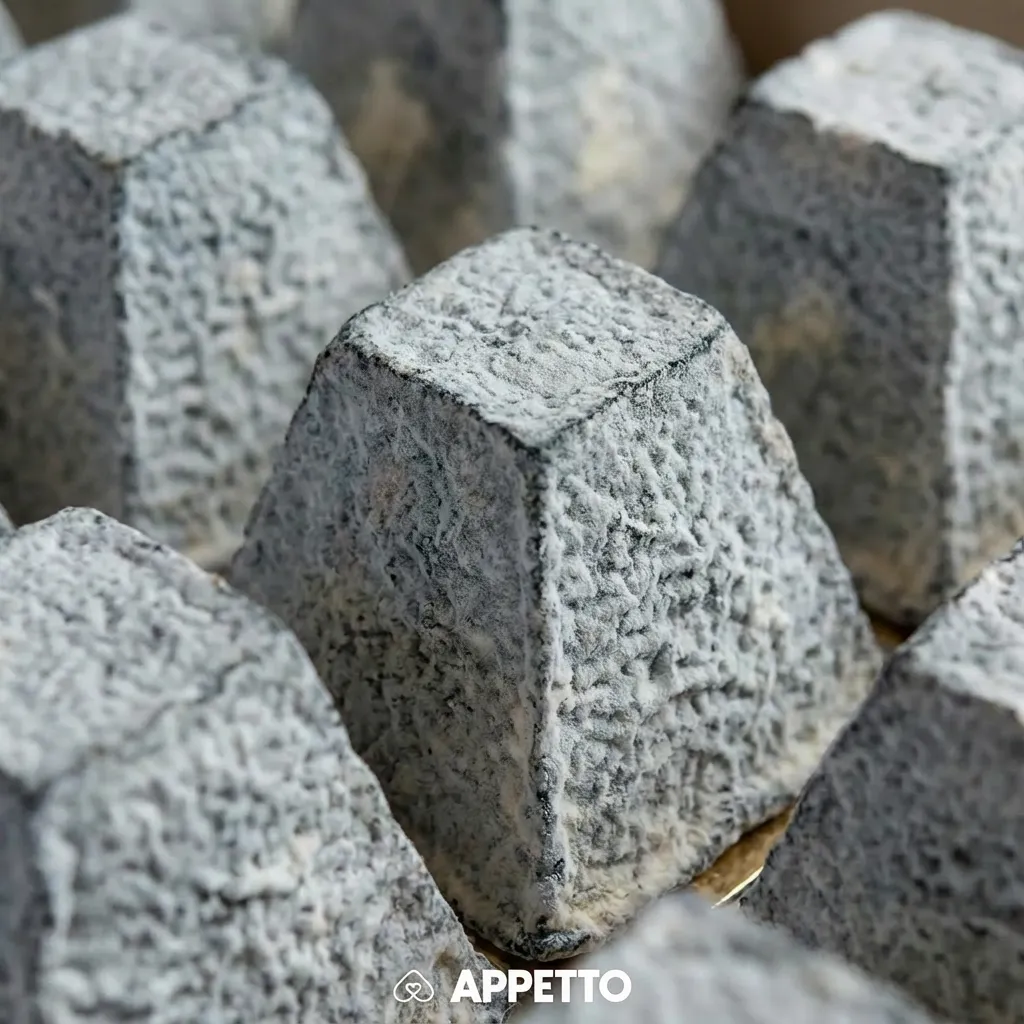
Valençay should be avoided for cats. This goat cheese can be made from raw milk, contains salt, fats, residual lactose, and an ash-coated rind with mold. Suffice it to say that for a strict carnivore, this isn’t a treat: it’s a pyramid of risks.
Quick verdict
- For cats: avoid.
- Key takeaway: the ash-coated rind, mold, salt, and lactose make this cheese unsuitable for cats.
Valençay for cats: allowed, limited, or forbidden?
Valençay is not recommended for cats. Even if a microscopic crumb of the cheese paste without the rind is swallowed accidentally and doesn’t always cause symptoms, it shouldn’t be given intentionally. Cheeses with moldy or ash-coated rinds should be avoided for cats.
Is Valençay dangerous or toxic for cats?
Valençay can pose a risk, primarily because of the rind and molds. While there is less data on cats compared to dogs, digestive and neurological issues remain signs to take seriously. The salt and lactose also add an unnecessary burden.
What are the possible benefits?
The potential benefits do not justify giving it to your cat.
- A bit of protein, but in a poorly adapted food source.
- The calcium present doesn’t make up for the risks associated with mold, salt, and lactose.
What are the risks to know?
Valençay combines several risks for cats.
- Molds: vomiting, diarrhea, tremors, or possible neurological signs.
- Lactose and salt: digestive issues and unnecessary kidney strain.
- Parts to avoid: ash-coated rind, large amounts of the cheese paste, highly aged cheese, and dishes containing Valençay.
How much should you give your cat?
No amount is recommended. Valençay should be avoided.
- Adult cat: avoid.
- Sensitive cat: strictly avoid.
- Kitten: avoid completely.
Can my cat eat raw, melted, or processed Valençay?
No. Whether raw, melted, in a tart, salad, or sauce, Valençay remains ill-advised. Human recipes can also contain oil, salt, garlic, onion, spices, or dough, which are not suitable for cats.
How to react properly?
- Remove the cheese and keep the packaging if possible.
- Note the amount swallowed and check if the ash-coated rind was eaten.
- Contact a vet if the quantity is large, if your cat is fragile, or if symptoms appear.
When should it be avoided?
- Kittens.
- Senior cats.
- Cats with heart disease, kidney failure, sensitive digestion, or lactose intolerance.
- Cats on medication or a prescribed veterinary diet.
My cat ate Valençay: what should I do?
If your cat ate a tiny crumb of the cheese paste without the rind, monitor them. If the rind was swallowed, if the amount is significant, or if vomiting, diarrhea, tremors, or abnormal signs occur, contact a vet.
What signs should you watch out for?
Vomiting, diarrhea, tremors, lethargy, loss of appetite, hypersalivation, balance issues, or unusual behavior should raise alarms. Tremors require prompt veterinary attention.
What are safer alternatives?
- A suitable feline treat.
- A small piece of plain, cooked chicken.
- Complete wet food tailored to their profile.
How APPETTO can help you?
APPETTO helps you understand which foods to avoid for cats and compare products using the Pet-Score®. This allows you to make clearer choices without playing Russian roulette with moldy-rind cheeses. Download APPETTO.
FAQ
Is Valençay toxic to my cat?
It can pose a risk, mainly due to the ash-coated rind and molds. It is best avoided.
How much Valençay can I give my cat?
No amount is recommended. This cheese should be avoided.
Can my cat eat the Valençay rind?
No, the ash-coated rind is strictly forbidden.
Can my cat eat melted Valençay?
No, melted or not, it remains not recommended and is often paired with other unsuitable ingredients.
What signs should I look for if my cat ate Valençay?
Watch for vomiting, diarrhea, tremors, lethargy, loss of appetite, and unusual behavior.
Can a kitten eat Valençay?
No, kittens should avoid rind cheeses and stick to a suitable diet.
Therefore, Valençay should be avoided for cats: the ash-coated rind, molds, salt, and lactose make it a poor choice. To better compare foods and find suitable products, APPETTO helps you with the Pet-Score®. Download APPETTO.
Credits and disclaimer
Credits: Content created by the APPETTO team based on referenced sources and internal food classification methodology.
Disclaimer: This information is general and does not replace veterinary advice.