


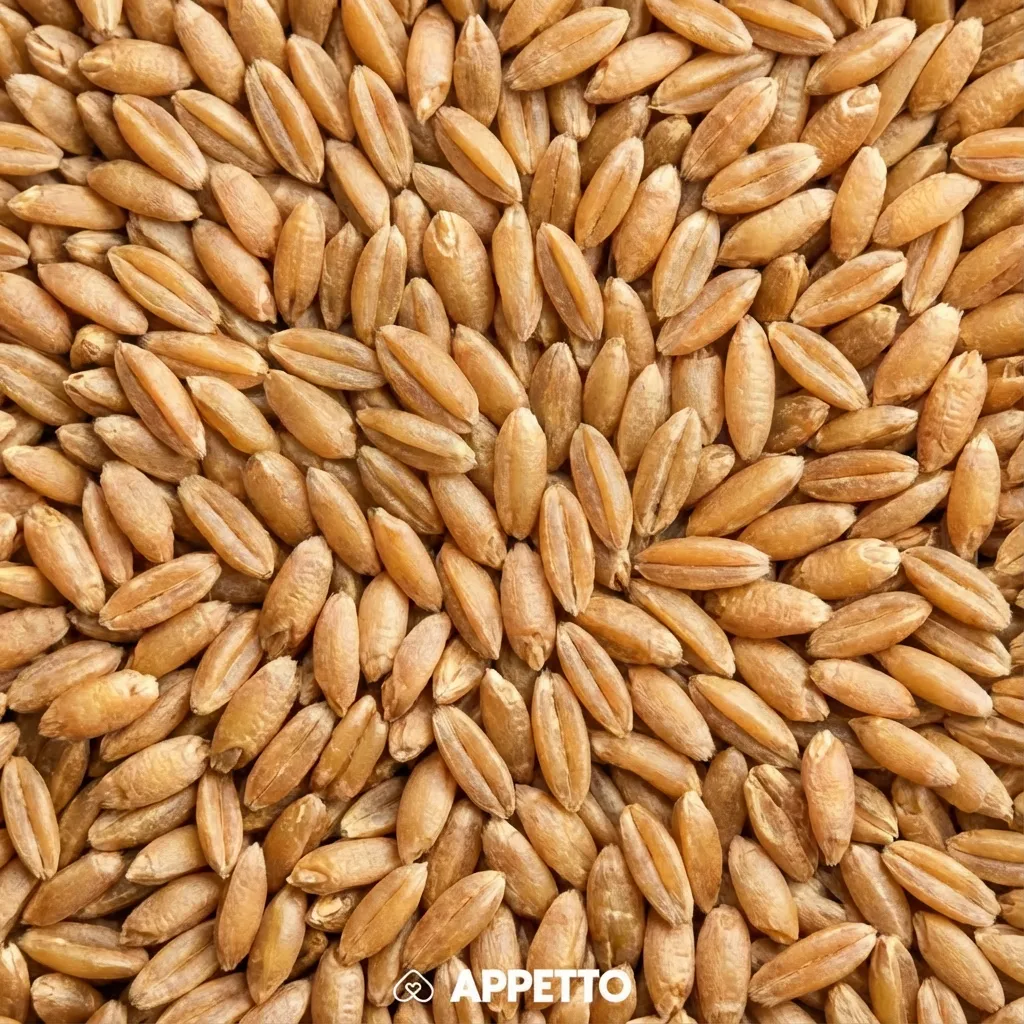
Are you wondering if your cat can eat Kamut, also known as Khorasan wheat? This cereal is allowed in moderation. However, there are some important facts to consider before sharing it with your feline friend.
Nutritional Value and Benefits
Cats are strict carnivores. They have high protein needs and very little use for carbohydrates. Because of this, the data shows no nutritional value or specific benefits of Kamut for cats. Instead, it acts mostly as empty calories in their diet.
How to Serve It
If you choose to give your cat a small amount of this grain, it must be cooked. Cooked Kamut in the form of crumbs is generally better tolerated.
Potential Risks
Feeding Kamut involves nutritional risks due to its carbohydrate content, which can lead to an unbalanced diet. Additionally, this cereal contains gluten. While gluten sensitivity or intolerance is very rare in cats, a possible sensitivity can still occur.
Caution is particularly advised if your cat is obese or diabetic, as the extra carbohydrates could be problematic.
Symptoms to Watch For and What to Do
If your cat consumes Kamut and experiences an adverse reaction, the following symptoms may appear:
- Vomiting
- Diarrhea
If you notice these signs, monitor your cat closely. Contact a veterinarian if the symptoms persist, worsen, or seem concerning. Please note that this article does not evaluate the individual severity of the ingestion.
The APPETTO App
To help you better understand your cat’s diet and consult information about various foods, you can use APPETTO. Download the application at https://www.download.appetto.co.
This article is provided for informational purposes only and does not replace the advice or diagnosis of a veterinarian. A veterinarian should always be consulted in the event of concerning or persistent symptoms.