


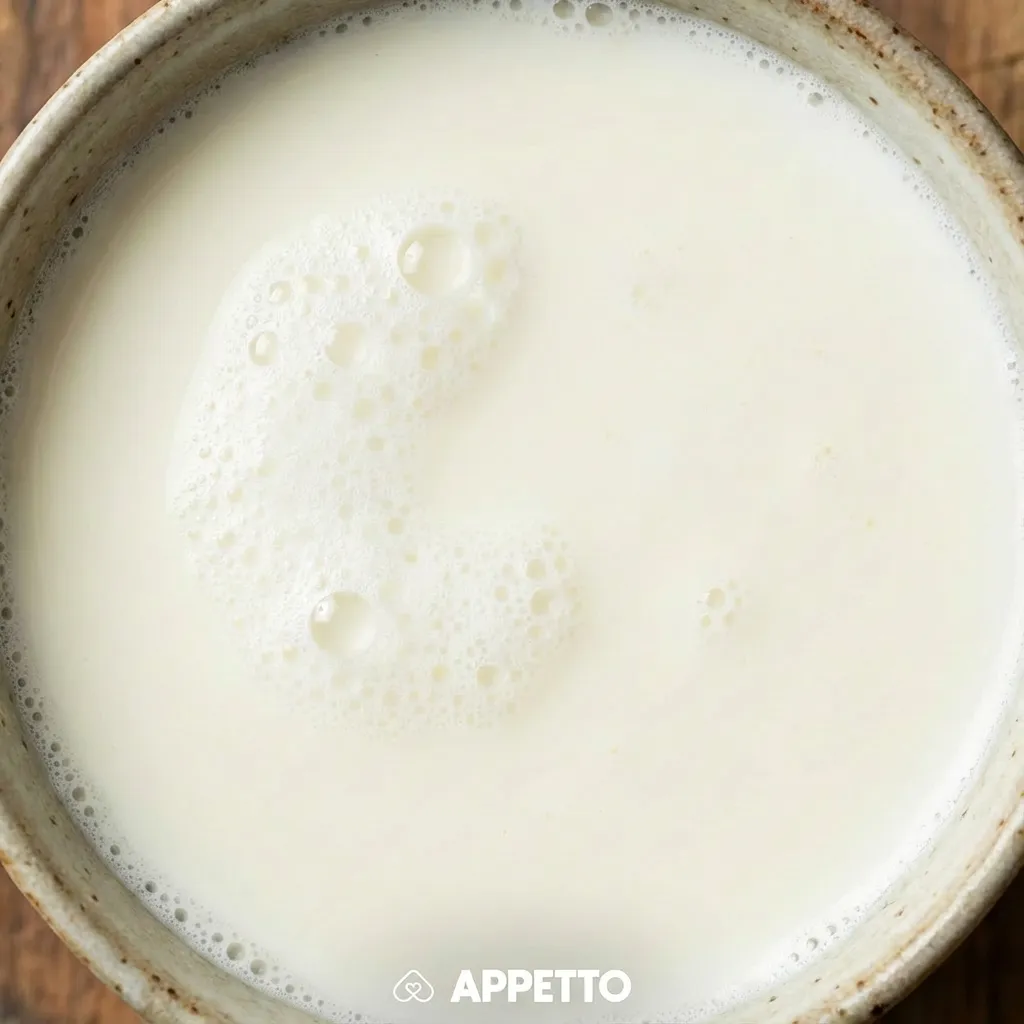
Buffalo milk should be avoided for dogs. If you ever wonder “is milk ok for dogs?”, you should know that this specific type contains lactose and is particularly high in fats, which increases the risk of digestive issues and caloric overload. On paper, it sounds nourishing. But for a sensitive dog, it is simply too rich. “Premium milk” isn’t necessarily premium for their pancreas.
Quick verdict
- For dogs: best to avoid.
- Key takeaway: highly fatty and lactose-rich, it can cause vomiting, diarrhea, and digestive discomfort.
Buffalo milk for dogs: allowed, to be limited, or forbidden?
Buffalo milk is not recommended for dogs. Its high fat content makes it less suitable than other options, especially for overweight dogs or those at risk of pancreatitis. It provides nothing essential if the dog is already on a complete diet.
Is buffalo milk dangerous or toxic for dogs?
Buffalo milk is not strictly toxic, but it can be dangerous in large quantities. High lipid levels can overload the digestive system and pancreas, while lactose can trigger osmotic diarrhea.
What are the possible benefits?
The benefits do not outweigh the risks for dogs.
- Provides proteins and minerals, but in a form that is far too rich.
- No particular advantage compared to a balanced diet.
What are the risks to know?
Buffalo milk is mainly problematic because of its energy density.
- Very high fat: caloric overload and potential pancreatic risk.
- Lactose: diarrhea, gas, vomiting.
- Parts to avoid: raw milk, sweetened milk, desserts, or buffalo milk-based preparations.
How much can you give your dog?
No amount is recommended. It is better to avoid it entirely.
- Small dog: avoid completely.
- Medium dog: avoid; monitor if ingested.
- Large dog: avoid as well, especially in large amounts.
Can my dog drink raw, pasteurized, or processed buffalo milk?
Raw milk should be avoided due to bacterial risks. Even when pasteurized, buffalo milk remains very fatty and lactose-heavy. Processed products, desserts, or sweet preparations are even less appropriate.
How to prepare it properly?
- Do not give buffalo milk to your dog.
- Avoid rich desserts or products containing it.
- If ingested, monitor their digestion and overall condition.
When should it be avoided?
- Puppies.
- Senior dogs.
- Dogs at risk for pancreatitis, overweight, or with sensitive stomachs.
- Dogs under treatment or on a low-fat veterinary diet.
My dog drank buffalo milk: what should I do?
If your dog drank a small amount, keep an eye on them. If the quantity was large, if the milk was raw, or if vomiting, diarrhea, or pain occurs, contact your veterinarian.
What signs should you look out for?
Vomiting, diarrhea, gas, abdominal pain, lethargy, loss of appetite, or unusual postures should be a warning.
What are safer alternatives?
- Fresh water.
- A suitable dog treat.
- Complete wet food if you want to occasionally enrich their meal.
How can APPETTO help?
APPETTO helps you spot foods that are too rich or unsuitable for dogs and compare products using the Pet-Score®. You can make more informed choices for their bowl. Download APPETTO.
FAQ
Is buffalo milk toxic to my dog?
No, but it is too fatty and lactose-rich, thus often highly unsuitable.
How much buffalo milk can I give my dog?
No amount is recommended. It is best avoided.
Can my dog drink pasteurized buffalo milk?
Even pasteurized, it remains very fatty and can cause digestive upset.
Can my dog drink raw buffalo milk?
No, raw milk adds a risk of bacterial infection.
What signs should I monitor if my dog drank buffalo milk?
Watch for vomiting, diarrhea, gas, abdominal pain, and lethargy.
Can a puppy drink buffalo milk?
No, a puppy should avoid unsuitable and excessively rich milks.
Buffalo milk should therefore be avoided for dogs: it is too fatty, full of lactose, and of little use. To better compare suitable foods and products, APPETTO helps you with the Pet-Score®. Download APPETTO.
Credits and disclaimer
Credits: Content developed by the APPETTO team based on referenced sources and our internal food classification methodology.
Disclaimer: This information is general and does not replace veterinary advice.