


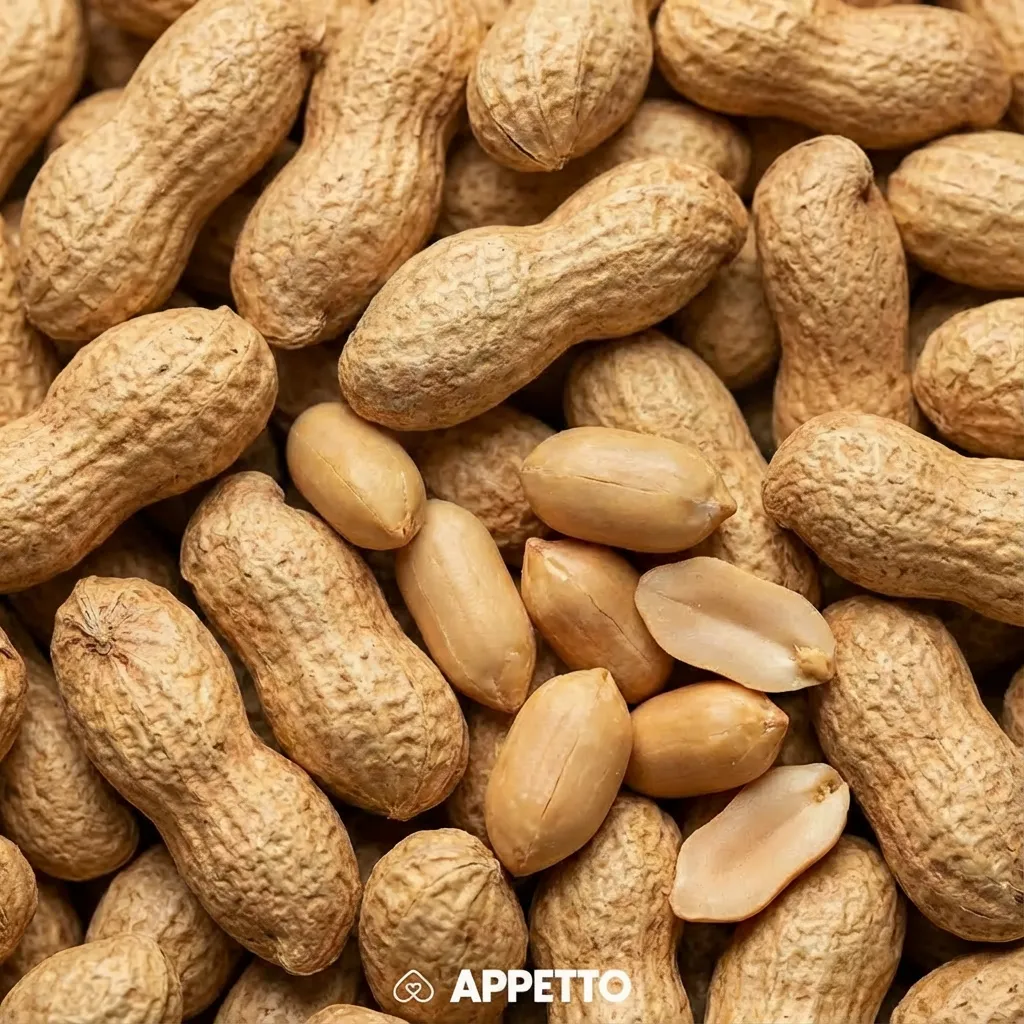
Cats can eat peanuts in strict moderation. While they are not entirely forbidden, they offer very little nutritional value for felines and come with several potential health risks.
Benefits and Nutritional Value
Peanuts can provide an occasional energy intake, but they have a low overall nutritional value. There are no specific health benefits associated with feeding peanuts to cats.
Potential Risks and Mechanisms
The peanut (Arachis hypogaea) has a high caloric density to which cats are not well adapted. The high fat content presents a nutritional risk that can lead to diarrhea and weight gain. Additionally, cats may experience gastrointestinal issues or allergic reactions. There is also a mechanical risk of obstruction or choking if they are given whole or hard pieces.
How to Serve Peanuts Safely
Peanuts should never be part of your cat’s daily routine and must only be offered with caution in very small, occasional amounts.
- What can be given: Only raw, very finely crushed peanuts should be offered to minimize the risk of obstruction.
- What must be avoided: The hard shell should never be given.
Vulnerable Cats
Sedentary cats are particularly vulnerable, as the high fat content increases their risk of becoming overweight.
Symptoms to Watch For and What to Do
If your cat has eaten peanuts, it is important to monitor their tolerance. Watch for signs such as vomiting or diarrhea. If these symptoms appear, persist, or seem concerning, you should contact a veterinarian.
About APPETTO
Want to learn more about what is safe for your pet to eat? APPETTO is an application that helps users better understand the diet of cats and dogs, and consult information about various foods: Download APPETTO.
This article is provided for informational purposes only. It does not replace the advice or diagnosis of a veterinarian. If your pet shows any concerning or persistent symptoms, a veterinarian must be consulted.