


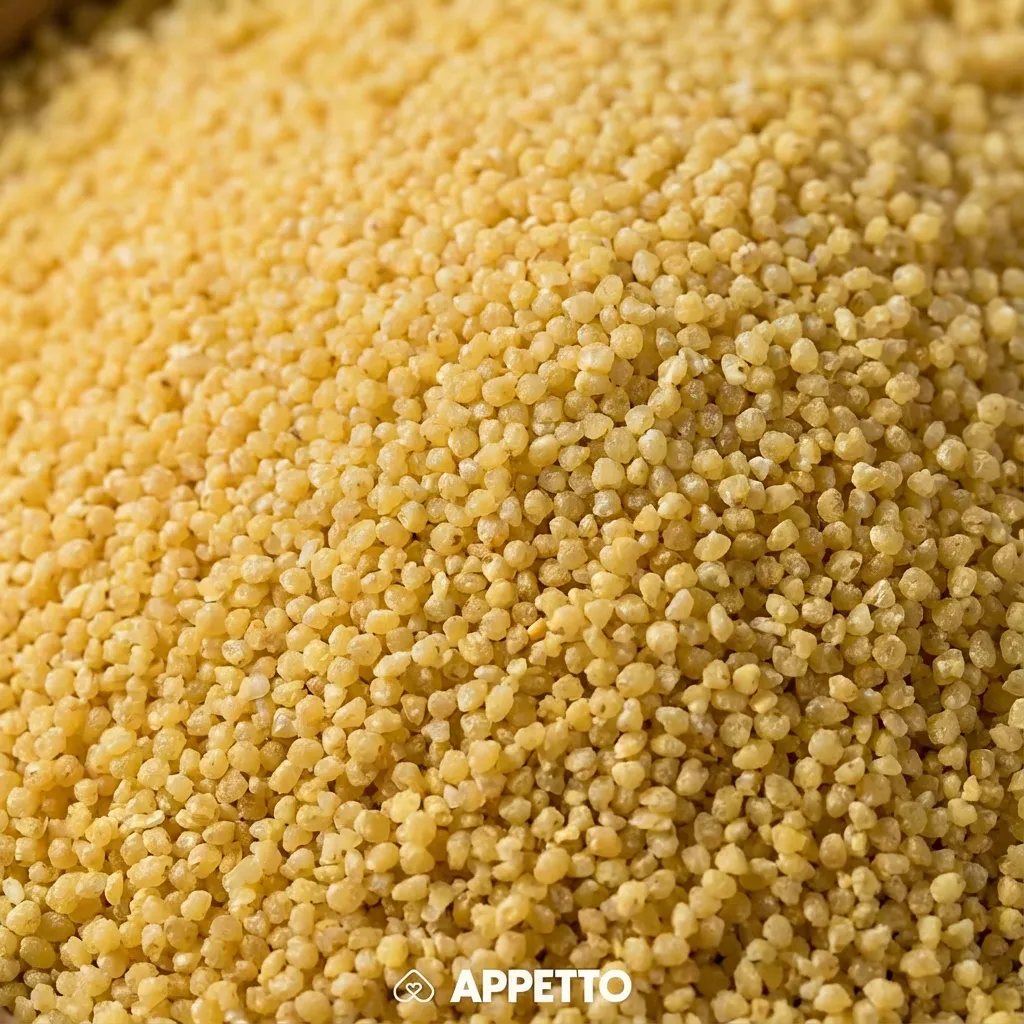
Are you wondering if you can share some couscous (durum wheat semolina) with your cat? While this cereal can be given in very specific circumstances, it is not essential to their diet.
Verdict: Allowed in moderation
Couscous is allowed in moderation. It should only be given as a very small addition to their food, as cats do not actually need cereals in their diet.
Nutritional value
The available data shows no nutritional value or specific benefits for cats consuming this food.
Risks and scientific explanations
Feeding couscous presents a nutritional risk due to its carbohydrates, which provide unnecessary calories. Scientifically, cats poorly convert starch into useful energy without animal proteins. Eating too much can lead to an imbalance in their daily diet and promote weight gain.
Preparation and vulnerable cats
If offered, couscous must be cooked; small crumbs are better tolerated by cats. Furthermore, special caution is required for obese or diabetic cats, as they are particularly vulnerable.
Symptoms to watch for and what to do
If a cat eats too much couscous, symptoms may appear, such as:
- Vomiting
- Diarrhea
- Lethargy
Monitor your pet closely. If these symptoms occur, persist, or seem concerning, it is advisable to contact a veterinarian. This article does not allow for an individual assessment of the ingestion’s severity.
Learn more with APPETTO
To help you better understand your cat’s diet and check information about various foods, you can download the APPETTO app.
This article is provided for informational purposes only and does not replace the advice or diagnosis of a veterinarian. A veterinarian must be consulted in case of concerning or persistent symptoms.