


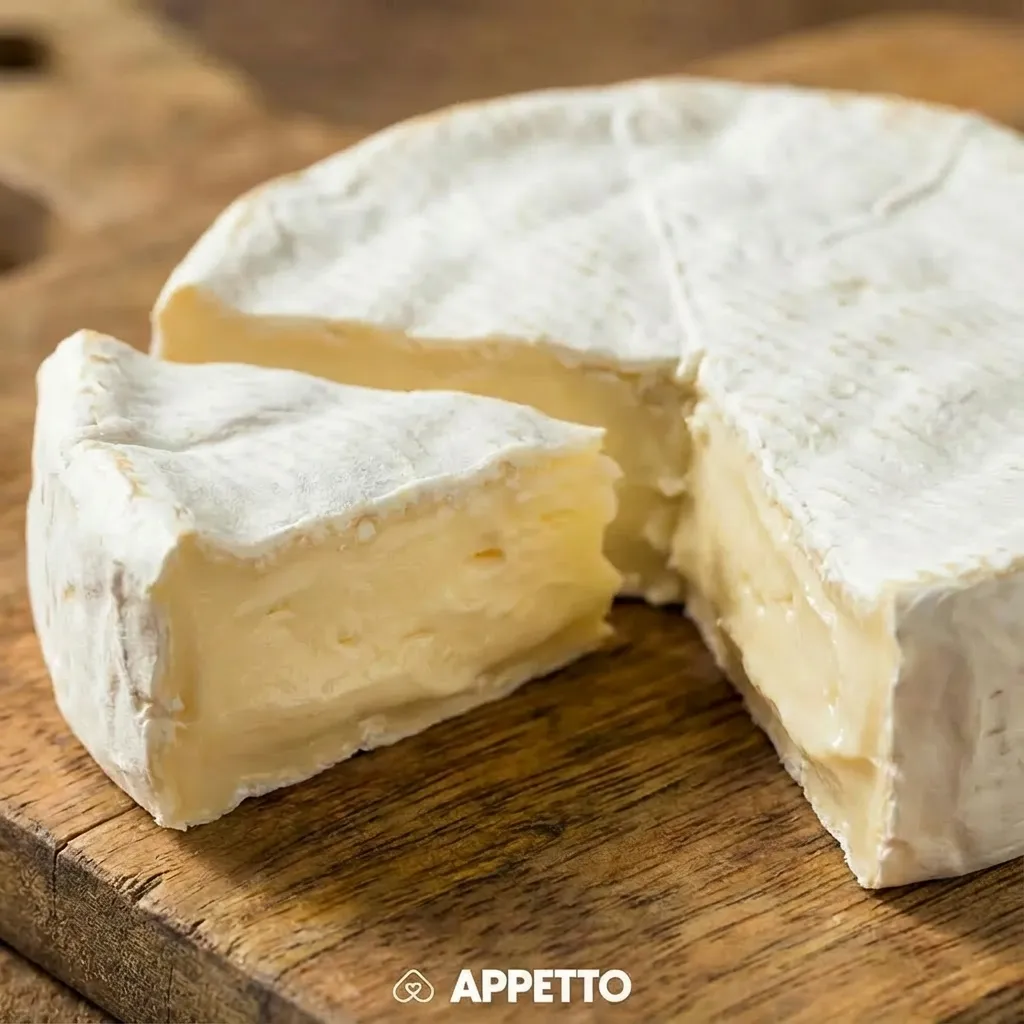
Camembert should be avoided for dogs. Even if a tiny crumb dropped on the floor doesn’t necessarily cause an emergency, this cheese remains very fatty, often difficult to digest, and its bloomy rind isn’t ideal. For a sensitive dog, or one prone to pancreatitis, camembert can quickly go from a “little treat” to a “bad idea (mop included)”.
Quick verdict
- For dogs: avoid.
- Keep in mind: camembert is fatty, sometimes made with raw milk, and its bloomy rind can irritate digestion.
Camembert for dogs: allowed, to be limited, or forbidden?
Camembert is not a food you should intentionally give to your dog. It can contain a lot of fat, some residual lactose, salt, and is sometimes made with raw milk. Even if some dogs can tolerate a tiny amount, the risk-reward ratio just isn’t worth it.
Is camembert dangerous or toxic for dogs?
Camembert is not toxic like chocolate or grapes, but it can be dangerous in excess. Its high fat content can promote vomiting, diarrhea, abdominal pain, and pancreatitis in predisposed dogs. Raw milk, when present, also adds a microbiological risk.
What are the possible benefits?
The benefits of camembert for dogs are very low. Even though it contains protein and calcium, it’s not a good nutritional source for balancing their diet.
- Provides protein, but in a food that’s too fatty.
- Contains calcium, but with no practical value given the digestive risks.
What are the risks to know?
Camembert primarily poses a problem with digestion and fat overload.
- Fats: vomiting, diarrhea, abdominal pain, or pancreatitis in case of excess.
- Possible raw milk: risk of undesirable pathogens depending on the product.
- Parts to avoid: bloomy rind, very ripe or moldy pieces, or camembert mixed into fatty dishes.
How much should you give your dog?
It’s best not to give camembert intentionally. If your dog has eaten a tiny crumb, simply monitor their digestion.
- Small dog: avoid completely; a small amount can already be too fatty.
- Medium dog: avoid; monitor if ingested.
- Large dog: avoid as well, especially if a large amount was swallowed.
Can my dog eat raw, melted, or processed camembert?
Plain camembert is already best avoided. Melted, on toast, in a sauce, in a quiche, or in a cooked dish, it often becomes even more problematic because of the fat, salt, and associated ingredients like garlic, onion, cured meats, or spices.
How to prepare it correctly?
- Do not prepare it for your dog.
- Remove leftover camembert and rinds left within reach.
- If accidentally ingested, estimate the amount and watch for digestive signs.
When should it be avoided?
- Puppies.
- Senior dogs.
- Overweight dogs, or those prone to diarrhea, vomiting, or pancreatitis.
- Dogs on medication, with digestive, kidney, or heart diseases, or on a veterinary diet.
My dog ate camembert: what should I do?
If your dog ate a tiny crumb, keep an eye on them. If they swallowed a large amount, a whole rind, a very ripe camembert, or a dish containing camembert, contact your vet, especially if your dog is small or sensitive to fats.
What signs should you look out for?
Watch for vomiting, diarrhea, gas, abdominal pain, lethargy, loss of appetite, or unusual posturing. Abdominal pain after eating a fatty food should be taken seriously.
What are safer alternatives?
- A low-fat dog treat.
- A small piece of plain, cooked chicken.
- A suitable vegetable like a carrot or zucchini, depending on their tolerance.
How can APPETTO help you?
APPETTO helps you spot everyday foods that seem harmless but might be too fatty or poorly tolerated. With the Pet-Score®, you can compare dog products and make more informed choices. Download APPETTO.
FAQ
Is camembert toxic to my dog?
Not strictly poisonous, but it is too fatty and can cause digestive upset or pancreatitis.
How much camembert can I give my dog?
No amount is recommended. It is better to avoid giving it intentionally.
Can my dog eat the camembert rind?
No, the bloomy rind should be avoided, especially if it is very ripe or looks questionable.
Can my dog eat melted camembert?
This is not recommended, as camembert dishes are often too fatty, too salty, or accompanied by unsuitable ingredients.
What signs should I watch for if my dog ate camembert?
Watch for vomiting, diarrhea, gas, abdominal pain, lethargy, and loss of appetite.
Can a puppy eat camembert?
No, it’s best to avoid it. Puppies are more sensitive to fatty foods and digestive issues.
Camembert should therefore be avoided for dogs: it’s too fatty, hard to digest, and offers little benefit. To better compare foods and choose suitable products, APPETTO helps you with the Pet-Score®. Download APPETTO.
Credits and disclaimer
Credits: Content created by the APPETTO team based on referenced sources and our internal food scoring methodology.
Disclaimer: This information is general and does not replace veterinary advice.