


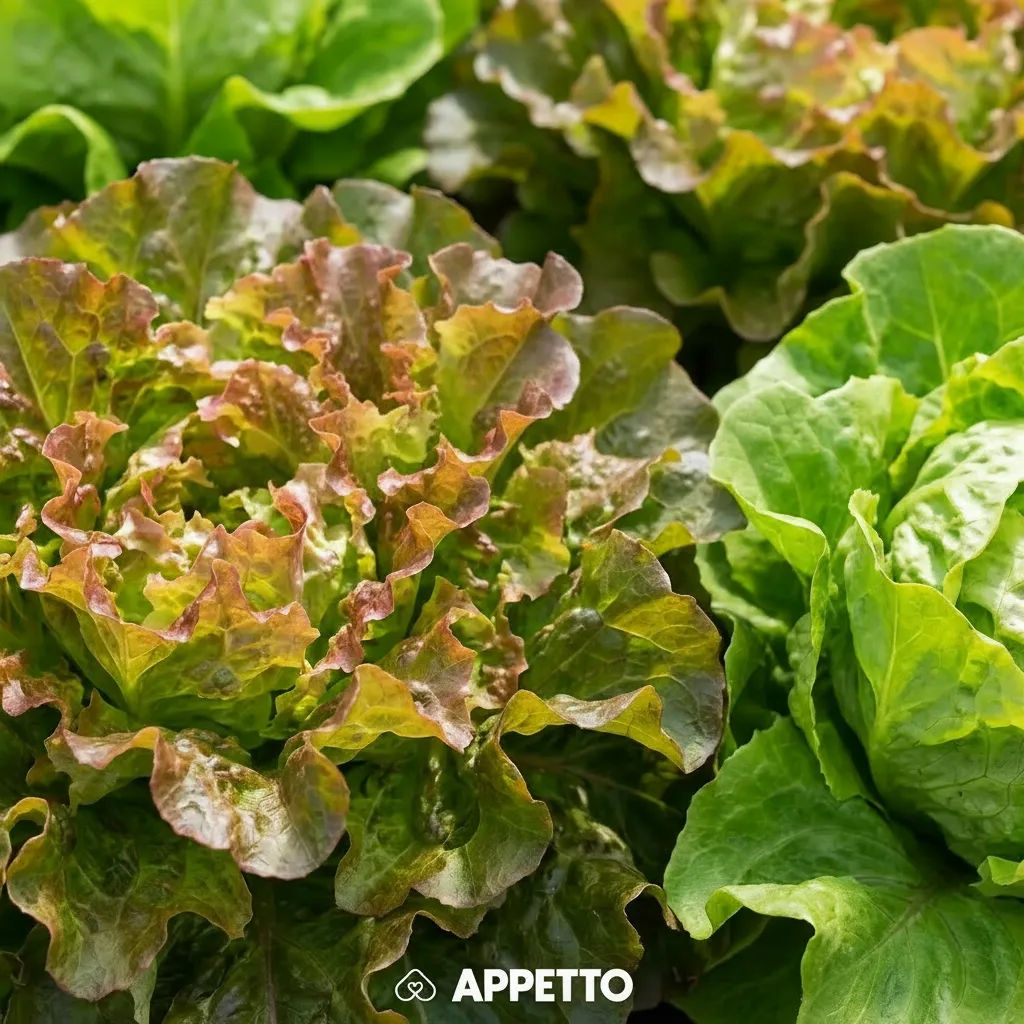
Batavia lettuce can be given to cats in moderation and in very small amounts. While it mainly provides water and a little fiber and is not an essential part of their diet, a few crumbs of tender leaves can be tolerated by some cats.
Quick verdict
- For cats: allowed in moderation.
- To remember: only tender leaves, well washed and very finely chopped.
Batavia for cats: allowed, limited, or forbidden?
Batavia lettuce is allowed in small amounts for cats, though it is not essential. Some cats enjoy chewing on a leaf for its crunch or out of curiosity. Others may simply ignore it. Both reactions are entirely normal.
Is batavia dangerous or toxic for cats?
Batavia is not considered toxic to cats. The risks primarily come from large unchewed leaves, portions given too frequently, or excess fiber, which can cause vomiting or diarrhea.
What are the possible benefits?
The benefits remain slight.
- Hydration thanks to its high water content.
- Fiber that can slightly ease digestive transit.
- A crunchy treat that is very low in calories.
What are the risks to know?
Batavia must remain a tiny extra.
- Excess fiber: loose stools, gas, or vomiting.
- Large leaves: poor chewing and possible regurgitation.
- Seasoning: sauce, garlic, onion, or vinaigrette are forbidden.
How much to give your cat?
The portion must remain very small.
- Adult cat: one or two small crumbs of a tender leaf.
- Sensitive cat: avoid or test a trace only.
- Kittens: to be avoided.
Can my cat eat raw, cooked, or processed batavia?
Raw batavia, well washed and very finely chopped, is the most suitable form. It can also be slightly blanched if your cat has a sensitive stomach. Seasoned salads, those covered in sauce, or leaves mixed with human ingredients are to be avoided.
How to prepare it correctly?
- Carefully wash a tender leaf.
- Remove any thick or damaged parts.
- Chop into tiny crumbs before offering.
When should it be avoided?
- Kittens.
- Older cats with fragile digestion.
- Cats that vomit easily.
- Cats with diarrhea or that are sick.
- Cats on medication or a veterinary diet.
My cat ate batavia: what to do?
If your cat ate a few plain crumbs, simply monitor them. If they consumed a large amount, a seasoned salad, or thick pieces, observe them for any digestive signs and contact a veterinarian if needed.
What signs should alert you?
Signs such as vomiting, diarrhea, gas, apathy, hypersalivation, or a refusal to eat should be closely monitored.
What are safer alternatives?
- Appropriate cat grass.
- Formulated feline treats.
- High-quality complete wet food.
How can APPETTO help you?
APPETTO helps you better understand foods allowed in small amounts, compare cat products using the Pet-Score®, and choose more confidently. Download APPETTO.
FAQ
Is batavia toxic to my cat?
No, batavia is not toxic if given plain and in small amounts.
How much batavia can I give my cat?
One or two small crumbs of a tender leaf are enough.
Can my cat eat raw batavia?
Yes, if it is well washed and very finely chopped.
Is seasoned salad dangerous for cats?
Yes. Sauces, vinaigrettes, garlic, and onion are to be avoided.
What signs to watch for if my cat ate batavia?
Vomiting, diarrhea, gas, or apathy should be monitored.
Can a kitten eat batavia?
It is better to avoid it for kittens.
Batavia can be tolerated by cats in very fine crumbs, but it remains an unnecessary extra. To better compare everyday foods and feline products, APPETTO helps you with the Pet-Score®. Download APPETTO.
Credits and warning
Credits: Content developed by the APPETTO team based on referenced sources and internal food classification methodology.
Warning: This information is general and does not replace veterinary advice.