


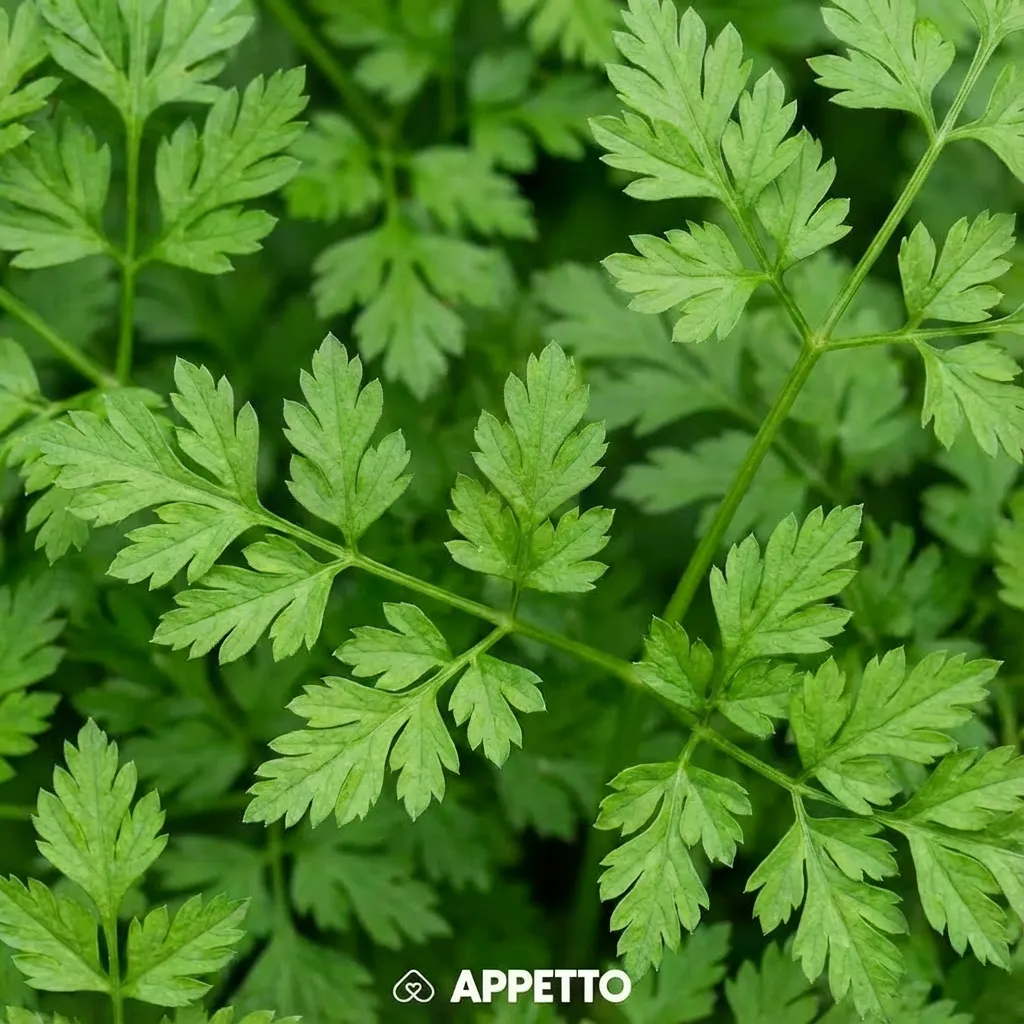
It is entirely possible to give chervil to a dog, but this aromatic herb should only be offered in moderation. Although it is not toxic, adding it to your dog’s diet requires a few precautions to avoid digestive discomfort.
Benefits of Chervil for Dogs
Generally speaking, the nutritional value of chervil for dogs is low. However, as an aromatic herb, it does provide a few beneficial elements for your pet’s body:
- Carotenoids: Chervil contains beta-carotene, a precursor to vitamin A, which is known to play a role in maintaining good vision and healthy skin.
- Polyphenols: These compounds offer antioxidant activity.
How to Safely Feed Chervil to Your Dog
To safely include chervil in your dog’s meals, it is recommended to use fresh, chopped leaves. Whether it is raw or cooked makes no difference, as long as it is served in small quantities.
On the other hand, you should strictly avoid using concentrated essential oils of chervil, as they are not suitable for pets.
What Are the Risks of Overconsumption?
If given in excessive amounts, chervil poses a nutritional risk due to its fiber content. Eating too much of this herb can lead to:
- Loose stools;
- Gastrointestinal issues, such as vomiting and diarrhea.
It is also important to note that puppies are particularly vulnerable to these potential intestinal upsets because their digestive systems are still immature. Therefore, extra caution is needed with young dogs.
What to Do if Your Dog Eats Too Much Chervil
If your dog has ingested a large amount of chervil and starts experiencing vomiting or diarrhea, you should closely monitor their symptoms. If the digestive issues persist, worsen, or appear concerning, do not hesitate to contact your veterinarian.
Learn More with APPETTO
To better understand your dog’s diet and discover what other herbs or foods can safely be added to their meals, you can use the APPETTO app. It provides detailed information on a wide variety of ingredients. You can download it at https://www.download.appetto.co.
This article is provided for informational purposes only. It does not replace the advice or diagnosis of a veterinary professional. If your dog experiences persistent or concerning symptoms, please consult a veterinarian promptly.