


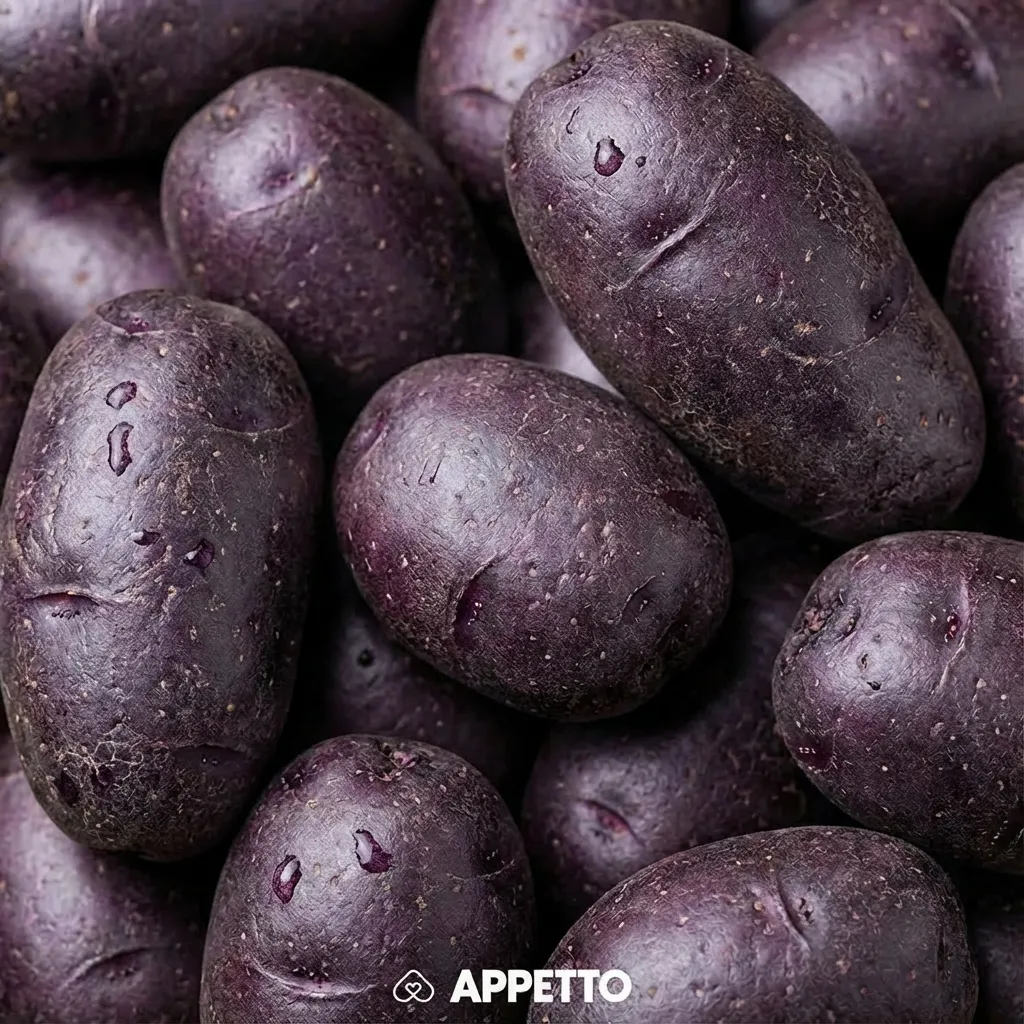
Vitelotte, also known as the purple potato, can be given to dogs in moderation, provided it is well-cooked, peeled, and completely free of green parts or sprouts. If given raw or green, it may contain solanine, which can be toxic.
Quick verdict
- For dogs: Allowed in moderation.
- To remember: Only serve the flesh peeled and well-cooked. Never offer it raw, green, or sprouted.
Vitelotte and dogs: same precautions as regular potatoes
Its distinctive purple color does not change the main rule: vitelotte remains a potato. It must always be served cooked, plain, and in small portions.
Is vitelotte dangerous for dogs?
The cooked flesh can be tolerated. However, danger arises from green parts, sprouts, raw flesh, and the cooking water, which can concentrate undesirable compounds.
Possible benefits
- Energy intake through cooked starch.
- A digestible texture when thoroughly cooked.
- Occasional variety to their diet in small amounts.
Risks to know
- Solanine: Can cause digestive and neurological issues if the potato is consumed raw or green.
- Starch: May lead to weight gain if given in excess.
- Hard pieces: Poses a choking hazard if poorly cooked.
How much vitelotte to give your dog?
- Small dog: One cooked mini-cube.
- Medium dog: One teaspoon of cooked flesh.
- Large dog: One to two teaspoons maximum.
Raw, cooked, or mashed vitelotte?
Vitelotte must always be cooked, peeled, and served plain. Avoid offering fries, chips, or mashed potatoes prepared with butter, salt, cream, garlic, or onion.
How to prepare it correctly?
- Remove any sprouts and green parts.
- Peel the vitelotte carefully.
- Cook it thoroughly and discard the cooking water.
When should it be avoided?
- Puppies.
- Small dogs, if the pieces are too big.
- Overweight dogs.
- Diabetic dogs (without prior veterinary advice).
- Dogs on a specific veterinary diet.
My dog ate a raw or sprouted vitelotte: what to do?
Contact a veterinarian, especially if a large quantity was ingested or if your dog shows signs like vomiting, diarrhea, tremors, or lethargy.
What signs should alert you?
Symptoms such as vomiting, diarrhea, hypersalivation, tremors, weakness, or lethargy should alert you.
Simpler alternatives
- Cooked sweet potato.
- Cooked squash.
- Cooked carrot.
How can APPETTO help you?
APPETTO helps you distinguish between safe and dangerous foods, compare dog products using the Pet-Score®, and safely manage extras. Download APPETTO.
FAQ
Is vitelotte toxic to my dog?
The non-green cooked flesh can be tolerated, but raw, green, or sprouted vitelotte can be toxic.
How much vitelotte to give my dog?
You can offer from a mini-cube up to two teaspoons, depending on your dog’s size.
Can my dog eat raw vitelotte?
No, raw vitelotte must be avoided entirely.
Are vitelotte sprouts dangerous?
Yes, they must be removed and avoided.
What signs to watch for after ingestion?
Watch for vomiting, diarrhea, and tremors.
Can a puppy eat vitelotte?
It is better to avoid giving it to puppies without veterinary advice.
Vitelotte can be given to dogs only if it is cooked, peeled, and without any green parts. To compare suitable foods and products, APPETTO helps you with the Pet-Score®. Download APPETTO.
Credits and warning
Credits: Content developed by the APPETTO team based on referenced sources and our internal food classification methodology.
Warning: This information is general and does not replace veterinary advice.