


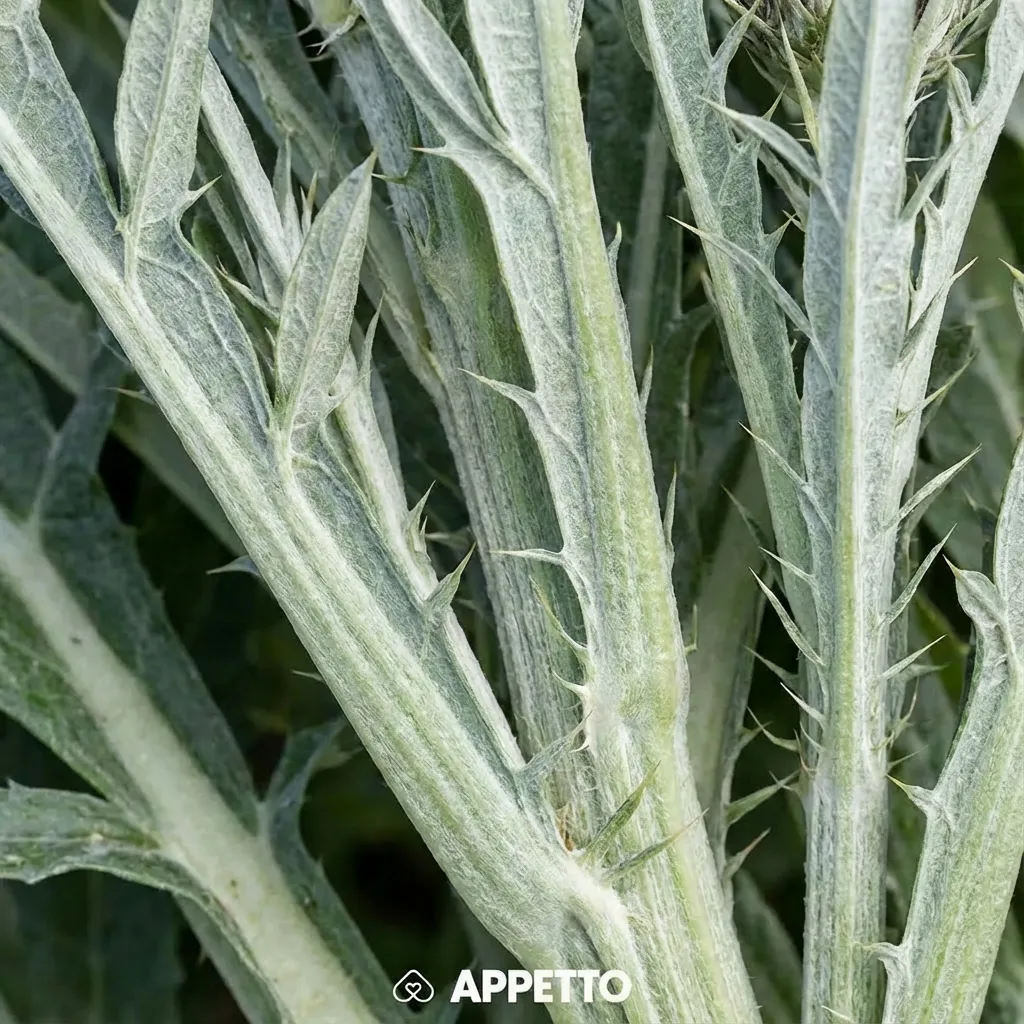
Cardoon is best avoided for cats. While it is not classified as toxic, it is very fibrous, offers little value to a strict carnivore, and can cause diarrhea, vomiting, or abdominal pain, even in small amounts.
Quick verdict
- For cats: to be avoided.
- To remember: if ingestion occurs, a tiny crumb of thoroughly cooked heart is the least problematic form, but it should not be offered as food.
Cardoon and cats: allowed, limited, or forbidden?
Cardoon is not recommended for cats. Although a very small amount of well-cooked heart might be less irritating than the hard leaves, its nutritional value remains zero. Cats digest many fibrous vegetables poorly, and cardoon is no exception.
Is cardoon dangerous for cats?
Cardoon can be poorly tolerated by cats. The main risks are digestive: difficult-to-ferment fibers, gas, loose stools, vomiting, or loss of appetite. The hard leaves can also cause chewing or swallowing discomfort.
Are there any benefits for cats?
The benefits are minimal and do not justify offering this vegetable.
- It covers no feline nutritional needs.
- The fibers are not very useful and are potentially irritating.
Risks to know
For a cat, cardoon mainly poses digestion problems.
- Fiber: possible diarrhea, gas, or vomiting.
- Hard leaves: chewing discomfort and a risk of swallowing difficulties.
- Low digestibility: very limited interest for a strict carnivore.
How much cardoon to give your cat?
No amount is recommended. It is best not to offer it voluntarily.
- Adult cat: avoidance advised.
- Sensitive cat: strictly avoid.
- Kitten: do not give.
Raw, cooked, or processed cardoon: what to avoid?
Raw cardoon is too fibrous. Cooked cardoon is more tender but remains largely useless for cats. Any cooked dishes prepared with salt, sauce, garlic, onions, or cream must be completely avoided.
How to prepare it correctly?
- Do not prepare cardoon for your cat by default.
- Keep hard leaves and fibrous parts away from them.
- If your cat accidentally eats some, monitor their digestion and appetite.
When should it be avoided?
- Kittens.
- Older cats.
- Cats with a fragile digestive system.
- Cats prone to vomiting.
- Cats on medication or a specific veterinary diet.
My cat ate cardoon: what to do?
If your cat ate a tiny trace of very cooked heart, simply monitor them. If they swallowed hard leaves, a large portion, or a seasoned dish, contact your veterinarian if you notice vomiting, diarrhea, or a loss of appetite.
What signs should alert you?
Diarrhea, vomiting, abdominal pain, gas, loss of appetite, lethargy, or a refusal to drink are signs that require monitoring.
What are safer alternatives?
- Appropriate cat treats.
- High-quality complete wet food.
- A tiny portion of cooked zucchini, provided it is well tolerated.
How can APPETTO help you?
APPETTO helps you identify foods that are best avoided, compare cat products using the Pet-Score®, and make choices with greater confidence. Download APPETTO.
FAQ
Is cardoon toxic to my cat?
While not explicitly reported as toxic, it is not recommended due to the potential for digestive issues.
How much cardoon can a cat eat?
No amount is recommended. It is best to avoid giving it entirely.
Can my cat eat raw cardoon?
No, raw cardoon is too fibrous and difficult for a cat to digest.
Which parts of the cardoon should be avoided for cats?
The hard leaves and fibrous sections must be avoided.
What symptoms should I monitor if my cat ate cardoon?
Vomiting, diarrhea, abdominal pain, and loss of appetite should alert you.
Can a kitten eat cardoon?
No, cardoon should be completely avoided for kittens.
Cardoon is therefore best avoided for cats: it is too fibrous, offers little nutritional value, and is often poorly tolerated. To better compare feline foods and products using a clear benchmark, APPETTO guides you with the Pet-Score®. Download APPETTO.
Credits and warning
Credits: Content developed by the APPETTO team based on referenced sources and internal food classification methodology.
Warning: This information is general and does not replace veterinary advice.