


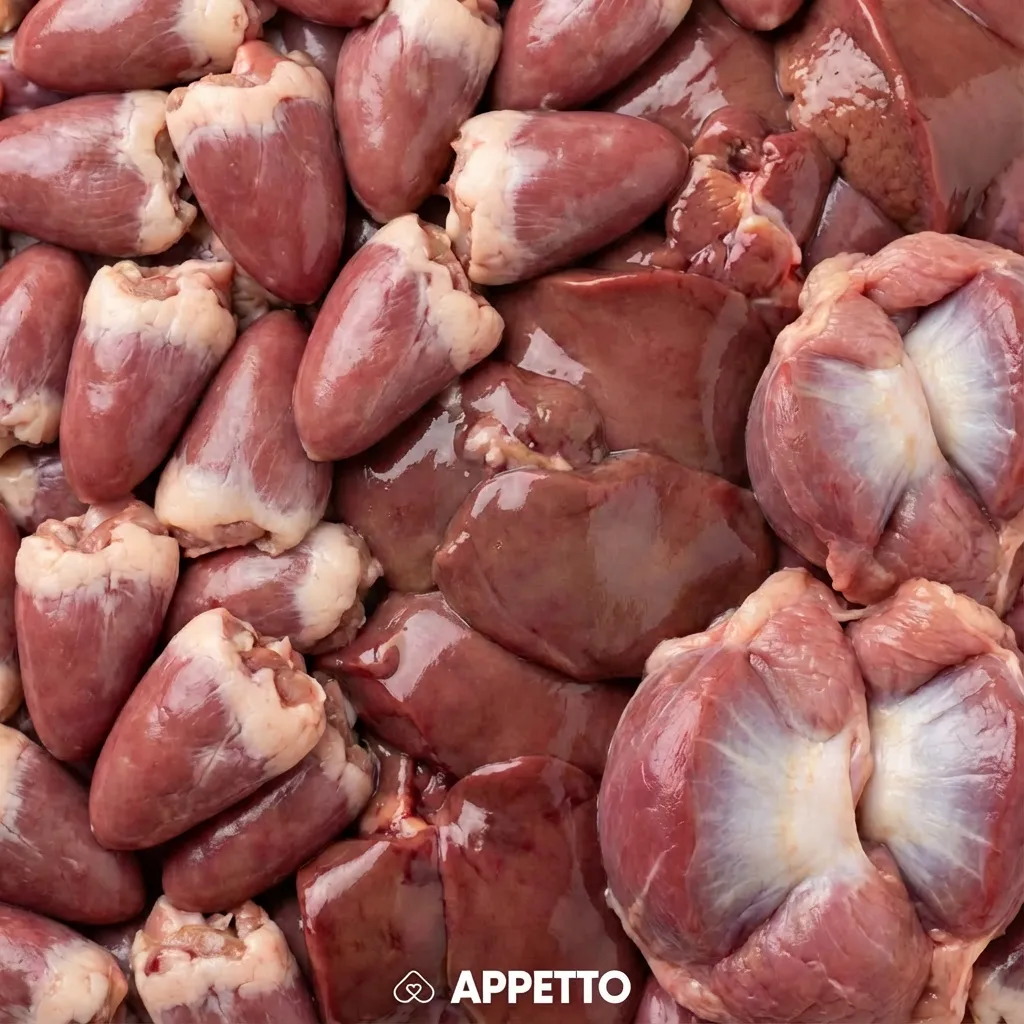
Yes, a dog can eat chicken giblets, but in moderation. The heart and gizzard are generally the easiest to incorporate, while liver should only be given occasionally due to its high vitamin A content. The idea isn’t to make it the star of the bowl every day, but rather a well-prepared little supplement, much like when you prepare boiled chicken for dogs.
Quick verdict
- For dogs: allowed in moderation.
- Key takeaway: heart and gizzard can be given cooked in small quantities, but liver must be limited.
Chicken giblets for dogs: allowed, limited, or forbidden?
Chicken giblets such as liver, heart, and gizzard can have a place in your dog’s diet when given occasionally. They provide iron, vitamins, and are highly palatable. However, they should not unbalance the diet or replace a complete dog food with chicken.
Are chicken giblets dangerous or toxic for dogs?
They are not considered toxic in small amounts. The real point of vigilance mainly concerns the liver, which is very rich in vitamin A. Repeated excess of this vitamin can accumulate in the body and cause problems, particularly in the bones and joints. Many owners wonder, “is chicken bad for dogs?”—the answer is no, but specific parts like liver require portion control.
What are the possible benefits?
When used well, chicken for dogs, including giblets, can be beneficial, especially to add a little variety to their intake.
- The heart and gizzard provide animal proteins and minerals.
- The liver contains iron and vitamins, but it should remain a rare treat.
- Their strong flavor can help some picky eaters accept their meal.
What are the risks to be aware of?
The risk mainly comes from quantity and frequency.
- Vitamin A toxicity if liver is given too often.
- Vomiting or diarrhea if the portion is too large.
- Nutritional imbalance if giblets replace a complete diet.
- Parts to avoid: excess liver, poorly stored raw giblets, or seasoned ones.
How much to give your dog?
Giblets should remain a small supplement. In home-cooked or supervised BARF diets, giblets often represent a small part of the ration, with liver being even more limited. Without veterinary supervision, stick to very small, occasional portions.
- Small dog: a very small cooked piece, rarely.
- Medium dog: a few small cooked cubes, occasionally.
- Large dog: a small cooked portion, without making it a daily habit.
Can my dog eat raw, cooked, or processed chicken giblets?
Cooking is preferable for better tolerance and simpler microbiological safety. Can dogs eat raw chicken or raw giblets? Raw giblets can expose your pet to bacteria if the cold chain or hygiene are not perfectly managed. Smoked, salted, spiced giblets, or those cooked for humans are to be avoided.
How to prepare them correctly?
- Choose fresh, plain giblets, with no salt, sauce, garlic, onion, or spices.
- Cook chicken for dogs thoroughly, then let it cool. Boiling is a great method.
- Cut into small pieces and give a small amount, ideally as a supplement to a regular meal.
When should they be avoided?
- In puppies, whose digestion is more sensitive.
- In elderly or frail dogs.
- In dogs with digestive issues, liver disease, or on a strict veterinary diet.
- In a dog that has previously reacted badly to rich or new foods.
My dog ate chicken giblets: what should I do?
If they ate a small cooked amount, simply monitor their digestive comfort. If your dog ate raw chicken giblets of doubtful quality, a large amount of liver, or a seasoned preparation, contact your vet, especially if symptoms appear.
What signs should alert you?
Watch for vomiting, diarrhea, lethargy, abdominal pain, unusual stiffness, or a loss of appetite. If the signs persist or if the amount swallowed is large, seeking veterinary advice is the right reflex.
What are safer alternatives?
- Plain boiled chicken and rice for dogs.
- Cooked turkey without skin or seasoning.
- Dog treats formulated specifically for pets.
How can APPETTO help you?
With APPETTO, you can better understand what you are feeding your dog, compare kibble, wet food, treats, and everyday foods using the Pet-Score®, and make more informed choices for their bowl. Download APPETTO.
FAQ
Are chicken giblets toxic to my dog?
No, not in small quantities, but liver must be limited because of its high vitamin A content.
How many chicken giblets should I give my dog?
A small, occasional portion is enough. Liver should remain even rarer than heart or gizzard.
Can my dog eat chicken liver?
Yes, but occasionally and in very small amounts. Too much liver can lead to an excess of vitamin A.
Can dogs eat raw chicken giblets?
As a precaution, it’s better to give them cooked, especially if your dog is fragile or if raw food hygiene isn’t perfectly controlled.
What signs to watch for if my dog ate too many giblets?
Vomiting, diarrhea, abdominal pain, lethargy, or digestive discomfort should be monitored.
Can a puppy eat chicken giblets?
It is better to avoid it or ask your vet’s advice, as puppies are more sensitive to dietary excesses and changes.
Chicken giblets can therefore be allowed for dogs, but in small quantities, well cooked, and without excess liver. To more easily compare everyday foods and products suited to your dog, APPETTO gives you a clear benchmark with the Pet-Score®. Download APPETTO.
Credits and disclaimer
Credits: Content developed by the APPETTO team based on referenced sources and the internal food classification methodology.
Disclaimer: This information is general and does not replace veterinary advice.