


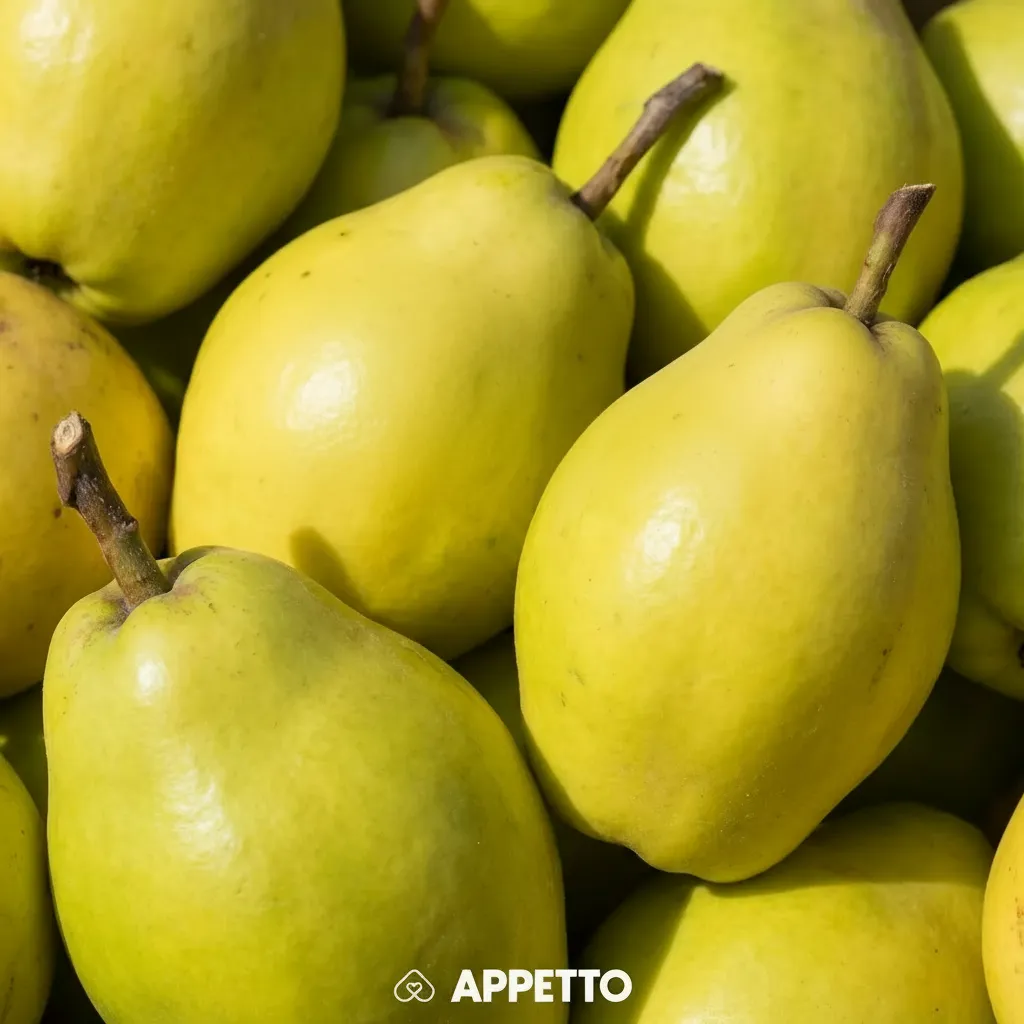
Dogs may eat Chinese quince in moderation, similarly to common quince. Only the fully ripe flesh should be offered, while the seeds, leaves, and stems must be removed.
Quick verdict
- For dogs: allowed in small amounts.
- Key point: offer ripe flesh only and never the seeds, leaves, or stems.
Chinese quince may be offered occasionally
A small amount of ripe flesh may be tolerated. The fruit should not become a regular treat because raw flesh may be astringent and irritating.
The seeds are the main danger
Chinese quince seeds may contain amygdalin, which can release cyanide when chewed. Hard plant parts may also cause choking or intestinal blockage.
Possible benefits are modest
Chinese quince provides some fiber and is relatively low in calories, but it is not essential.
- A small amount of fiber.
- A low-calorie occasional treat when properly prepared.
Main risks to know
Careful preparation matters because the seeds and hard pieces should not be eaten.
- Vomiting, diarrhea, or constipation after excessive consumption.
- Possible cyanogenic exposure if seeds are chewed.
- Parts to avoid: seeds, leaves, stems, and hard pieces.
How much can a dog eat?
Offer only a small amount of ripe flesh.
- Small dog: one tiny bite.
- Medium dog: one small piece.
- Large dog: a few small pieces, occasionally.
Raw, cooked, and processed Chinese quince
A small amount of ripe flesh may be offered. Plain cooked flesh may be easier to digest. Jelly, jam, fruit paste, and desserts should be avoided.
How to prepare it safely
- Remove every seed, leaf, and stem.
- Use only fully ripe flesh.
- Cut it into small pieces and introduce it gradually.
When Chinese quince should be avoided
- Puppies.
- Small dogs at greater risk of choking or blockage.
- Dogs with sensitive digestion, constipation, gastritis, or a history of intestinal blockage.
- Dogs receiving medication or eating a veterinary diet.
My dog ate Chinese quince
If your dog ate a small amount of flesh, monitor them. If they chewed seeds, swallowed hard pieces, or develop vomiting, diarrhea, or constipation, contact a veterinarian.
Warning signs to watch for
Watch for vomiting, diarrhea, constipation, abdominal pain, fatigue, excessive drooling, or unusual behavior.
Safer alternatives
- A small piece of seedless apple.
- A few plain blueberries.
- A small piece of cooked carrot.
How APPETTO can help
APPETTO helps you understand similar foods, compare dog products, and make more confident choices with Pet-Score®. Download APPETTO.
FAQ
Is Chinese quince toxic to dogs?
The ripe flesh is not toxic in small amounts, but the seeds should be avoided.
How much Chinese quince can I give my dog?
Only a small amount of ripe flesh, and only occasionally.
Can dogs eat Chinese quince seeds?
No. Chewed seeds may release cyanide.
Can dogs eat cooked Chinese quince?
Yes, in a small amount, plain, without sugar or seeds.
What symptoms should I watch for after ingestion?
Watch for vomiting, diarrhea, constipation, or abdominal pain.
Can puppies eat Chinese quince?
It is best to avoid it for puppies.
Chinese quince may be offered to dogs in small amounts, but only as ripe, seedless flesh. To compare foods and suitable products, download APPETTO.
Credits and disclaimer
Credits: Content developed by the APPETTO team using referenced sources and its internal food classification methodology.
Disclaimer: This information is general and does not replace veterinary advice.