


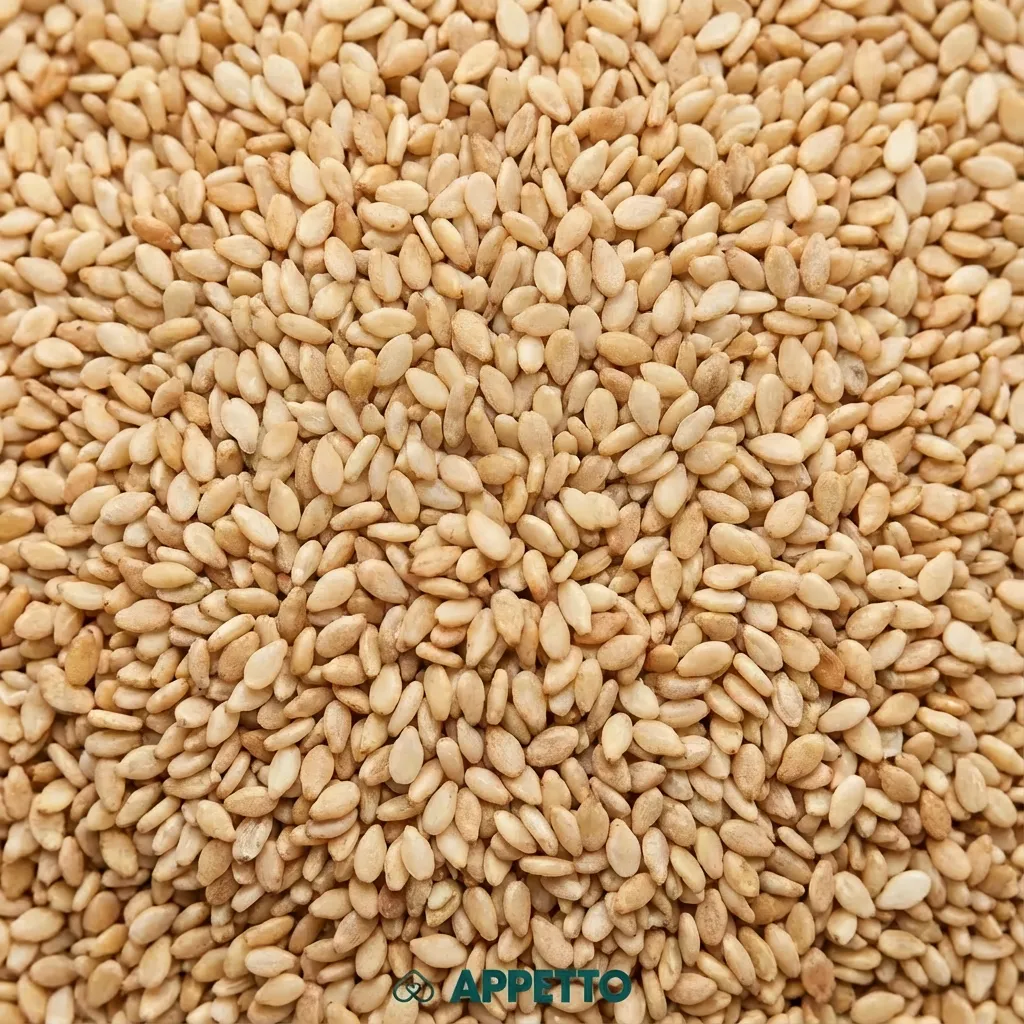
Can dogs eat sesame seeds?
Are you wondering if you can feed sesame seeds to your dog? The answer is yes, this food is allowed in moderation.
Benefits and nutritional value
Sesame seeds provide essential minerals such as calcium, iron, and zinc, along with fibers and unsaturated fatty acids. However, their overall nutritional value for dogs is considered low.
Scientific mechanisms and risks
Sesame (Sesamum indicum) contains lignans and fatty acids, which can act as antioxidants and provide energy. Despite these elements, feeding sesame seeds carries certain risks. There is a mechanical risk: if the dry seeds are swallowed whole without being chewed, they can present a choking hazard. There is also a nutritional risk due to their caloric density and fat content. Giving repeated portions can lead to weight gain because of the concentrated fats. Furthermore, an excessive amount can cause diarrhea.
Preparation and recommended amounts
When offering sesame seeds to your dog, they should be raw and slightly crushed. It is important to introduce them very gradually into their diet. For a medium-sized dog, occasional feeding of about one dessert spoon (approximately 5 g) three to four times a week is mentioned in some recommendations.
Vulnerable dogs
Because of the concentrated fats, overweight dogs are particularly vulnerable and require extra caution.
Symptoms to monitor and what to do
If your dog consumes too many sesame seeds, symptoms such as vomiting and diarrhea may occur. If you notice these signs, monitor your dog’s condition closely. If the symptoms persist, worsen, or appear concerning, you should contact a veterinarian.
APPETTO
The APPETTO application helps users better understand the diet of dogs and cats and consult information on various foods. You can find more information at APPETTO.
This article is provided for informational purposes only. It does not replace the advice or diagnosis of a veterinarian. A veterinarian should be consulted in the event of concerning or persistent symptoms.