


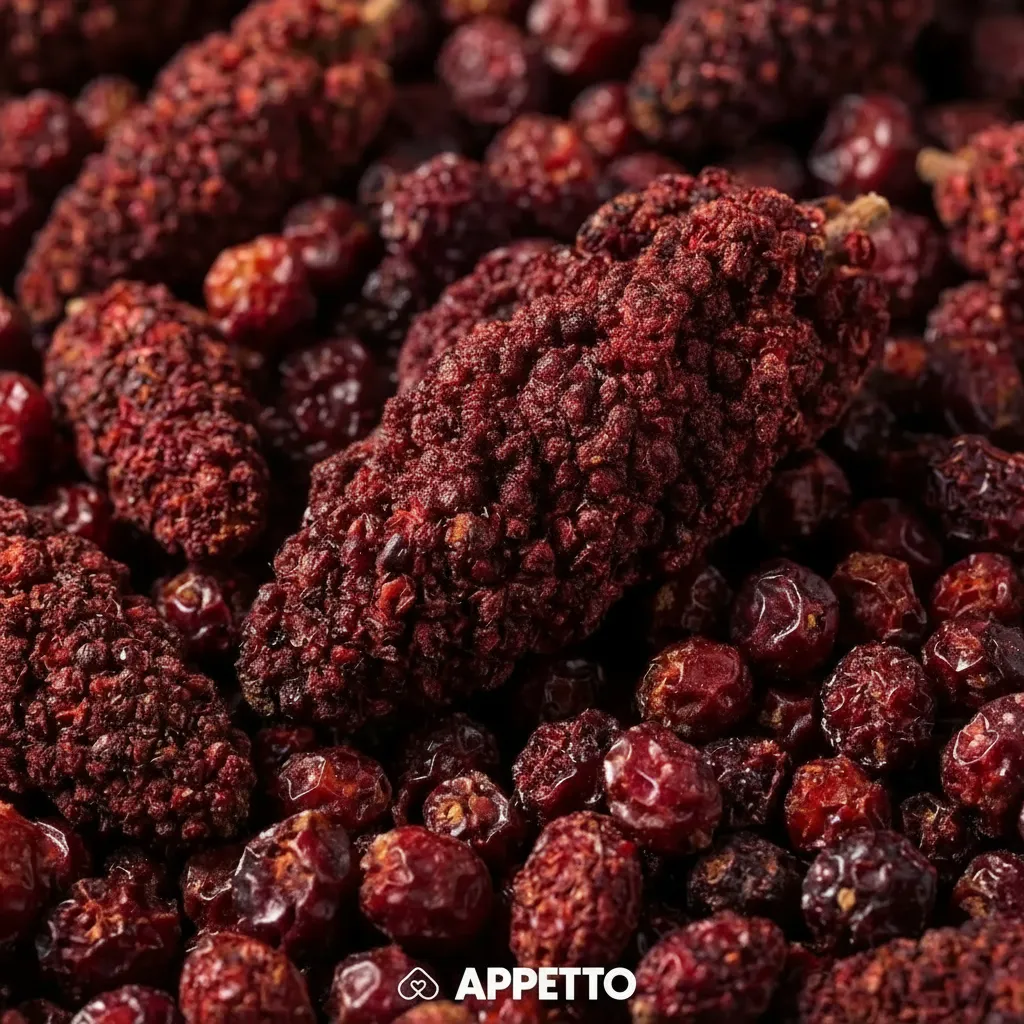
If you are wondering whether you can give sumac to your dog, you should know that opinions are divergent. Because of conflicting information, caution is required.
Nutritional Value
Based on available data, sumac offers no nutritional value or health benefits for your dog.
Risks and Conflicting Data
The information regarding sumac is often discordant, as the risks depend heavily on the specific parts of the plant, its maturity, and the exact species involved. Notably, there is a risk of confusion with other sumac species, such as “poison sumac,” which can cause contact irritation, whereas culinary sumac (Rhus coriaria) is different.
From a scientific standpoint, the danger is chemical. Certain plant compounds can lead to digestive irritation depending on the part of the plant consumed.
Parts to Avoid and Precautions
Non-culinary plant parts, such as the leaves and branches, are considered bad for dogs and should not be consumed. Due to the uncertain nature of the data surrounding sumac, the general recommendation is to avoid feeding it to your dog as a precaution, regardless of whether it is raw or cooked.
Symptoms to Watch For
If your dog happens to ingest non-culinary parts of the sumac plant, they may experience adverse reactions. The main symptoms to look out for are:
- Vomiting
- Diarrhea
If you notice these symptoms or if they appear concerning following ingestion, it is highly recommended to contact a veterinarian for appropriate advice.
Learn More with APPETTO
If you want to better understand your dog’s diet and access information about various foods, you can download the APPETTO app. It is available here: https://www.download.appetto.co.
This article is provided for informational purposes only and does not replace the advice or diagnosis of a veterinarian. A veterinarian should always be consulted in the event of persistent or concerning symptoms.